On Peace Day, Hun Manet Urges Thailand to Respect Border Agreements
Prime Minister Hun Manet marked the International Day of Peace by calling on Thailand to honor bilateral agreements and resolve border issues peacefully under international law, stressing that peace is vital to Cambodia's development and security.
Prime Minister Hun Manet has urged Thailand to uphold bilateral agreements and work with Cambodia to settle border issues peacefully and in line with international law, in a message marking the International Day of Peace.
In his statement dated September 21, Manet said Cambodia joined other nations around the world in reaffirming a shared commitment to peace and in honoring all those who have sacrificed to achieve it.
He noted that history and current global developments show that international law by itself cannot secure peace without real political will and consistent implementation.
Commitment to peaceful settlement
Manet said Cambodia remains steadfast in its respect for state sovereignty and equality, its rejection of the use of force, its good-faith fulfillment of international obligations, and its support for cooperation and multilateral mechanisms to resolve disputes peacefully under international law.
He described peace as the breath of life for Cambodia, saying it has enabled the country to rebuild after war, alleviate poverty, strengthen social and economic infrastructure, and integrate more deeply into the region and the international community.
Peace, he added, has allowed Cambodia to direct its resources toward development across all sectors and to become an active and responsible participant in global affairs. Under the United Nations framework, Cambodia has contributed to international peacekeeping operations, he said.
According to the prime minister, Cambodia has deployed a total of 10,912 peacekeepers, including 1,082 women, to UN missions in 10 countries since 2006. These missions have included deployments to Chad, Sudan, South Sudan, the Central African Republic, Lebanon, Cyprus, Syria, Mali, Yemen and the Democratic Republic of Congo.
Manet also pointed to Cambodia's painful wartime past and to what he described as recent violations of the country's sovereignty by a neighboring state, in an apparent reference to Thailand.
He said that having endured the suffering and severe consequences of war, as well as recent acts of aggression against its sovereignty, Cambodia understands more deeply the invaluable nature of peace, the opportunities it creates, and how fragile it is and how it must be protected at all costs.
The government, he said, once again calls on the Thai side to honor the understandings already reached, to engage in a peaceful resolution of Cambodia-Thailand border matters on the basis of international law, to ease tensions, build trust, and work toward restoring calm along the frontier and fostering peaceful coexistence between the two peoples as good neighbors.
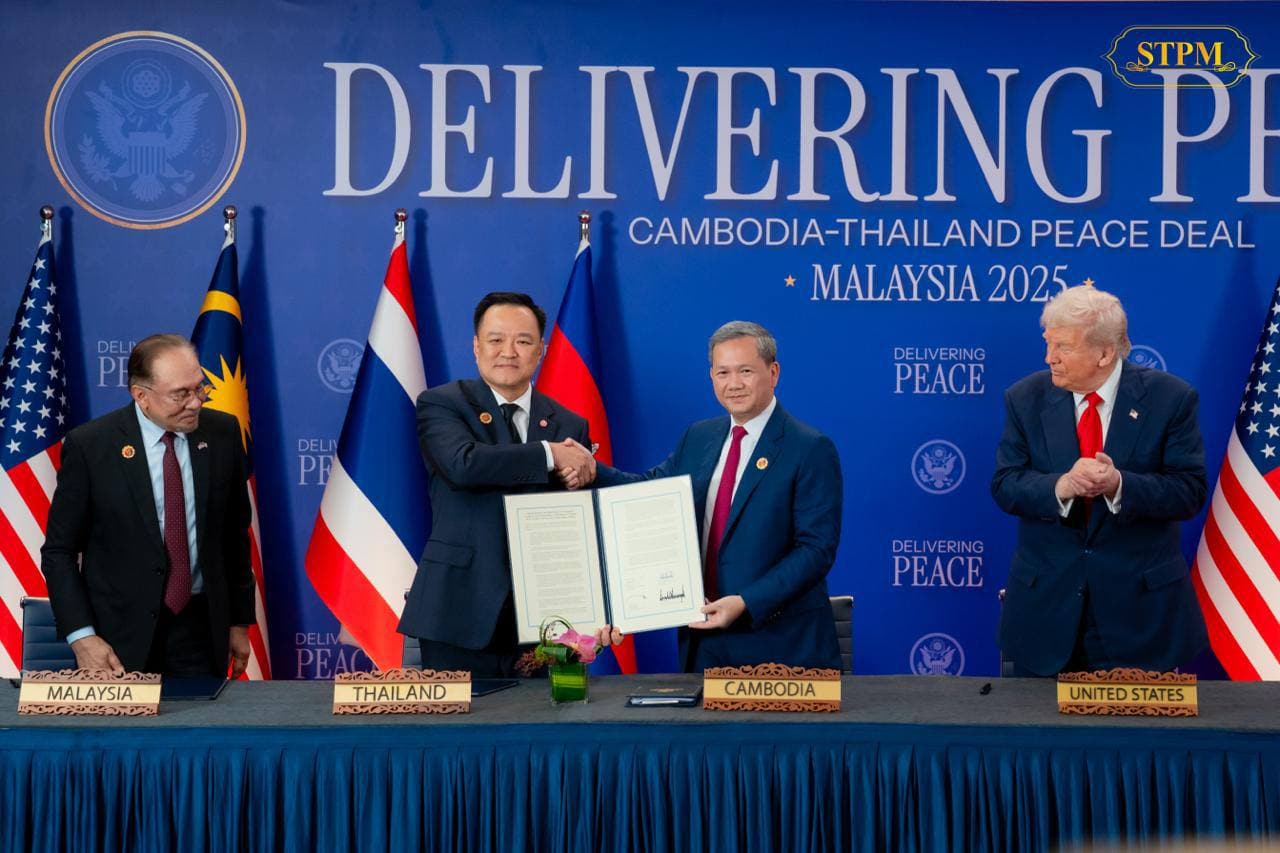
The appeal echoes the Joint Declaration signed in Kuala Lumpur in October 2025 by Manet and Thai Prime Minister Anutin Charnvirakul, witnessed by U.S. President Donald Trump and Malaysian Prime Minister Anwar Ibrahim. That declaration reaffirmed the two countries' commitment to settling their border dispute peacefully, respecting international law, reducing tensions, strengthening confidence, and using bilateral mechanisms to address border-related matters.
Manet said Cambodia will continue to defend core principles of peace, respect for sovereignty and equality among states, and the settlement of disputes without force and in accordance with international law, which he said are vital for protecting the security and welfare of the people and for advancing sustainable and inclusive socio-economic development.