 Mekong Monitor
North Korea promotes improved rocket system, presses for heavier firepower at the border
North Korea says it tested an upgraded guided rocket system with a claimed range of up to 115 kilometers, while pushing for more powerful weapons to be placed near the border with South Korea.
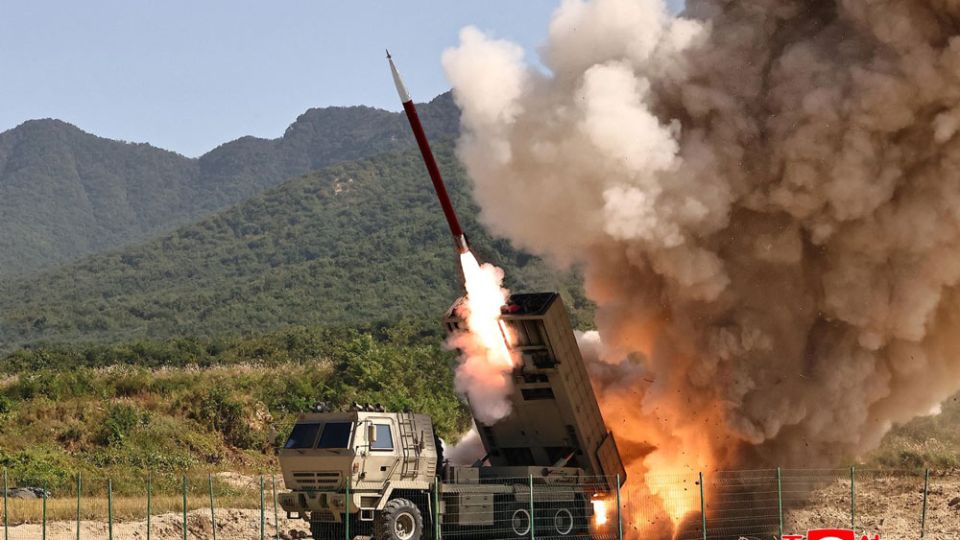
Pyongyang highlights longer-range guided rockets
North Korea announced Thursday that it had carried out a successful test of an upgraded 240 mm multiple-launch rocket system, saying the new model offers increased range and accuracy. The country also urged that its most powerful weapons be positioned near the inter-Korean border.
State media reported that the launch took place Tuesday and involved newly developed guided rockets. Pyongyang said the projectiles can travel as far as 115 kilometers, which could widen the area exposed to its frontline artillery.
Officials call for stronger forward deployment
According to the Korean Central News Agency, the improved rockets use what North Korea describes as an autonomous pinpoint guidance system. They can hit targets about 100 kilometers away on a ballistic path, and reach up to 115 kilometers by combining ballistic flight with a gliding stage, the report said.
Senior military figures watching the test said the extended-range rockets would bring a major shift in combat readiness along the line North Korea calls its southern border. Pak Jong-chon, vice chairman of the ruling party's Central Military Commission, reportedly emphasized the need to concentrate the most lethal attack forces in that direction.
Pak also said adversaries should understand that North Korea has been rapidly replacing older long-range strike capabilities with its newest weapon systems, the state agency added.
An expert sees a broader threat
Yang Moo-jin, a professor at the University of North Korean Studies, said the latest 240 mm system is a clear improvement over earlier versions, expanding both distance and precision.
- Older rockets were generally assessed to reach around 70 kilometers and were mainly viewed as a danger to the Seoul metropolitan area.
- The newer range of up to 115 kilometers could put major U.S. bases in Pyeongtaek and Osan, as well as parts of northern Chungcheong Province, within possible reach.
Yang said the mix of longer range, guided accuracy and a maneuvering glide trajectory marks a move from traditional artillery rockets toward more advanced precision weapons.
He added that the glide feature may be designed to make it harder for South Korea's layered missile defenses around the capital to intercept incoming rounds.
The expert also noted that the rockets could be cheaper to produce than ballistic missiles, allowing North Korea to build them in large numbers and speed delivery to frontline units. If performance is proven, Pyongyang might also look to export the system as an affordable weapon to earn foreign currency.
Tensions and regional implications
The announcement follows a period in which North Korea has worked to sharpen its strike posture against the South after declaring in late 2023 that relations between the two Koreas are those of hostile states.
Yang said the focus on maintaining continuous military pressure points to a more aggressive and coercive approach to deterrence. He warned that deploying stronger firepower near the border could deepen the arms race and increase the chance that a small clash turns into a localized conflict.
South Korea's military said it detected several projectiles fired toward the Yellow Sea on Tuesday and was reviewing their features. It said Seoul remained ready to respond to provocations while monitoring North Korean activity closely with the United States.