 Mekong Monitor
North Korea Demonstrates Enhanced Rocket System, Signals Military Escalation Near Border
North Korea announced a successful test of an upgraded rocket system with extended range, with military officials signaling the deployment of more destructive weapons along the inter-Korean border.
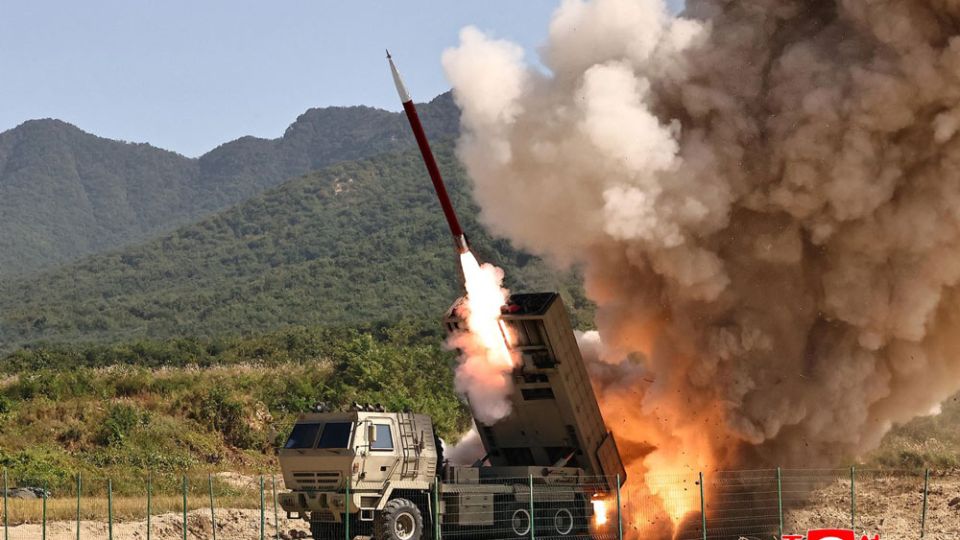
North Korea announced Thursday that it had successfully tested an upgraded 240 mm multiple-launch rocket system, showcasing extended range and improved targeting accuracy. The test, carried out on Tuesday, featured newly developed guided rockets that Pyongyang claims can reach distances of up to 115 kilometers, substantially expanding the territory that could be threatened by its frontline weaponry.
According to North Korea's state news agency, the enhanced rockets employ what officials describe as an "autonomous pinpoint guide system." The weapons can strike targets 100 kilometers away using a ballistic flight path, or extend their range to 115 kilometers through a combined glide-flight mode that allows them to maneuver while descending.
Military leadership overseeing the test indicated that the extended-range capability represents a watershed moment for North Korea's firepower positioning along what it refers to as its southern border. Pak Jong-chon, vice chairman of the ruling party's Central Military Commission, emphasized the importance of deploying the nation's most potent weapons systems to frontline positions and underscored Pyongyang's commitment to modernizing its military arsenal at an accelerated rate.
The upgrade represents a substantial leap from North Korea's previous-generation 240 mm rockets, which had a maximum range of approximately 70 kilometers. Experts note that the new system's extended reach would bring major U.S. military facilities in South Korea—including bases in Pyeongtaek and Osan—within striking distance, along with portions of northern Chungcheong Province.
The combination of increased range, precision targeting, and maneuvering capability marks a progression from traditional artillery rockets toward more advanced guided munitions. The glide feature may also complicate South Korea's ability to defend against incoming projectiles using its air defense network serving the Seoul region.
Analysts suggest that the system's relatively economical production cost compared to ballistic missiles could enable North Korea to manufacture the rockets in large quantities and station them across forward positions more rapidly. The affordability could also make the weapons an attractive export option, potentially generating revenue for Pyongyang.
The test reflects North Korea's broader military strategy shift, particularly since late 2023 when it formally declared relations with the South to be adversarial. Military observers interpret Pyongyang's focus on maintaining constant pressure through enhanced offensive capabilities as a departure from traditional deterrence toward a more aggressive and coercive posture.
The accumulation of more sophisticated weaponry near the inter-Korean border threatens to intensify the arms competition between the two nations and elevates the possibility that even minor clashes could spiral into larger conflicts.
South Korea's defense ministry confirmed it detected multiple projectile launches toward the Yellow Sea on Tuesday and stated it was analyzing the tests to assess their technical specifications. Seoul reiterated its readiness to respond to any North Korean military action while maintaining surveillance coordination with the United States.