 Mekong Monitor
North Korea Claims Success with Enhanced Rocket System, Urges Border Reinforcement
North Korea claims success in testing an upgraded 240 mm rocket system with extended range and precision guidance, warning of increased firepower along the inter-Korean border.
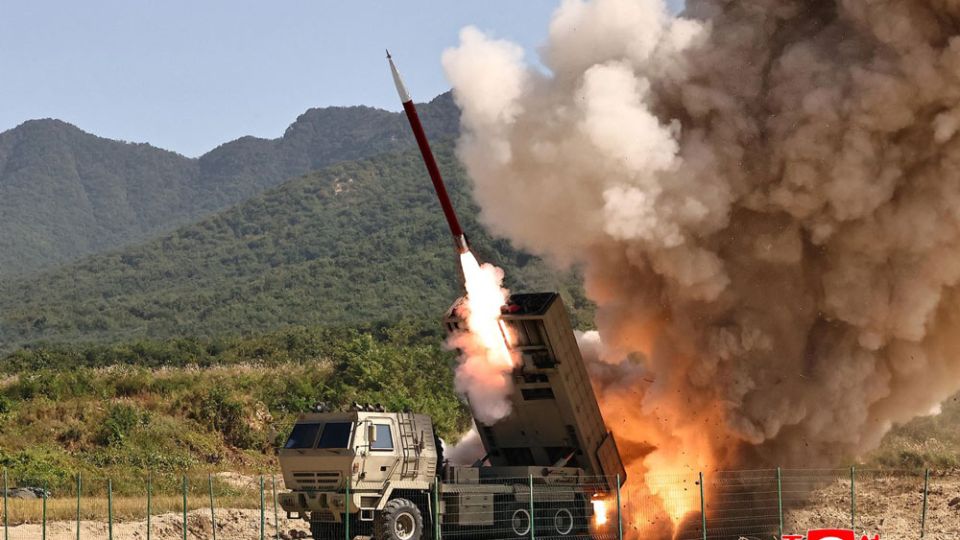
North Korea announced it has successfully tested an upgraded 240 mm multiple-launch rocket system, featuring extended range and improved accuracy. Conducted on Tuesday, the test reportedly featured new guided rockets capable of striking targets up to 115 kilometers away, depending on flight mode, according to the country's state-run news agency.
The military described the rockets as employing an "autonomous pinpoint guide system," enabling precision strikes at 100 kilometers via a standard ballistic trajectory, with extended range to 115 kilometers using a glide flight maneuver. Officials claimed the development would substantially reshape frontline artillery readiness along what Pyongyang terms its "southern border."
Pak Jong-chon, a top party military official, emphasized the need to concentrate the nation's most potent weapons systems near the inter-Korean border and stated that North Korea has rapidly replaced long-range strike assets with newer equipment.
Yang Moo-jin, a distinguished professor at the University of North Korean Studies, noted that while older 240 mm rockets had a range of about 70 kilometers—primarily threatening the Seoul area—the new system could reach major U.S. bases at Pyeongtaek and Osan, as well as parts of northern Chungcheong Province.
He explained that the combination of increased range, precision guidance, and a maneuvering glide phase marks a shift from conventional artillery rockets toward more advanced, missile-like capabilities. The low-altitude glide could be designed to evade South Korea’s layered missile defense network around the capital.
Yang also pointed out the weapon’s potential for mass production due to its relatively low cost versus ballistic missiles, allowing quicker deployment and possible export as a revenue-generating system for Pyongyang.
This development comes amid North Korea’s broader effort to bolster strike capabilities since redefining inter-Korean relations as those between "two hostile states" in late 2023. Analysts interpret the strategy as moving away from defensive deterrence toward more aggressive coercion.
South Korea’s military confirmed it monitored launches toward the Yellow Sea and is analyzing their flight characteristics. Seoul stated it remains on high alert and continues close coordination with the United States to deter further provocations.