 Mekong Monitor
Looted Khmer Artefacts Set to Return Home to Cambodia
Eighteen Khmer artefacts dating from the 10th to 13th centuries have been handed to Cambodia's embassy in London ahead of their return. Recovered by London police, they will be studied by Cambodian specialists once they arrive home.
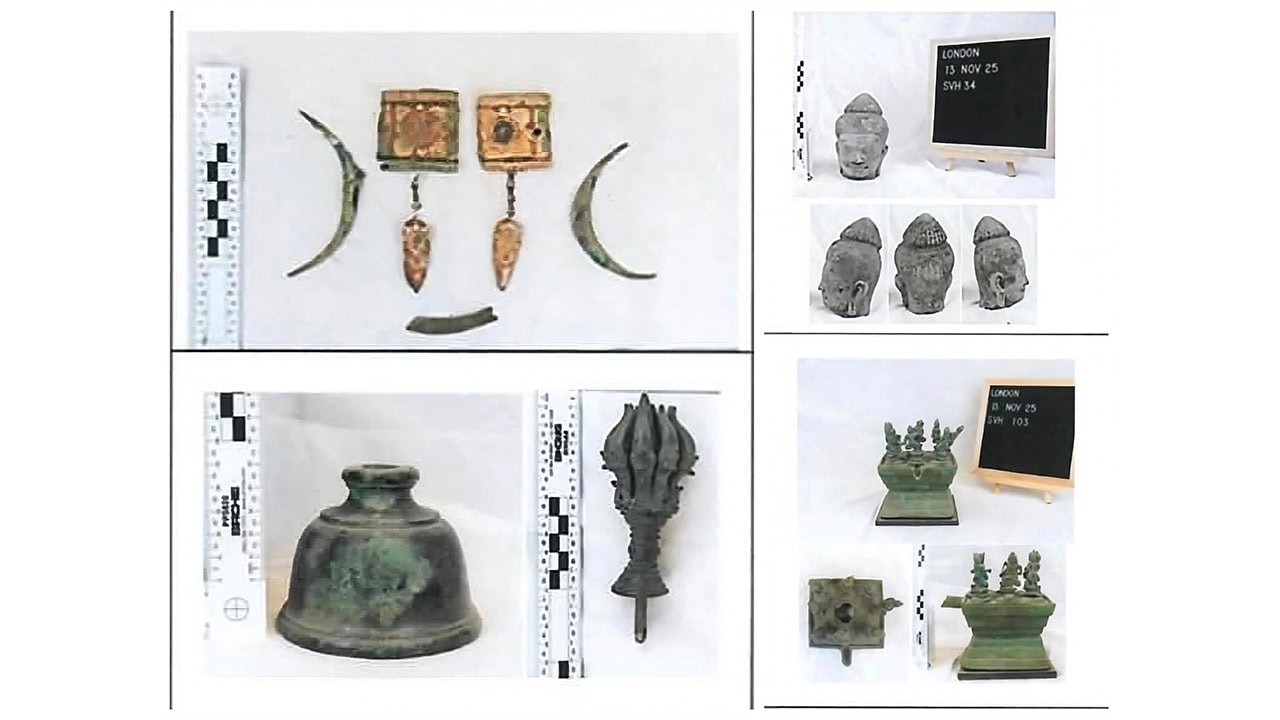
A total of eighteen Khmer artefacts and fragments, made between the 10th and 13th centuries, have been handed over to Cambodia's embassy in London ahead of their journey back to the Kingdom. Once they arrive, specialists will investigate where the pieces came from and how they connect to Cambodian communities.
The Ministry of Culture and Fine Arts announced the handover in a statement issued on October 30.
The items were recovered in London in November 2025 by the Art and Antiques Unit of the Metropolitan Police Service, with help from the Heritage Crime Task Force of the Organisation for Security and Co-operation in Europe (OSCE). After confirming that the objects originated in Cambodia, the ministry filed a formal restitution request in September 2026 and will organise their transport home.
What the collection contains
The group includes stone sculptures, bronze ritual objects and jewellery fragments, which offer insight into the craftsmanship and religious practices of the Angkor period. Notable pieces include:
- A sandstone head in the Baphuon style, dating to the second half of the 11th century
- A Bayon-style sculpture head from the late 12th century
- A Buddhist bell with a vajra-shaped handle
- Dancing figures on a pedestal
- Decorative ornaments with pendants
- A bronze lamp used in religious ceremonies
According to the ministry, the objects reflect centuries of Khmer artistic achievement, as well as the region's traditions, religious beliefs and everyday cultural life.
Why they matter beyond art
Their significance goes well beyond their artistic and historical worth. In Khmer belief, consecrated statues are considered living beings with souls, and they serve as homes for deities. When such sacred objects are taken from their original settings, communities lose more than physical heritage. They also lose their links to history, beliefs, customs and shared memories, the ministry said.
Next steps
After arrival, specialists from the ministry and the National Museum of Cambodia will study the objects and compare their findings with field research and archaeological site records. This work should give a clearer understanding of each piece's history and origin, and support Cambodia's wider effort to identify and recover cultural property that was illegally removed from the country.
The ministry described the return as another important achievement in the Kingdom's push to bring its lost heritage back. It thanked the Metropolitan Police Service and the OSCE task force for their work against the illegal trade in cultural property, and it acknowledged legal advisers Bradley J. Gordon and Melina Antoniadis for helping secure the return.
Cambodia remains committed to seeking the restitution of cultural property taken unlawfully from its territory, the ministry said. It welcomed continued cooperation from governments, law enforcement agencies, museums, researchers and private collectors.