 Mekong Monitor
Khuon Sudary Urges ASEAN Lawmakers to Press for an End to Thai Occupation and Civilian Displacement
Cambodia's National Assembly President told ASEAN parliamentarians in Manila to press for an end to Thailand's occupation of Cambodian territory, as more than 20,000 civilians remain unable to return home. She also called for the revival of border demarcation work and the implementation of existing peace agreements.
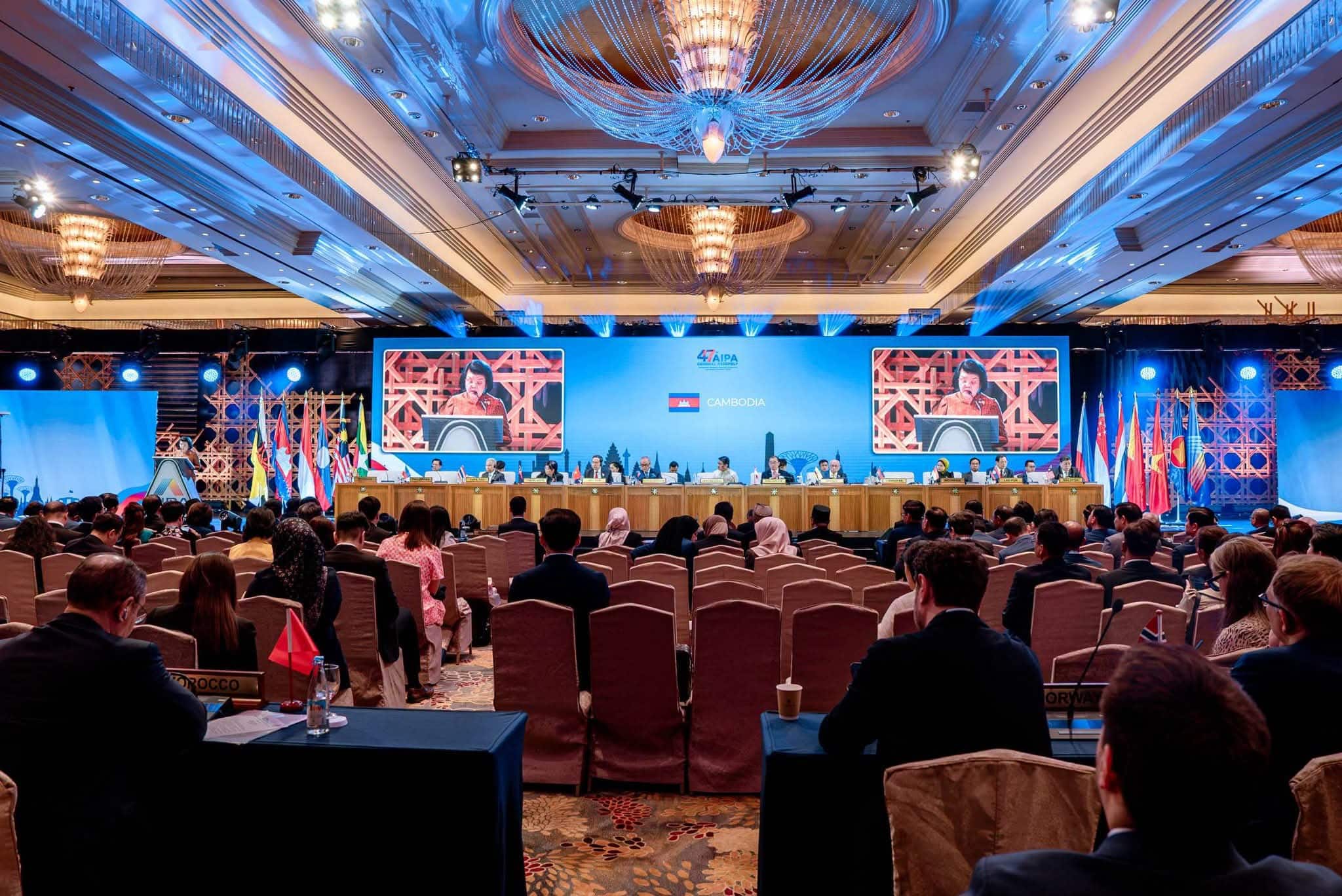
National Assembly President Khuon Sudary has called on ASEAN parliamentarians to uphold international law and to demand an end to what she described as Thailand's unlawful occupation of Cambodian territory. She stressed that more than 20,000 civilians are still displaced and cannot return to their homes.
Speaking at the 47th General Assembly of the ASEAN Inter-Parliamentary Assembly (AIPA) in Manila, the Philippines, on November 18, Sudary urged the immediate implementation of existing peace agreements. She also called for joint border surveys and demarcation work to restart without delay.
According to a statement from the National Assembly, Sudary voiced serious concern about ongoing activities by Thai armed forces in areas that Cambodia maintains are part of its territory. She said these actions break international law and bilateral and international treaties.
She repeated Cambodia's firm opposition to any attempt to change international borders by force or to create facts on the ground before legitimate joint mechanisms have made a decision.
Civilians Still Waiting to Go Home
Sudary tied the plight of border residents to Cambodia's push for progress through diplomatic and technical channels. She noted that more than 20,000 civilians remain unable to return home and called for their situation to be resolved without further delay.
She recalled comments made by a UN special rapporteur during a visit to the affected areas in July, who said the displaced people need to go home and deserve to do so. Sudary said the commitment to making their return possible must be honored.
Calls for Implementing Agreements
Sudary highlighted the need to restart survey and demarcation work under the Joint Boundary Commission (JBC), the bilateral body that handles land border issues. She also urged full implementation of several agreements and understandings, including the Kuala Lumpur Peace Accord of October 26, 2025, the Joint Statement of December 27, 2025, the Fuxian Consensus of December 29, 2025, and what she called the 'Cebu spirit' of May 7, 2026.
While criticizing Thai military activity, she thanked ASEAN member states and the wider international community for backing the ceasefire, dialogue, and respect for international law. She also acknowledged the ASEAN Observer Team for monitoring and verifying the ceasefire.
Maritime Dispute and ASEAN Solidarity
Sudary also addressed the separate maritime dispute between Cambodia and Thailand. She said Cambodia had opted for compulsory conciliation under the UN Convention on the Law of the Sea (UNCLOS) and described Thailand's participation in that process as a hopeful sign. She framed the legal route as part of Cambodia's commitment to resolving disputes peacefully, while maintaining that progress on the land border and the return of displaced civilians remains a priority.
Her remarks were delivered under the assembly's theme, 'Parliaments Securing a Peaceful, Prosperous, and People-Centred ASEAN.' She called the theme timely given rising strategic mistrust, geopolitical rivalry, geoeconomic fragmentation, and the use of economic ties as leverage.
She argued that lasting regional peace depends on trust, respect for international law, preventive diplomacy, and effective tools for settling conflicts peacefully. She urged ASEAN members to stand together, noting that the region faces shared challenges.
In closing, Sudary asked parliamentarians to use their collective voice to defend ASEAN's core values, principles, norms, and rules, and to turn regional commitments into concrete results. She made the point that deeds matter more than declarations.