 Mekong Monitor
Khmer Wedding Traditions May Soon Win UNESCO Recognition
Cambodia could learn as early as December whether its traditional Khmer weddings will be added to UNESCO's Representative List of Intangible Cultural Heritage. The sbai sash, a central part of the wedding ritual, is being showcased at the Francophonie Summit in Phnom Penh.
A decision on whether traditional Khmer weddings will be added to UNESCO's Representative List of the Intangible Cultural Heritage of Humanity could arrive as early as December.
At the Francophonie Village in Phnom Penh, Cambodia is showing off the sbai Khmer, a traditional shoulder sash worn during wedding ceremonies.
Som Mab, a secretary of state and spokesperson for the Ministry of Culture and Fine Arts, told reporters that Cambodia has finished preparing its nomination file and could hear the official outcome early next month.
The nomination is on the agenda for the 21st session of the Intergovernmental Committee for the Safeguarding of the Intangible Cultural Heritage, which takes place from November 30 to December 5 in Xiamen, China. The evaluation body has recommended inscription, but the committee will make the final call.
A Hands-On Cultural Showcase
Pich Chanmony, wife of Prime Minister Hun Manet, introduced the sbai Khmer to French First Lady Brigitte Macron and other guests. The group gathered around a frame holding a gold-toned sash, observed the embroidery process, and tried adding decorative details to the pattern themselves. Brigitte Macron also put on a finished sash and wore it draped over one shoulder.
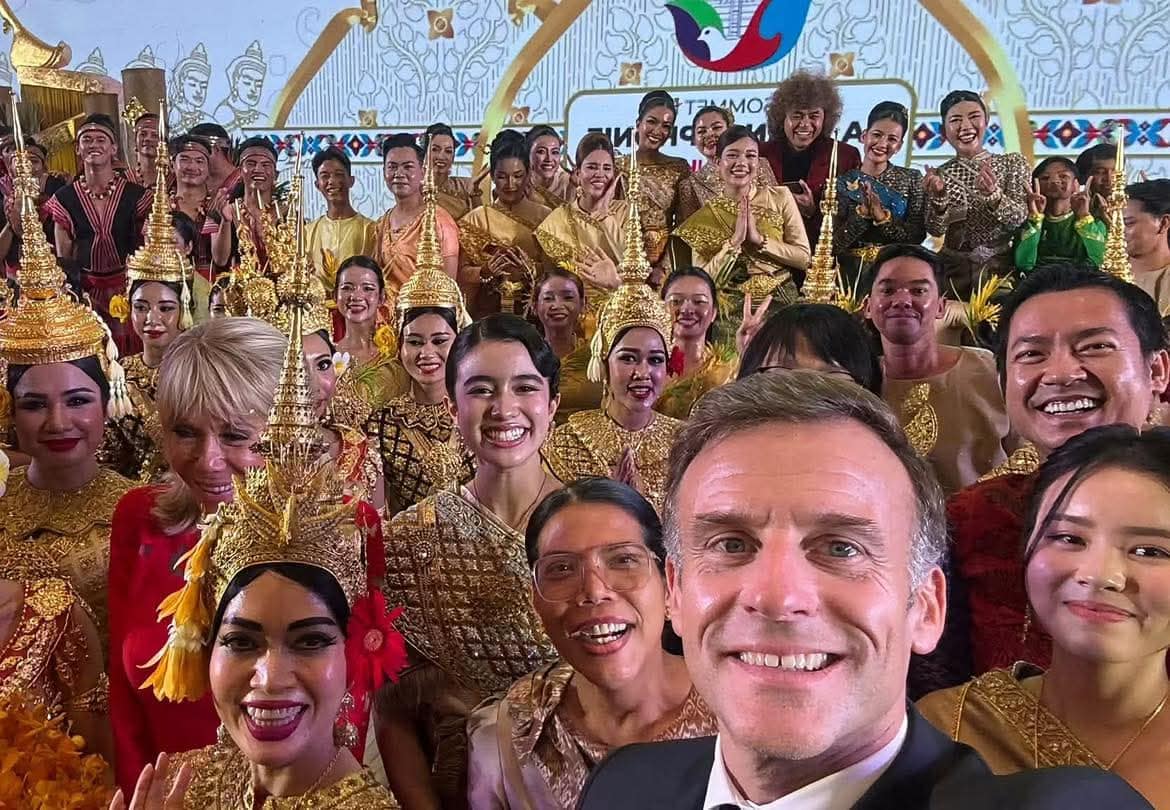
Other images from the summit show French President Emmanuel Macron and his wife posing with a Cambodian dancer in a gilded headdress and embroidered costume. The president also took a selfie with the performers, while Brigitte Macron smiled among the dancers.
Why the Sash Matters
Mab called the sash a central element of Khmer weddings. He pointed to the Preah Thong Taong Sbai Neang Neak ritual, in which the groom holds the end of the bride's sash and walks behind her. The gesture echoes the legend of Prince Preah Thong and the naga princess Neang Neak.
He described hosting the summit as a point of national pride and a chance to share Cambodian culture with a global audience. According to Mab, Cambodian products, arts and music appeared throughout the summit program, from the Francophonie Village and FrancoTech to official welcomes at the airport.
"All of these events drew on Khmer traditions, and they carried the warmth and friendliness of our people," he said.
The Francophonie Village also includes performances, displays of the traditional sampot and other garments, and leaflets that explain their history and uses. Held alongside the 20th Francophonie Summit, the village is free and open to the public from November 13 to 17 at Wat Botum Park.
The Path to Recognition
Cambodia submitted the nomination on April 2, 2024. The dossier covers wedding rituals, traditional music and songs, ceremonial clothing and adornments. The ministry said people who practise these traditions and help organise weddings in their communities contributed to preparing the submission.
If approved, traditional Khmer weddings would join the Royal Ballet of Cambodia, which was inscribed in 2008, and the practices surrounding the krama, Cambodia's traditional woven cloth, which was inscribed in 2024.