 Mekong Monitor
Indonesia Names 20 Firms as Suspects in Crackdown on Forest Fire Culprits
Indonesian police have named 20 companies as suspects in 2026 forest and land fires, four of them foreign-owned. The move is part of a widening crackdown on plantation firms blamed for the regional haze.
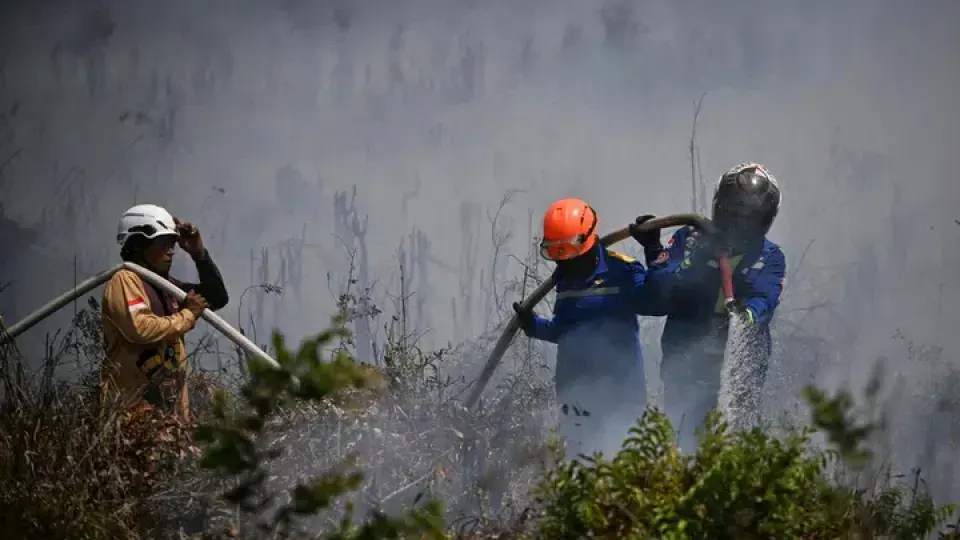
Indonesian police have named 20 companies as suspects in this year's forest and land fires, as their crackdown on plantation firms blamed for the regional haze gains momentum. Four of the companies are foreign-owned, with investors from Singapore, Malaysia and South Korea.
On October 29, Asep Safrudin, head of the national police criminal investigation department, announced the four foreign-owned suspects at a briefing in Pontianak, the capital of West Kalimantan. He identified them only by their initials: HKI, RKA, API and AI. The other 16 suspects are Indonesian-owned. Police gave no details on the links or parent groups of any of the companies.
The 20 suspects were drawn from a pool of 97 companies under criminal investigation over the fires. Police said 22 of those 97 have foreign backing, and the remaining 77 are still being investigated.
Where the foreign money comes from
Singapore accounts for the largest share of the 22 foreign-backed companies, with nine. The rest break down as follows:
- Malaysia: eight
- Britain: two
- China, Japan and South Korea: one each
Government and regional response
Asep said the state will not allow fires, whether set on purpose or caused by carelessness, to produce profits for a handful of reckless operators while the public and the state bear the environmental damage. He is a three-star general.
Police have also asked authorities to revoke the permits of 23 companies. Their reasons include repeated fires on their land, blazes that started inside their concessions, inadequate firefighting equipment, and fires that spread across more than 500 hectares.
At a Cabinet meeting on October 21, President Prabowo Subianto directed police and prosecutors to pursue both individuals and corporations. He described the fires as a crime against humanity, said many companies share the blame, and likened them to environmental terrorism.
Singapore has also stepped up its response. Its National Environment Agency issued legal notices to 10 Indonesian companies, requiring them to hand over documents and information about any links to the fires. Senior executives from those 10 firms were called to a meeting with Senior Minister K. Shanmugam on October 28. Separately, the Singapore Exchange has asked seven Singapore-listed agricultural companies about their operations and any connection to the fires.
Indonesian police did not say on October 29 whether any of the four foreign-owned suspects are among the firms Singapore is targeting.
Charges and penalties
The companies face charges under the 2009 Environmental Protection and Management Law, which covers deliberate and negligent acts that damage the environment, Asep said. Fines range from 3 billion rupiah (S$211,000) to 15 billion rupiah.
Indonesian regulations require plantation operators to maintain fire watchtowers and CCTV cameras, at least one water reservoir for every 500 hectares, pumps, hoses and trained firefighting crews. They must also set aside a budget for fire control and run fire drills every six months. Inadequate equipment was one of the reasons cited for the 23 proposed permit revocations.
Asep warned that the number of corporate suspects will keep growing as investigations proceed.
Individuals
Police have also filed 287 more reports against individuals, covering about 5,860 hectares, and have named 245 suspects. Most are accused of clearing land by burning, either deliberately or through negligence.
Individuals face up to 15 years in prison under the 1999 Forestry Law. Under the plantation and environmental laws, they face up to 10 years in prison and fines of up to 10 billion rupiah.