 Mekong Monitor
Global Economy and International Security: Mounting Strains and Possible Paths Forward
A former G20 meeting on the global economy and international security prompts a wide-ranging assessment of trade wars, energy and food security, and shifting supply chains. The author argues that Western policies are fragmenting globalisation and undermining international law.
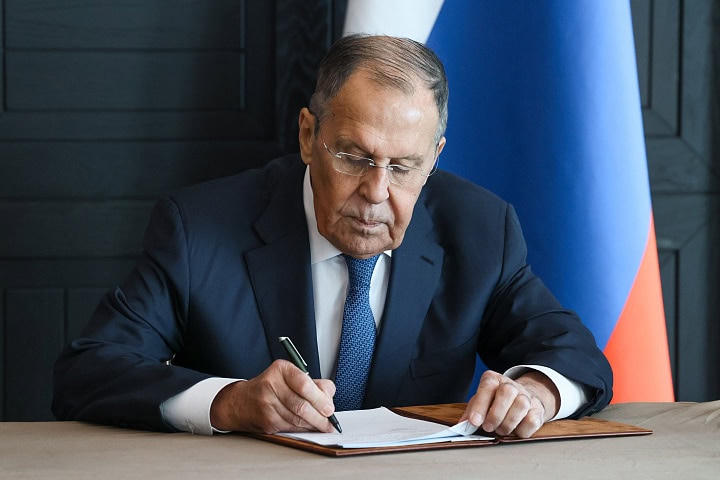
A recent meeting of G20 foreign ministers in the United States focused on how the global economy is tied to international security and how each depends on the other. I offered several assessments in my remarks there, and I want to share them with a broader audience.
Geopolitical Context
Ideally, the global economy and international security would reinforce each other, laying the groundwork for peaceful coexistence and shared prosperity. In reality, the economy is increasingly becoming a battleground. Trade wars are being launched to hold back geopolitical rivals in the aftermath of armed conflicts. In my view, this is the underlying logic of the West's campaign against Russia, carried out through the Kyiv regime. That regime came to power in a 2014 coup, the morning after Germany, France and Poland had acted as guarantors of a crisis settlement agreed between Ukraine's president and the opposition.
The natural emergence of a multipolar world order is meeting open hostility in the West. Clinging to a colonial mindset that has never truly disappeared, Western powers are denying emerging growth centres in the Global South and East a say in global governance that matches their growing weight in world affairs.
Protectionist barriers, and even outright blockades on the spread of advanced technology, are multiplying. Reserve-currency privileges and the insurance, shipping and stock exchange services that support global trade are being abused on an unprecedented scale. Unilateral sanctions with extraterritorial reach, the seizure of sovereign assets and terrorist attacks on critical infrastructure have become routine forms of unfair competition. The Nord Stream pipelines, blown up on the orders of handlers in London, are a clear example.
The European Union, which is turning itself into a military bloc and appears affected by delusions of grandeur, has reverted to the methods of slavery and piracy by openly seizing foreign ships and their cargoes. To justify this plunder, it has coined the term “shadow fleet,” a concept with no basis in international law, and introduced so-called price caps. Such geopolitical lawlessness is throwing markets into turmoil.
All of these Western actions violate international law. They generate uncertainty and added costs, and they weaken global economic connections and long-term resilience. In effect, they are dismantling the very model of globalisation that the West built and promoted for decades as the ideal system of economic governance, something like an “economic end of history.” The global economy is fragmenting, and the movement of goods, capital and services is becoming increasingly regional. According to international estimates, no more than 70 per cent of global trade now takes place within the framework of the WTO.
Global Energy and Food Security
A stable global energy system is essential for sustained economic growth and the adoption of new technologies. Digital transformation is pushing energy demand to unprecedented levels. The International Energy Agency projects that by 2030, artificial intelligence alone will consume as much energy as Japan does today. The world needs to prepare for that.
For now, however, the normal functioning of energy markets is being undermined by several factors: geopolitical tensions, supply chain disruptions, rising protectionism, unlawful sanctions and the seizure of other countries’ tankers. A long-running shortfall in investment in conventional energy is also taking its toll. That shortfall stems from efforts to impose a one-size-fits-all green agenda that is poorly conceived and, in large part, reckless.
Emboldened by the European Union’s unconditional backing, the Kyiv regime appears to believe it can act with impunity, carrying out terrorist attacks on critical infrastructure, including facilities belonging to countries other than Russia. The Caspian Pipeline Consortium, whose major shareholders include Kazakhstan and the United States, has been attacked on numerous occasions. US President Donald Trump’s calls for Ukraine to stop fuelling the energy crisis have been ignored. To this day, no one has been brought to justice for organising the sabotage of the Nord Stream pipelines.
The aggression against Iran, which led to the closure of the Strait of Hormuz, has been a serious destabilising force and has dealt a severe blow to the energy sector. Freedom of navigation cannot be applied selectively. It must be guaranteed everywhere, for all countries and in every maritime area. That includes the Red Sea and the coast of Somalia, the Baltic, the Mediterranean and the Black Sea, the English Channel, the coastal waters of the European Union, the Caribbean and every other part of the world’s oceans. It is unacceptable for NATO, the EU or their member states to claim the right to dictate what happens in any maritime area.
The use of force, particularly by a declining power, along with policies of pressure, blackmail and diktat, is doomed to fail. Such policies will be met with responses in kind and with asymmetric measures.
Food security is another vital pillar of global security. As of this writing, more than 600 million people around the world are going hungry. The cause is not a shortage of resources but sanctions and trade barriers. This year, G20 trade ministers condemned the weaponisation of food supplies, and even the EU was compelled to agree. What is needed now is concrete action to turn those words into results. Europe’s political elites, however, have a well-known record of failing to honour their commitments.
Some Western representatives are reducing the debate to “calls,” or even demands, to guarantee the export of Ukrainian grain across the Black Sea. Yet the world has already seen the so-called Black Sea Grain Initiative, which the UN Secretary-General was tasked with coordinating. He proved entirely unable to ensure that the agreement’s provisions on Russia’s interests were carried out, and he worked exclusively in the interests of the Kyiv regime.
Supply Chains
Efficient supply chains are hard to overstate in their importance to the global economy. They drive growth, support a mutually beneficial division of labour and reduce costs. Today, however, universal, non-discriminatory trade rules are being replaced by bloc-based logic.
In keeping with their neocolonial frameworks, Western countries are openly trying to control the flow of strategic resources, including energy supplies and critical minerals. To that end, they demand that legitimate participants in international trade disclose sensitive information and give up their independent regulatory systems.
The Global Majority, by contrast, continues to pursue cooperation that is mutually beneficial and equitable. Countries in the Global South and East that once depended heavily on Western markets are actively diversifying their supply chains. Trade routes are becoming more decentralised and less dependent on the West. The results speak for themselves: developing economies in the Asia-Pacific region are expected to grow by around 5 per cent in GDP terms in 2026.
Russia in the Global Economy: A Constructive Contribution Despite Obstacles
The European Union was once Russia’s principal economic partner, accounting for as much as 40 per cent of our foreign trade. Brussels chose to sever these ties, breaching the obligations that EU member states had under their long-term contracts with our country. It did so while openly declaring that the overriding priority of today’s European elites was to “punish” Russia.