 Mekong Monitor
From Royal Kitchens to Street Food: Cambodian Chefs Revive Khmer Culinary Heritage
Young Cambodian chefs are reviving royal recipes, forgotten ingredients and street food classics at the Masters of Khmer Flavors event in Siem Reap. Their work aims to preserve the Kingdom's culinary heritage for future generations.
A new generation of Cambodian chefs is bringing Khmer food traditions back to life. They are recreating royal dishes that are more than half a century old, rediscovering local ingredients that have fallen out of use, and reimagining everyday street food as modern plates. Their goal is to protect the Kingdom's culinary heritage for future generations.
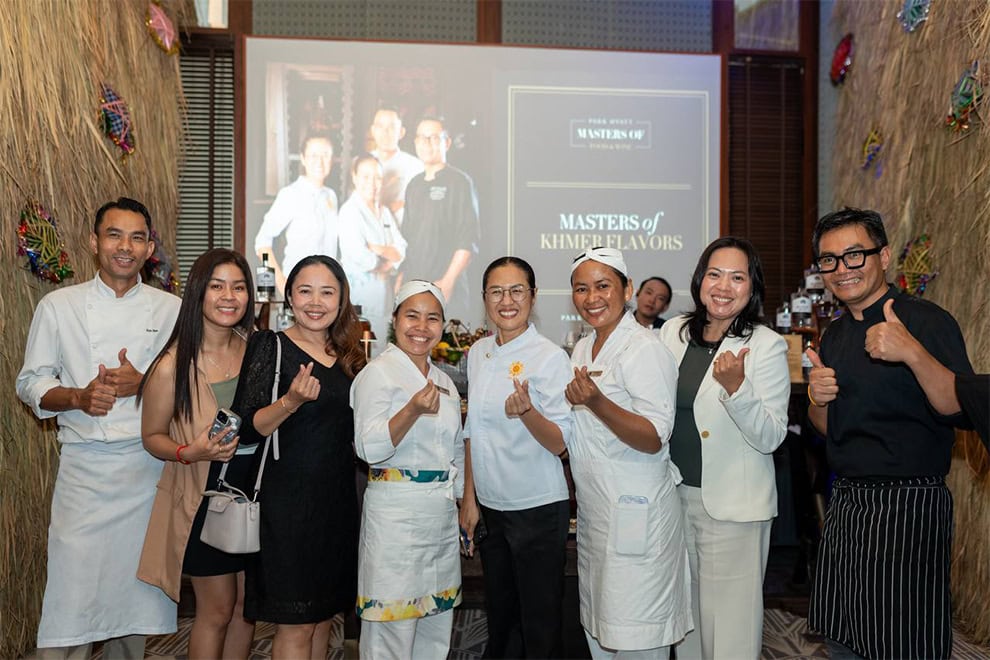
The chefs came together at the “Masters of Khmer Flavors” event at Park Hyatt Siem Reap on October 8. Each presented a four-course meal inspired by the royal kitchens, the Mekong and Tonle Sap rivers, everyday Cambodian cooking and tropical produce grown locally. The event was part of a wider culinary festival running from October 8 to 10, and guests were entertained by traditional Apsara dancers.
The lineup included Rotanak “Chef Nak” Ros, Chanrith Van, Kimsan Pol and Kimsan Soan. Each brought a distinct view of how traditional Khmer flavors can endure alongside modern cooking techniques.
Royal dishes from the palace
Nak researches and documents Cambodian recipes. She believes preserving culinary heritage requires much more than copying dishes from old cookbooks. It also means tracking down forgotten ingredients, working out how dishes were originally cooked and speaking with people who still remember the royal food traditions.
For the event, she prepared Natang Sach Kdam, a crab dish tied to royal cuisine that she said was served at the Royal Palace between the 1950s and 1970s. It belonged to a category of royal food called preah saoy, made for members of the royal family and, on special occasions, for visiting foreign dignitaries.
“At that time, the Palace was also a hub for cultural and diplomatic exchange, hosting guests from abroad. This dish was one of the ones prepared to welcome them,” she said.
Rebuilding such dishes has been difficult. Decades of conflict and social upheaval left many traditional recipes and ingredients unfamiliar to younger Cambodians.
Nak began by studying surviving historical documents. She then set out to identify and recover ingredients that had once been central to Cambodian cooking but were no longer widely recognized. These included Cambodian cardamom, using its seeds, leaves and other parts, as well as black ginger and other traditional staples.
“Before I started researching Cambodian cuisine, I didn't even know how cardamom seeds or leaves were used in cooking,” Nak said.
“When we started studying these ingredients, we had to find the plants, grow them again and figure out how to cook with them,” she added.
Nak explained that the Khmer Rouge period dramatically changed Cambodia's food culture, when getting enough to eat mattered far more than elaborate cooking. The deaths of older generations and the scarcity of written records have made accurate reconstruction even harder.
“Many of the elders who knew these traditions have passed away, and few documents remain. So we have to study what survives, rediscover the ingredients and bring them back into use,” she said.
Repeated testing is also essential, since researchers rarely have firsthand memories of how the original dishes tasted. Nak consulted royal family members who knew palace life and its cooking customs, to better understand the balance of flavors and preparation methods. Some of them also tasted the reconstructed dishes and offered feedback.
“Their feedback matters a great deal to us. It helps us understand the ingredients and flavors we are trying to recreate, and it gives us more confidence,” she said.
Flavors from the waterways
While Nak looks back to royal history, chef Chanrith Van takes his cues from Cambodia's rivers, especially the Mekong and Tonle Sap. Freshwater fish and seasonal produce from these waters have long shaped local eating habits.
For the event, he made a taro soup with Cambodian freshwater fish, prahok and other local ingredients. It is a countryside dish usually eaten during the rainy season. Traditionally it is made with snails, but he used snakehead fish instead to suit the dining setting while keeping the familiar taste.
Chanrith said the dish is tied to his childhood. He grew up in a family that sold fish, and his parents made their own prahok at home. “These ingredients and flavors have always been part of my life,” he said.
He noted that Cambodia's freshwater systems supply a wide range of fish for both traditional and modern dishes, which reduces reliance on imported ingredients. He also stressed the importance of fermented foods, especially prahok, in creating the distinctive flavor of Khmer cooking.
In his view, the combination of local fish, seasonal vegetables, fresh herbs and fermented ingredients reflects how closely Cambodian food is linked to its natural environment.
He wants visitors to learn the cultural story behind Khmer dishes rather than treating them as unfamiliar novelties. “We want visitors to understand more than just the food, because cuisine is connected to our culture, our people and our civilization,” he said.
Fresh ingredients such as lemongrass, kaffir lime leaves and other local herbs are among the strengths of Cambodian cooking, he added. From teaching cooking classes, he has seen international visitors impressed by fresh Cambodian herbs, which many had previously only encountered dried.
Hearty comfort food from the heartland
Kimsan Pol approached preservation from another angle, drawing inspiration from nom pang khor ko, a beef stew served with bread that is a familiar breakfast across Cambodia.
Rather than reproducing the street-stall version, she reworked the dish with beef tongue, slow cooking and a contemporary presentation. She chose it for its rich flavor, its accessibility and her own fondness for it since childhood.
“I have always loved nom pang khor ko because the flavor is so rich, especially with herbs like rice paddy herb and coriander,” she said.
Beef tongue needs long cooking to become tender. Pol drew on techniques she learned during her training in France. She cooked the meat slowly at a controlled temperature, then sliced it and finished it over charcoal for a smoky aroma. The sauce is served separately, and the bread is finished with butter and coriander.
Although she changed the cooking method and presentation, Pol said keeping the original taste was her top priority. “I still preserve the original flavor, because taste is very important. I don't change the flavor of our Khmer food, I change the cooking techniques,” she said.