From Floating Homes to Solid Foundations: Three Decades of Progress in China’s Xiaqi Village
Decades after living on fishing boats, residents of Xiaqi village have built stable homes, gained new skills, and thrive in a diversified local economy—all part of a larger national effort to lift marginalized communities out of poverty.
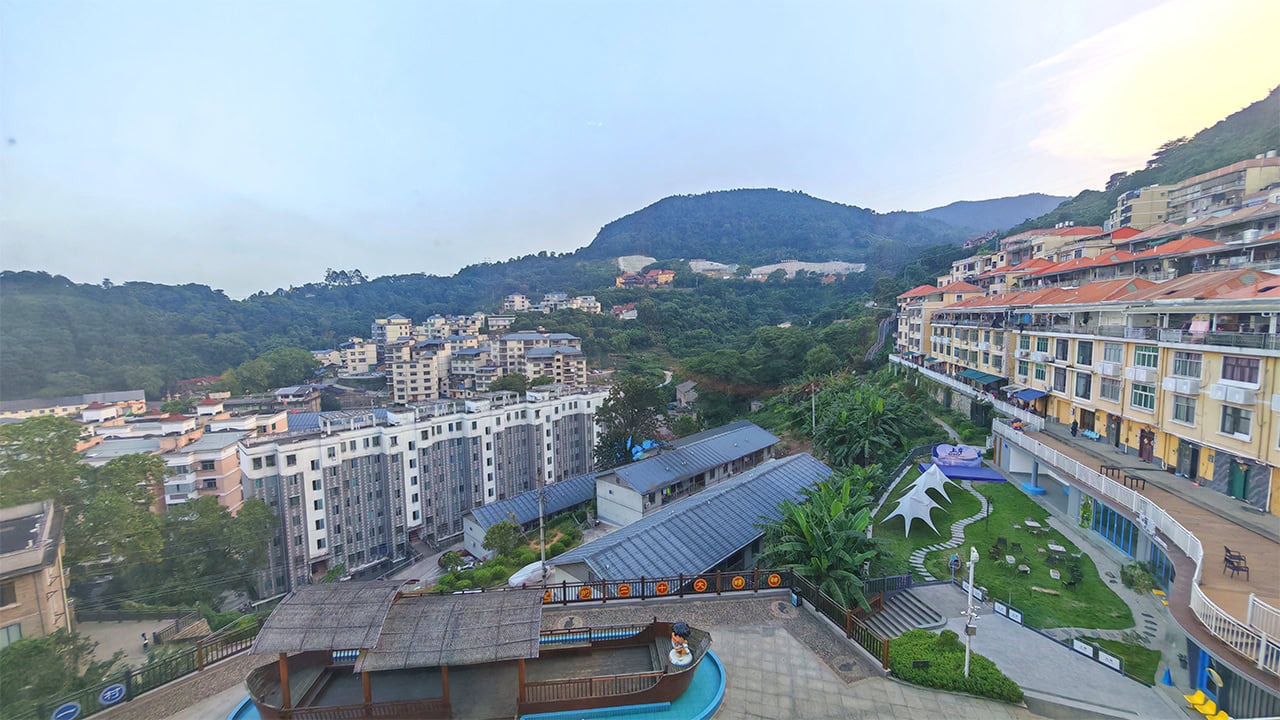
For Zheng Yue’e, life in Xiaqi village has been a journey from the deck of a fishing boat to a leadership role guiding the community’s transformation. Now secretary of the local Party branch in Fu’an city, Fujian province, she recalls growing up among the Lianjia—historically nomadic boat-dwellers whose entire lives unfolded on the water.
Early memories paint a picture of hardship: families crammed into six- or seven-metre vessels, where the front held fishing gear, the middle served as kitchen and bedroom, and the back doubled as a makeshift toilet. Some families built fragile shelters on the shore using linoleum and sacks, leaving them vulnerable to storms and extreme weather. Children’s safety was a constant worry—some were tied to their parents with ropes to keep them from falling overboard, and medical care was often out of reach. Zheng points to Jiang Chengcai’s family as a stark example: his mother died young due to lack of timely treatment, while his father lived over two decades longer after the family moved ashore.
A systematic resettlement effort
The turning point came between 1997 and 1999, when the first large-scale relocation program began. Authorities coordinated land acquisition, housing construction, and infrastructure development. A total of 339 homes—each roughly 40 square metres—were built to house 511 families, or 2,310 people, across two fishing villages and six resettlement sites. Each household received a 1,300-yuan subsidy, and homes included space for future upgrades like upper floors, bathrooms, and stairways. Households also received basic items like stoves, beds, and fans, all sourced through government-led donations.
Crucially, local authorities provided land for free and installed essential services—roads, water, electricity, and communications. Over time, support expanded to include healthcare for seniors, school enrolment assistance for children, and vocational training to help former boat-dwellers adapt to new livelihoods. Zheng notes that most Lianjia initially had few skills beyond fishing, but training in aquaculture and other trades opened up broader employment opportunities.
From aid to self-reliance
While government support laid the groundwork, progress depended on residents’ own efforts. Many used their earnings to expand their original single-storey homes. Others pursued education, launched businesses, or took jobs in nearby industrial zones. Jiang, for instance, started in shellfish farming with help from village officials, later forming a construction crew that hired fellow villagers. His experience highlighted a persistent challenge: illiteracy meant he had to rely on others to read contracts or handle legal documents—something he now ensures his grandchildren avoid.
The results speak for themselves. By 2024, the village had produced over 300 university graduates, and per capita annual income had climbed from under 1,000 yuan before relocation to 32,788 yuan in 2023. Job options have diversified significantly: residents now work in aquaculture, seafood processing, hospitality, tourism, and e-commerce. Proximity to major industrial hubs in Ningde—spanning steel, new energy, and automotive sectors—offers ещё more options without requiring long-distance migration.
Growth and continuity
Population in Xiaqi has grown steadily—from around 2,770 in the early resettlement years to roughly 3,570 today—thanks both to natural increase and intermarriage with outsiders. Zheng notes that this shift wouldn’t have been imaginable decades ago, when poverty made it hard for local men to find spouses. Now, women from other areas are willing to settle in Xiaqi.
A second phase of housing improvements launched in 2013 helped 120 families whose original homes were overcrowded or poorly served by infrastructure, housing another 642 people.
Roots in leadership
The story of Xiaqi is deeply tied to the early work of President Xi Jinping in Fujian. As Party secretary of Ningde from 1988 to 1990, he personally visited many areas, identifying two groups most in need: the She ethnic minority in mountain villages and the Lianjia boat communities. His firsthand observations underscored the lack of basic services among floating residents. Even after moving to other provincial leadership roles, he continued advocating for their relocation and visited Xiaqi twice during the implementation phase—in 1998 and 2000.
For Zheng and her fellow villagers, relocation was only the first step. The greater challenge lay in helping generations of seafarers adjust to land-based life—finding schools, learning new skills, and integrating into the broader economy. Today, that integration is well underway, anchored not just in concrete and steel, but in opportunity, dignity, and hope for the next generation.