 Mekong Monitor
France and Cambodia: Charting a New Chapter in Their Partnership
French President Emmanuel Macron's upcoming state visit to Cambodia, timed with the 20th Francophonie Summit in Phnom Penh, offers a chance to turn a long-standing friendship into a broader strategic partnership. The article looks at the history, leader-level diplomacy, and development ties behind that opportunity.
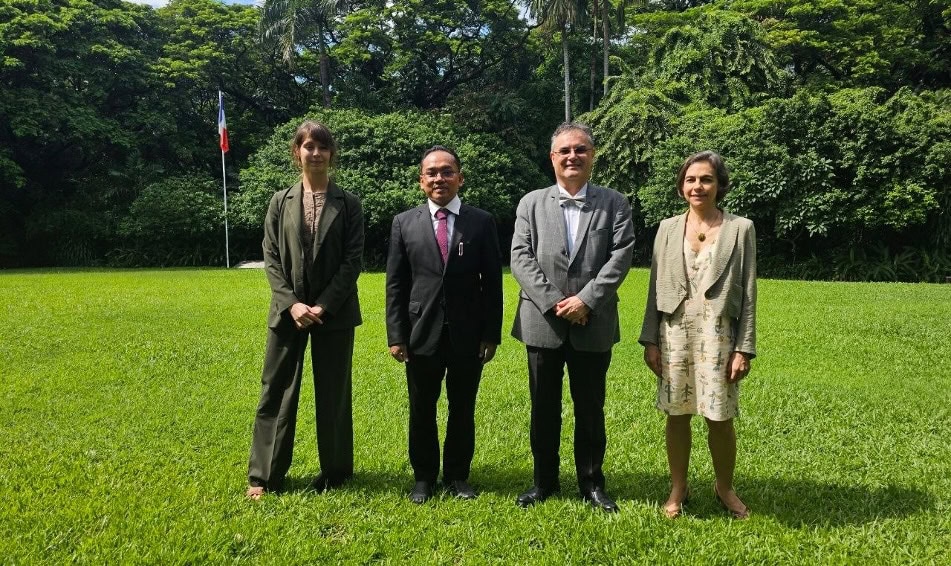
Relations between Cambodia and France are opening an important new chapter. Built on shared history, cultural ties, the French language, and decades of development cooperation, the partnership has proven its resilience and still holds considerable promise for both countries.
With French President Emmanuel Macron due to make a state visit to Cambodia this month, the two nations have a chance to deepen their friendship and build a firmer framework for cooperation at a time of growing global complexity.
The timing adds weight to the trip. It coincides with Cambodia hosting the 20th Summit of the International Organisation of La Francophonie (OIF) in Phnom Penh, scheduled for November 14 to 16. Macron's attendance will carry significant diplomatic and political meaning, signaling France's ongoing commitment to Cambodia and its recognition of Cambodia's growing role in the Francophone community.
A Friendship Rooted in History and Mutual Respect
The ties between France and Cambodia go well beyond formal diplomacy. Their shared past has produced lasting cultural, educational, linguistic, and institutional links between the two societies. Although that history has had its turns and complexities, both sides have continued to build a relationship grounded in dialogue, cooperation, and mutual understanding.
France played a meaningful role in Cambodia's modern recovery, especially in supporting the peace process and post-conflict reconstruction after the 1991 Paris Peace Agreements. It was an important diplomatic player in the international effort to restore peace, and it went on to help with institutional development, cultural preservation, education, healthcare, and economic recovery.
One of the most visible examples of this partnership is France's work to preserve Angkor. Through archaeological research, conservation expertise, and international collaboration, France has helped protect Cambodia's remarkable cultural heritage. That work shows the relationship is about more than diplomacy. It is also a shared responsibility to safeguard a legacy that belongs to all of humanity.
Macron and Hun Manet
Recent exchanges between Cambodian Prime Minister Hun Manet and Macron point to strong momentum in bilateral ties.
The two leaders first met in Paris in January 2024, during Hun Manet's official visit to France. They discussed deepening political ties, expanding economic cooperation, promoting the Francophonie, and working together on transport, energy, water management, and infrastructure.
Their second meeting took place on April 8, 2026, during Hun Manet's trip to France for the One Health Summit in Lyon. It gave them another opportunity to exchange views on bilateral cooperation and wider international developments. Both leaders committed to strengthening relations across trade, investment, energy, healthcare, education, culture, defence, security, and tourism.
Notably, Macron reaffirmed his upcoming state visit to Cambodia and his plan to attend the 20th Francophonie Summit. The leaders also explored the possibility of elevating bilateral relations to a strategic partnership in the near future.
Taken together, these meetings show that both governments are giving renewed attention to the relationship. They also reflect Hun Manet's effort to diversify Cambodia's international partnerships while maintaining its traditional ties with key European countries.
France's Continuing Support for Cambodia's Development
France has long contributed to Cambodia's national development across education, healthcare, infrastructure, cultural preservation, professional training, and institutional capacity-building.
In January 2024, Macron announced a commitment of more than €200 million through the French Development Agency (AFD) for vocational training, energy, and water management. The pledge signaled French confidence in Cambodia's development potential and France's willingness to remain a key development partner.
Educational and scientific cooperation is another valuable area. French universities and Cambodian institutions run academic exchanges, research partnerships, and scholarship programs. Hundreds of Cambodian students are studying in France, helping to build human capital and linking the younger generations of both countries.
Economic ties also deserve more attention. Bilateral trade continues to grow, and French companies are active in Cambodia in hospitality, tourism, energy, healthcare, finance, transport, and construction. There is considerable room to attract further French investment, particularly in renewable energy, digital transformation, sustainable infrastructure, agricultural processing, and high-quality vocational education.
For Cambodia, France is more than a traditional development partner. It is also a gateway to European expertise, technology, investment, and wider international cooperation.
The Francophonie Summit as a Chance to Deepen Ties
Cambodia's hosting of the 20th Francophonie Summit is a major diplomatic achievement. It will bring together leaders and representatives from French-speaking countries to discuss peace, international cooperation, sustainable development, and shared prosperity.
Macron's presence will make the occasion even more meaningful. His state visit should be seen not only as a ceremonial event but also as an opportunity to set concrete priorities for the next generation of Cambodia-France relations.
Both countries should use this moment to move forward in several strategic areas: economic development and investment, renewable energy, healthcare, education and scientific research, cultural heritage preservation, tourism, and regional and international diplomacy.
France's status as a permanent member of the UN Security Council adds an international dimension to the relationship. Constructive dialogue between the two countries can support regional stability, multilateral cooperation, and respect for international law.
As geopolitical competition intensifies and global challenges become more interconnected, Cambodia benefits from maintaining constructive relations with European partners, France included.
Toward a New Strategic Partnership
Looking ahead, Cambodia and France should consider turning their historic friendship into a broader, forward-looking strategic partnership. That partnership should rest on mutual respect, practical cooperation, economic opportunity, and a shared commitment to international dialogue.
For Cambodia, closer ties with France fit its broader foreign policy goal of maintaining diverse international partnerships. For France, Cambodia is an important partner in Southeast Asia, a dynamic region of growing economic weight and increasing influence in global affairs.
Macron's visit, then, is more than a continuation of long-standing diplomatic ties. It is an opportunity to show that the partnership between the two countries can evolve to meet the demands of a new era.