 Mekong Monitor
Examining Thailand's Claims in Its Border Dispute with Cambodia
Thailand's presentation to the UN General Assembly regarding its border conflict with Cambodia contains significant inaccuracies that contradict historical evidence and ground realities.
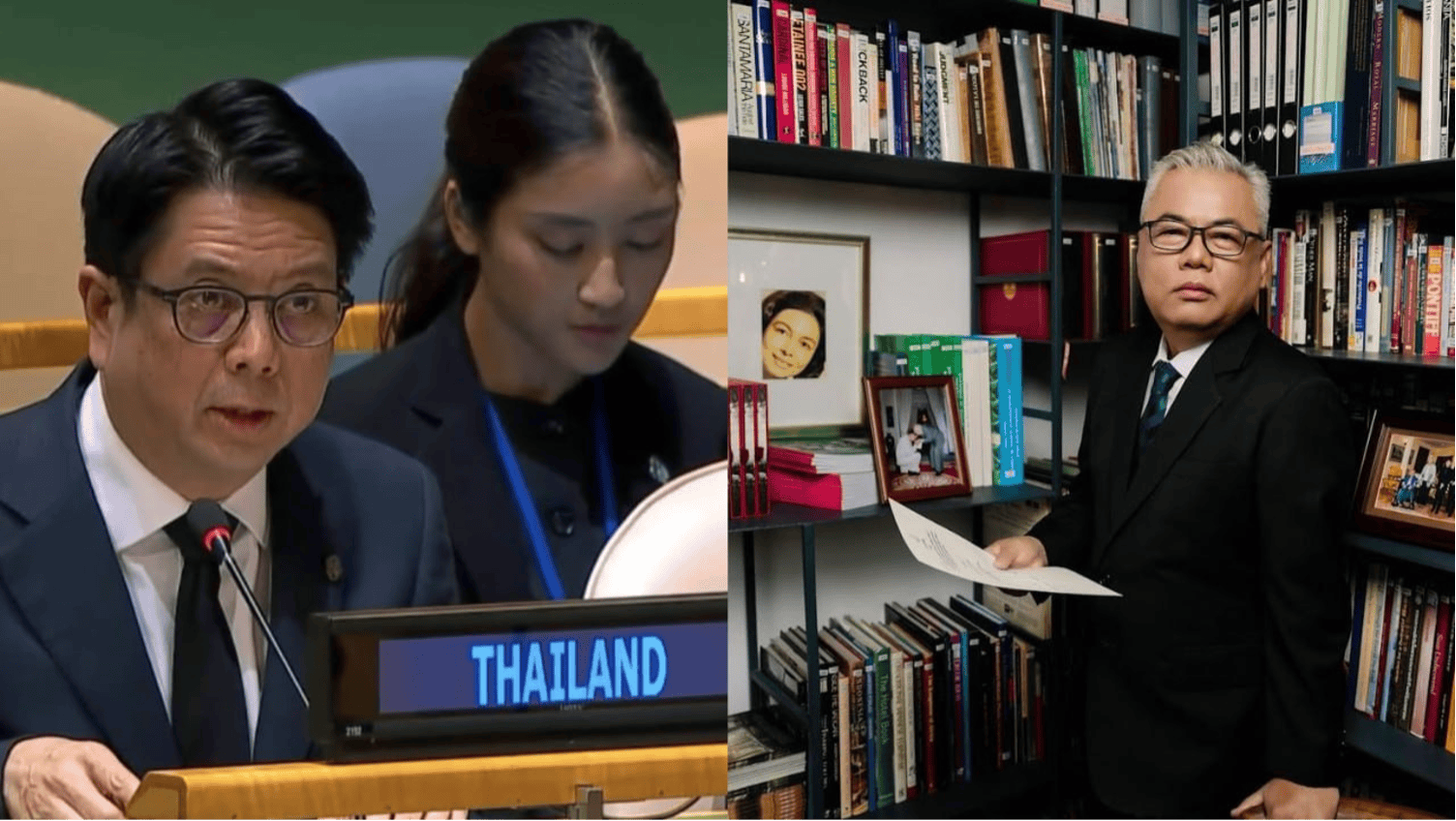
The ease with which Thailand's government has presented what appear to be inaccurate and misleading statements about its territorial dispute with Cambodia at the United Nations General Assembly raises serious questions.
Those seeking clarity need only examine the evidence on the ground and review the historical context to understand what steps might lead to a peaceful resolution of this long-standing conflict.
Thailand's presentation to the General Assembly does contain some accurate elements. Cambodian officials did indeed release a recording of a confidential discussion between leaders from both nations, which angered Thai politicians. Thai soldiers have been injured by unexploded munitions near the border. And most importantly, the conflict has caused genuine suffering for hundreds of thousands of civilians on both sides.
Beyond these points, however, Thailand's account diverges sharply from documented reality. These facts alone cannot justify Thailand's military response, yet the government has constructed a narrative casting itself as an innocent party victimized by Cambodian aggression.
Questionable Claims and Historical Context
Thailand asserts, without substantive proof, that the unexploded ordnance which injured its soldiers consisted of mines deliberately placed by Cambodians inside Thai territory. This claim ignores the well-documented reality that these border regions contain extensive minefields and unexploded munitions left from decades of warfare. Thailand also maintains that its forces did not initiate hostilities and that displaced Cambodian civilians had been illegally occupying Thai land since the 1980s despite Thai objections.
These assertions rely on an international audience unfamiliar with ground realities and willing to accept Thailand's version purely on faith—assuming the government has no reason to distort the truth. Yet Thailand's historical conduct along this border tells a different story.
Throughout history, Thailand has repeatedly attempted to claim substantial portions of Cambodian territory. During the 1800s, Thailand controlled large areas of Cambodia until French and Cambodian forces expelled them. When World War II erupted, Thailand again seized these lands, only to be forced out by American intervention.
In more recent decades, Thailand has conducted intermittent military operations aimed at intimidating Cambodia or challenging its territorial control. Even when international courts have ruled on specific border areas—such as the Preah Vihear temple site—Thailand has chosen to disregard these legal decisions.
A Familiar Pattern
Thailand's current effort to claim these territories under the pretense that they have always belonged to Thailand is neither a new assertion nor a novel tactic. The statements delivered to the UN General Assembly simply recycle longstanding ambitions to control Cambodian land.
The international community would do well to remember this extensive history and recognize the current situation as part of an established pattern rather than an isolated incident.