 Mekong Monitor
Drawings by Refugee Children Find a Permanent Home as Phare Turns 40
Nearly 200 drawings made by Cambodian children in a Thai-border refugee camp in the 1980s and 1990s are going on permanent display in a new museum in Battambang. The opening also marks 40 years since the arts organisation Phare Ponleu Selpak began.
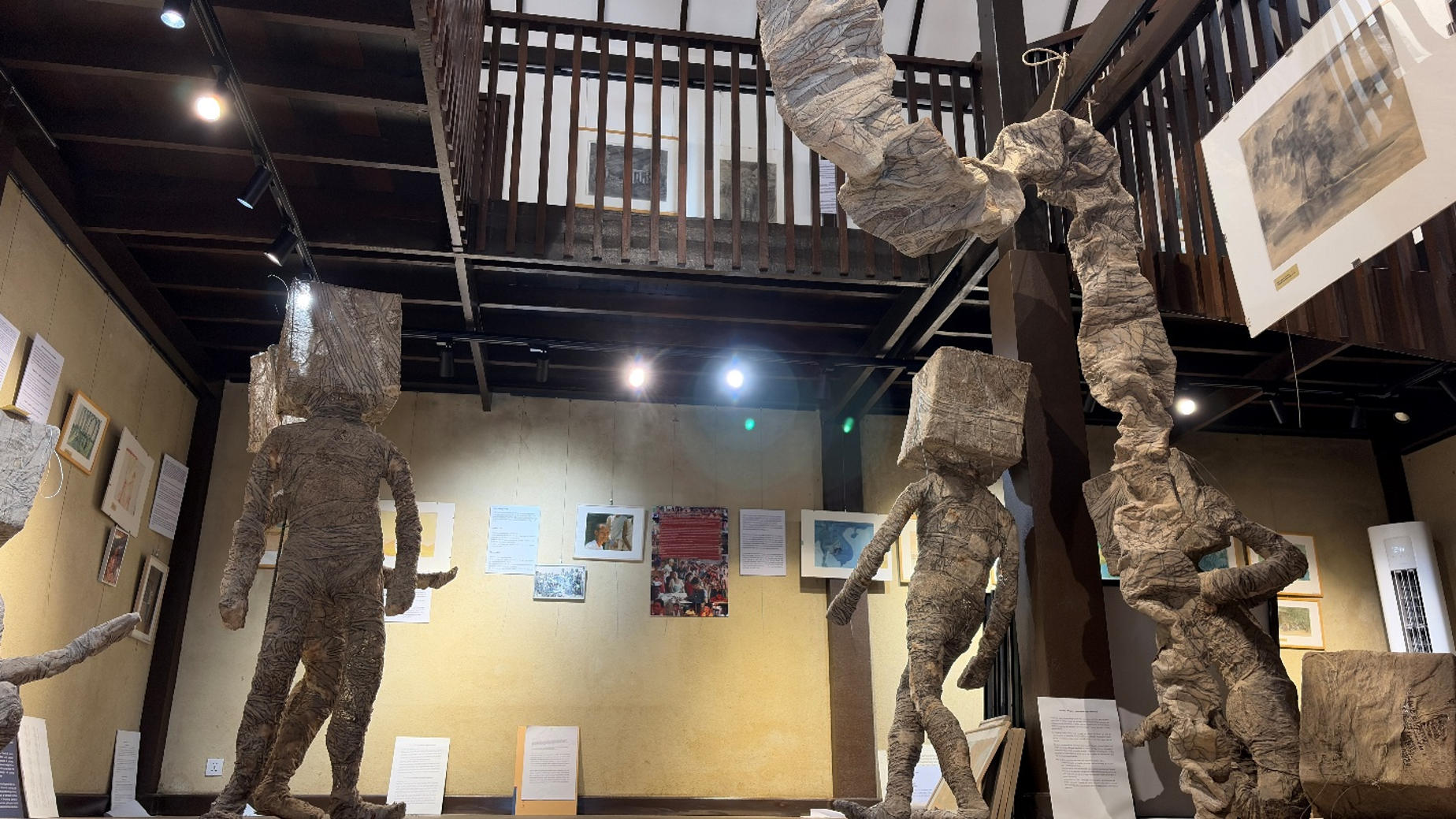
Almost 200 original drawings made by Cambodian children at Site 2 refugee camp on the Thai-Cambodian border four decades ago are finding a permanent home. The Véronique Decrop Museum opens today, November 22, in Battambang province. The works capture the displacement and hardship these children lived through, and show how art helped rebuild lives after years of conflict.
The museum also marks 40 years since the origins of Phare Ponleu Selpak, one of the Kingdom's leading arts and cultural organisations. It grew out of a drawing class set up for refugee children in 1986.
A collection of memories
The museum will display roughly 200 framed drawings produced at Site 2 during the 1980s and 1990s. They will be shown alongside historical photographs, archival material, artworks and personal accounts that trace the organisation's development. Phare describes the collection as more than an artistic achievement. It preserves the memories, experiences and cultural identities of children whose lives were deeply shaped by the Khmer Rouge regime and the displacement that followed.
The museum is aimed especially at younger Cambodians. It offers a way to learn about this period through the eyes of the children who lived through it, and to see how creative expression helped communities recover from conflict.
From a camp classroom to an arts centre
In 1986, Véronique Decrop, a young French fine arts graduate, began teaching drawing to Cambodian children living in the camp. Many families were struggling with war, displacement and the loss of social and cultural institutions, and the classes gave children a chance to express themselves through art. What started as an improvised lesson gradually grew into a wider effort to support young Cambodians through art and education.
After the peace agreements and the repatriation of refugees, Decrop invited her former students to set up an arts centre in Battambang in 1993. It was formally registered as an association in 1994 and went on to add visual arts, circus, theatre, music, dance and educational programmes.
Decrop has treated the children's original drawings as an important personal responsibility since the earliest days of the camp classes. She saw them as historical testimony to the experiences and creativity of a generation shaped by conflict, and worked to keep them from being lost. The museum will bring them together in one permanent exhibition space.
The museum also records the work of the students, artists, educators and international supporters who turned the camp initiative into an established cultural institution.
Beyond the museum
Phare Ponleu Selpak is now an important centre for arts training and professional development. It gives disadvantaged children and young people the chance to discover their talents, build confidence and pursue careers in the creative sector. Its work also includes general education and child protection support for vulnerable children and families.
Its social enterprise, Phare, The Cambodian Circus, performs nightly in Siem Reap, combining acrobatics, theatre and live music to tell Cambodian stories. Revenue from the shows helps fund the organisation's education and social programmes in Battambang and provides work for Cambodian artists.
Phare Commons
The museum is the first completed phase of Phare Commons, a larger architectural project. It is designed to protect the organisation's heritage while adding spaces for artistic collaboration and learning. Architect Martin Duplantier and his team designed six interconnected buildings linked by bamboo bridges and open-air corridors. The design uses natural ventilation, raised structures and features suited to Cambodia's tropical climate. The project was selected for presentation at the 2025 Venice Biennale for its approach to sustainable architecture.
Phare says proceeds from Decrop's new book, The Hidden Paths of Commitment, will help finance the second and third phases. Published in French and English, the book recounts the personal experiences, challenges and relationships that shaped Phare over four decades. It also includes contributions from five others who witnessed the organisation's beginnings and growth.
Opening celebrations
The book will be launched at the opening ceremony, which will also screen Decrop's 1993 documentary Shadow and Light (Ombre et Lumière). The event is part of the 13th Tini Tinou International Circus Festival, which brings Cambodian and international performers together in Siem Reap and Battambang. This year's festival, themed “BOLDER. BRIGHTER. BIGGER.”, includes a special performance tracing Phare's journey from refugee camps to the international stage.
Decrop said she hopes the organisation's work will continue under future generations of Cambodian artists and educators. “My greatest hope is that the passing of the torch from one team to the next continues for a very long time, and that the children of my own students will one day take over the baton,” she said.
For younger Cambodians who did not live through the years of conflict and displacement, the museum offers a different view of the country's past. It is told through the drawings and experiences of children whose work has survived for four decades.