 Mekong Monitor
Does Thailand Apply Different Diplomatic Standards to Different Neighbors?
A Cambodian perspective examines whether Thailand applies consistent diplomatic principles across all its neighbors, or whether its approach varies based on a country's size and economic importance.
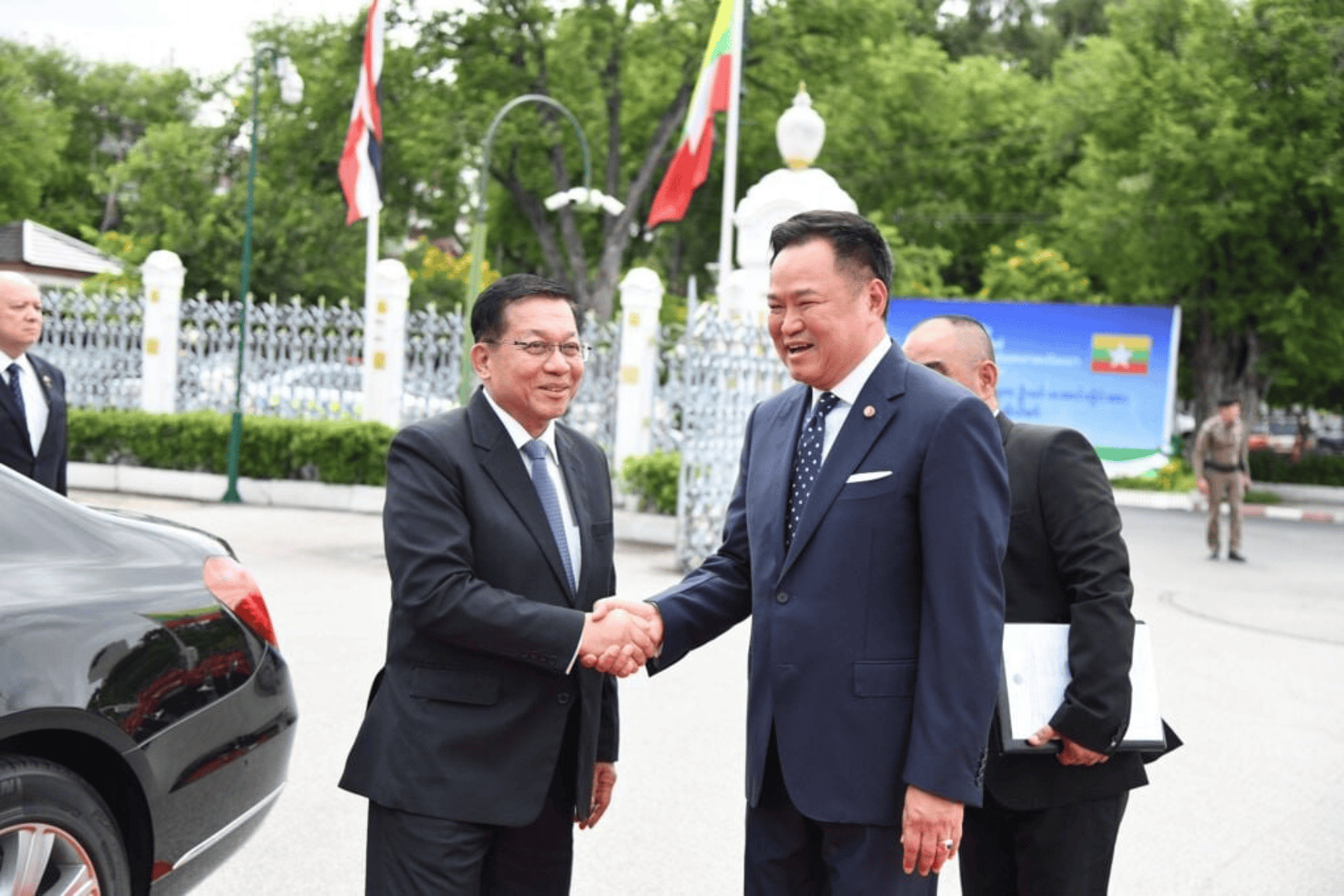
A fundamental question demands honest reflection from Thailand: Does the country apply consistent diplomatic principles across all its neighbors, or does its approach shift based on a neighbor's size, military capability, and economic significance?
This question comes from a Cambodian perspective—not from a place of animosity toward the Thai people, but from years of observing the dynamics between the two nations.
As a significant regional actor and influential ASEAN member, Thailand carries important responsibilities. Regional leadership requires demonstrating equal respect for sovereignty, territorial boundaries, and peaceful conflict resolution with smaller neighbors, just as it would expect from others.
Yet Thailand's diplomatic conduct across its borders reveals patterns worth examining more closely.
Economic Partnership with Malaysia
Consider Thailand's relationship with Malaysia, which Thailand recognizes as its top trading partner within ASEAN. During Prime Minister Anutin Charnvirakul's July 2026 visit to Malaysia, the focus centered on economic collaboration, trade expansion, investment opportunities, tourism development, border infrastructure, and security cooperation. Both governments established an ambitious $30 billion bilateral trade target and framed their shared border as a zone of economic potential.
Thailand has also stressed that this partnership holds strategic value for developing its southern provinces.
This diplomatic approach is entirely appropriate. Dialogue and economic engagement represent precisely what neighboring nations should cultivate.
But this raises an important question: Why should the principles of dialogue and accommodation apply differently when the neighbor is Cambodia?
If economic interdependence and strategic considerations drive Thailand toward negotiation and partnership with Malaysia, why do disputes with Cambodia so readily escalate into confrontation, pressure tactics, or nationalist posturing?
Calculated Restraint with Myanmar
Myanmar offers another illuminating comparison.
When violence and military activity in Myanmar spilled over into Thai territory—including an April 2026 incident where ordnance landed in Mae Hong Son province—Thailand's response involved evacuations and enhanced border security rather than direct military retaliation against Myanmar.
This represents a reasonable governmental approach to preventing escalation. More importantly, it demonstrates that Thailand possesses the capacity for restraint when circumstances demand it.
The question, therefore, isn't whether Thailand understands how to exercise restraint. The question is when Thailand chooses to exercise it—and toward which neighbors.
Cambodia Should Not Be the Default Target
This is where legitimate questions emerge from the Cambodian perspective.
Cambodia stands as Thailand's neighbor. Cambodians are not adversaries. Cambodian workers, merchants, students, families, and enterprises maintain profound connections with Thailand. The nations share cultural heritage, geographical proximity, historical ties, and extensive people-to-people exchanges.
Yet when disagreements surface between Cambodia and Thailand, public discourse can become markedly more confrontational.
This creates an impression—intentional or not—that the diplomatic bar for applying pressure to a smaller neighbor sits lower than the threshold for engaging a more economically or strategically significant neighbor.
This disparity demands Thailand's attention.
This is not a claim that every Thai government action has been uniform or that every dispute shares identical circumstances. They clearly do not.
The question is far simpler: Should international relations principles vary according to a neighbor's size and strength?
If the answer is no, then consistent standards should be evident across all relationships.
Power Does Not Justify Intimidation
Military capability does not grant a country enhanced sovereignty over another. A larger economy does not confer greater claim to international law.
A smaller population does not diminish a nation's territorial rights, and being a smaller neighbor does not mean Cambodia should accept challenges to its interests in silence.
Cambodia has increasingly turned to diplomatic and legal channels. On September 15, 2026, Cambodia and Thailand initiated a UN-supported compulsory conciliation process regarding their maritime boundary dispute, with the inaugural session held in Singapore.
This exemplifies precisely the mechanism ASEAN should promote: present the evidence, apply the law, and allow diplomacy to function before military force enters consideration.
The Real Measure: Consistency
Thailand cannot simultaneously advocate for regional peace while appearing to apply different diplomatic temperatures to different neighbors. It cannot demand that smaller countries respect Thai sovereignty while expecting those same countries to accept pressure when Thailand's own interests are at stake.
It cannot celebrate cooperation with one neighbor while allowing disputes with another to become fodder for nationalist sentiment.
The true test of foreign policy is not the volume of its rhetoric. The test is whether its principles hold steady when addressing a less powerful country.
This is why Thailand should examine its own track record carefully.
If Malaysia can be engaged as a vital economic and strategic partner, if Myanmar can be managed through restraint and security measures despite serious border incidents, then Cambodia deserves the same approach through diplomacy, evidence-based discussion, international law, and mutual respect.
There should not exist one standard for strong neighbors and another for smaller ones.
There should be one standard.
A Direct Appeal
This message goes directly to the Thai government and policymakers: Do not mistake Cambodia's pursuit of peace for weakness. Do not conflate Cambodia's smaller economy with diminished sovereignty.
Do not interpret Cambodian appeals to international law as acts of aggression, and do not allow political rhetoric to drive ordinary Cambodians and Thais into opposition.
Thailand holds an important position within ASEAN. Precisely because of that status, Thailand has an opportunity to demonstrate what responsible regional leadership actually means.
True strength does not lie in threatening weaker neighbors. True strength means possessing sufficient confidence to treat weaker neighbors with the same dignity and respect extended to stronger ones.
Cambodia does not seek hostility with Thailand. Cambodia does not want a culture war with Thailand.
Cambodia seeks a relationship built on equal sovereignty, evidence-based discussion, international law, mutual respect, and peaceful coexistence.
And ordinary Thai people deserve the same.
Because ultimately, while governments negotiate borders, ordinary people live the peace.