 Mekong Monitor
Displaced Cambodian Families Put Thailand's Ceasefire Commitment to the Test
More than 20,000 Cambodians displaced by border fighting still cannot return home, raising questions about whether Thailand is honouring its ceasefire commitments. The piece argues that troop positions must not become a de facto claim to disputed territory.
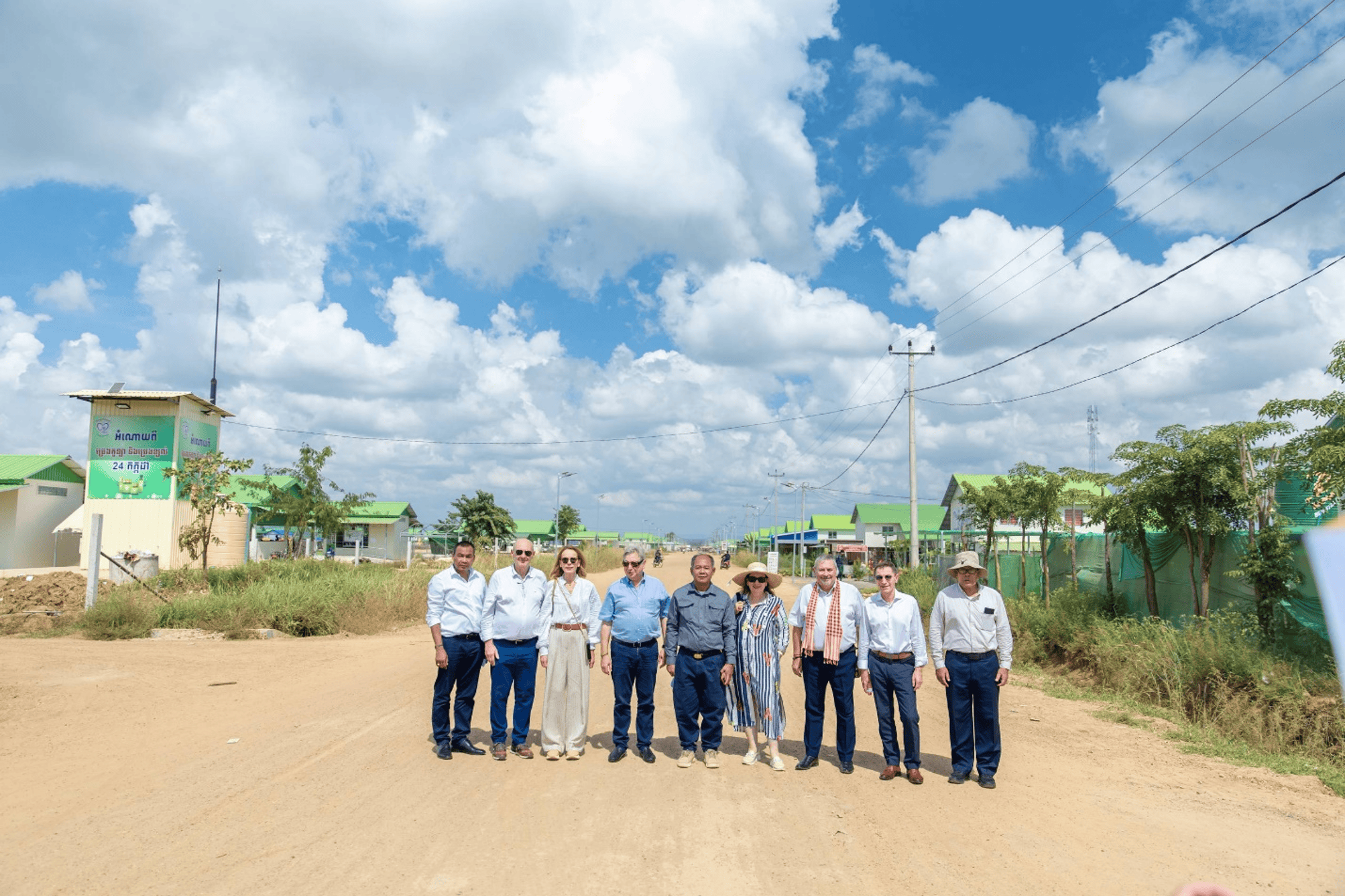
A ceasefire should bring real relief. It should mean the shooting has stopped, families can return home, children are back in school, and farmers can get back to their fields. Yet, according to Cambodia's Ministry of Interior as of November 18, 2026, more than 20,000 Cambodian civilians displaced by fighting along the Cambodia–Thailand border still cannot go back.
For these families, their homes remain out of reach, their livelihoods have been disrupted, and their children are growing up away from the communities they know. The question is no longer just whether the fighting has ended. It is whether these people can return to the lives they were forced to leave behind.
This is more than a humanitarian concern. It is also a test of whether the ceasefire is being carried out in good faith and whether the commitments both countries have made mean anything in practice.
A Ceasefire Does Not Transfer Territory
The central issue is not only how many families remain displaced, but why they cannot go home.
Cambodia says Thai military forces are still physically holding parts of Cambodian territory, which keeps residents from reaching their homes, farmland and communities. Its Ministry of Interior has also pointed to security concerns and damage to housing and public infrastructure as obstacles to return.
Thailand disputes Cambodia's account and has challenged parts of the displacement figures and how they are interpreted. With the two sides taking such different positions, independent verification and genuine engagement matter even more. These differences need to be settled through evidence and peaceful mechanisms, not left unresolved while civilians wait indefinitely.
The Joint Statement of the Third Special General Border Committee (GBC), signed on December 27, 2025, explicitly states that all arrangements under it are without prejudice to the border demarcation and the international boundary between the two countries. That clause matters. Cambodia has not agreed to hand over any of its sovereign land to Thailand. A ceasefire is not a territorial settlement, and keeping troops where they are under a ceasefire arrangement does not, on its own, establish sovereignty or resolve the international boundary.
The agreement to maintain troop positions is meant to prevent further clashes. It is not a ruling on who owns the land. It must not become a way of creating or legitimising a lasting territorial reality that undermines either country's legal rights.
This raises a serious humanitarian question: how can peace be claimed while thousands of families remain cut off from their homes? National security matters, but it cannot serve as an open-ended reason to keep civilians away from their communities.
During his visit to Cambodia in July 2026, UN Special Rapporteur Tom Andrews travelled to the border region and spoke with displaced people. He reported that residents told him they could not return because their villages and towns were occupied by Thai soldiers. He also said he saw barriers and razor wire preventing residents, including some he had spoken with, from going back to their homes. These observations deserve serious attention, although they do not amount to a legal finding on sovereignty or responsibility.
A ceasefire is an essential first step, not the end of the process. Its success should be judged not only by the absence of gunfire, but by whether civilians can safely rebuild their daily lives.
Protecting People Before Politics
The humanitarian consequences should not be pushed aside by domestic political calculations or competing national narratives. Disputing displacement figures or questioning the circumstances of a border dispute should not mean losing sight of the people behind the numbers.
Thailand's military has a legitimate role in national security. That role, however, must be carried out in line with applicable law, the commitments made under the ceasefire, and the protection of civilians. Military positions cannot replace negotiations, and political disagreements should not block practical humanitarian solutions.
A country's international standing depends not only on its diplomatic statements or military strength, but also on whether its institutions keep their commitments when implementation becomes difficult.
Keeping the Promises: Bringing Families Home and Restarting Border Talks
The Joint Statement of December 27, 2025 sets out clear commitments. Both countries agreed to keep current troop deployments in place without further movement. They also agreed to let affected civilians return as soon as possible, without obstruction and in safety and dignity, to their homes and normal livelihoods on their respective sides of the border.
The statement also calls on the Joint Boundary Commission (JBC) to resume survey and demarcation work at the earliest opportunity, giving first priority to border areas where civilians previously lived.
The mechanisms needed to move forward already exist:
- The GBC provides the framework for handling ceasefire and wider border-security issues.
- The Border Coordination Units are meant to help sustain the ceasefire, manage situations on the ground, respond to incidents quickly and prevent miscalculation, under the observation and verification of the ASEAN Observer Team.
- The JBC is responsible for the technical work of surveying and demarcating the international boundary.
Their effective operation, however, is still in doubt. On November 10, Cambodian government spokesman Pen Bona said Cambodia had sent 12 diplomatic notes requesting the resumption of JBC meetings, with no reply so far. Cambodia has also asked for joint survey teams to resume fieldwork.
Thailand, for its part, has reaffirmed its commitment to the ceasefire and bilateral mechanisms, rejected Cambodia's allegations, and said it is ready to submit evidence for scrutiny. These positions highlight the need for meaningful verification and renewed bilateral dialogue. Public pledges must be backed by concrete progress.
Thailand should formally respond to Cambodia's outstanding requests and agree on a date for resuming JBC meetings and joint fieldwork. Both countries should also use the GBC and Border Coordination Units to deal with ceasefire implementation and practical arrangements affecting border communities.
In practice, this means the GBC should drive effective implementation of the ceasefire and resolve outstanding issues through agreed channels. The Border Coordination Units should help settle situations on the ground and stop incidents from escalating. The JBC must resume its technical work in line with existing agreements and international law. The ASEAN Observer Team should be able to carry out its agreed role in monitoring and verifying implementation.
The return of displaced civilians must not be made conditional on finishing boundary negotiations. Equally, boundary demarcation must not be postponed indefinitely while military positions remain in place.
Every postponed meeting extends the uncertainty facing displaced families. Continued ambiguity over military positions and the boundary risks entrenching temporary realities on the ground, deepening mistrust and making a peaceful settlement harder to reach. Neither country gains from this situation. A stable, clearly demarcated boundary serves the security, economic interests and long-term relationship of both nations.
Disputed Borders Do Not Suspend the Law
International law draws a clear line between military presence and territorial sovereignty.