 Mekong Monitor
Deepening Cambodia-France Ties: From Historical Gratitude to Everyday Partnership
Built on French protection and decades of cultural and educational ties, the Cambodia-France relationship remains warm but underused. Closer student exchanges, cultural engagement and visa-free travel for French visitors could turn goodwill into concrete cooperation.
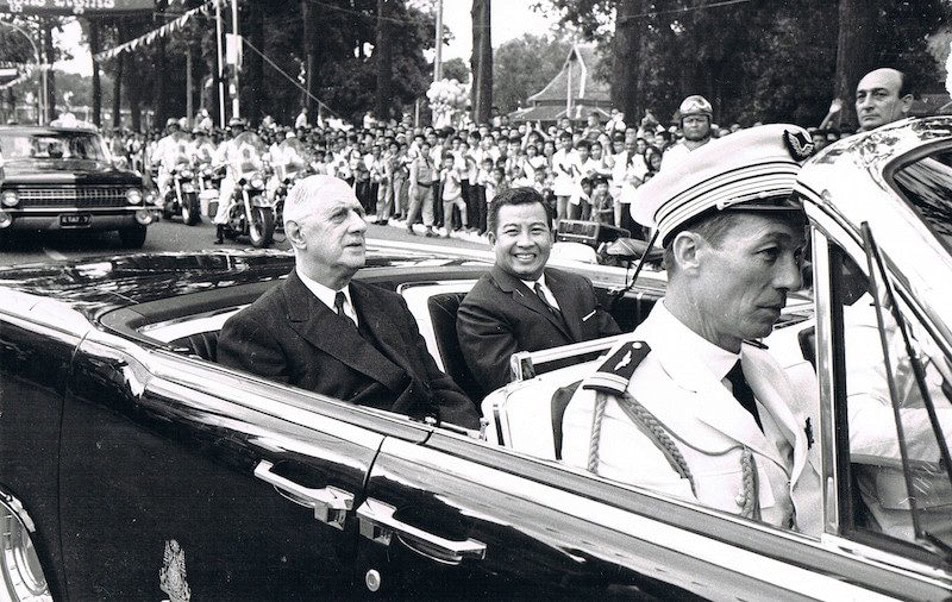
The relationship between Cambodia and France rests on a historical base that few bilateral partnerships can match. French protection helped preserve Cambodian sovereignty at a moment of grave danger, and decades of cultural, educational and diplomatic exchange followed. The ties remain warm today, but they have not yet reached their full potential.
Strengthening them further will take gratitude that shows up in concrete policy, a deeper understanding between the two peoples, and a more active French presence that lives up to the confidence Cambodia continues to place in France.
A Shared Past
Cambodia's existence as an independent kingdom cannot be separated from the French protectorate established in 1863. Squeezed between pressure from Siam and Vietnam, King Norodom turned to France for protection, mainly to keep the Khmer Kingdom from being absorbed by its neighbours.
France's acceptance of that role safeguarded Cambodia's territory, kept the monarchy intact and later supported the scholarly rediscovery and conservation of Angkor. French archaeologists, architects and administrators worked to record, stabilise and present the temples, which remain the country's greatest cultural achievement and a central source of national pride.
Instruction in French opened the way to careers in law, medicine and administration, helping to shape an early modern Cambodian elite. The infrastructure, land registry systems and urban layout of Phnom Penh still reflect that period. Cambodians do not view every aspect of colonial rule favourably, but the dominant national memory is one of gratitude: without French protection in the nineteenth century, the political entity now known as Cambodia might not have survived.
That sense of historical debt continues to colour Cambodian goodwill toward France more than toward any other Western partner.
Building on Goodwill
Gratitude is most persuasive when it is backed by forward-looking cooperation. Both governments should place people-to-people exchange at the heart of the next stage of relations, since diplomatic statements alone will not build mutual understanding.
Closer university partnerships, dual-degree programmes and scholarships would allow more Cambodian students to study in France and more French students to spend a semester in Phnom Penh, Siem Reap or Battambang. Professional exchanges in heritage conservation, sustainable tourism, agronomy and public health could create networks that last beyond any single diplomatic posting.
Cultural events would also help correct outdated perceptions on both sides. French film and literature festivals in Cambodian cities, alongside regular showcases of Khmer classical dance, contemporary art and cuisine in Paris, Lyon and Marseille, would be a good start.
Language may be the most practical bridge. Renewed support for French instruction in Cambodian secondary schools and universities, together with Khmer courses for French diplomats, business people and tourists, would narrow the distance that still separates the two societies.
A Visible First Step
One concrete and immediately noticeable measure would be for Cambodia to offer visa-free entry to French tourists. French visitors already count among the most culturally curious travellers to Angkor, the Mekong and the coastal provinces. Removing the visa requirement would signal trust, lower a practical obstacle and encourage longer stays and repeat trips.
The economic benefits would be tangible: higher tourism revenue, greater demand for French-speaking guides and hospitality staff, and stronger airline connections. Symbolically, the step would show that Cambodia sees French citizens as welcome partners rather than ordinary foreign visitors.
- Reciprocal ease of travel for Cambodian business people and students visiting France, within existing Schengen rules, would complete the gesture.
- Such reciprocity would show that openness runs in both directions.
What France Can Do
France, for its part, should match Cambodia's trust with greater visibility and sustained engagement. Cambodia regularly ranks France among its most dependable friends. That view rests on historical protection, ongoing development cooperation and the absence of the sharp geopolitical tensions that sometimes complicate relations with larger powers. France should cultivate that trust more deliberately.
Increased French development funding for heritage management beyond Angkor, for vocational training and for climate-resilient agriculture would reinforce France's image as a partner invested in Cambodia's long-term stability.
Cultural diplomacy could also be stepped up through permanent exhibitions, joint archaeological missions and support for Cambodian artists working in France, keeping French influence present in everyday Cambodian life. High-level visits should be more frequent and more substantive. French companies, meanwhile, should see Cambodia not simply as a small market but as a stable, francophone-friendly gateway into ASEAN.
When France speaks in international forums about sovereignty, cultural diversity and balanced partnerships in Southeast Asia, an explicit acknowledgement of Cambodia's friendship would be both accurate and welcome.
A Practical Agenda
None of these steps calls for sweeping new treaties. They call for political attention and modest resources directed at areas where affinity already exists. A visa exemption, a larger scholarship quota, a joint heritage fund and a regular bilateral cultural calendar could, within a few years, make the relationship feel current rather than purely historical.
Cambodians would see their gratitude answered by a France that stays engaged and constructive. French citizens and officials, in turn, would meet a Cambodia that honours the protectorate era with appreciation while pursuing partnership on equal, forward-looking terms.
The opportunity is clear. France helped ensure that Cambodia survived as a distinct kingdom, and Cambodia has not forgotten it. The task now is to turn historical gratitude and present trust into closer human contact, easier travel and more visible cooperation. If done well, the relationship could become a genuine model of mutual respect, one that honours the past while serving the interests of both societies in the decades ahead.