 Mekong Monitor
China Returns Remains of American Pilots Who Backed Wartime Resistance
China has handed over the remains of American pilots who supported its fight against Japan in World War II, recovered from the Himalayan Hump Route. The ceremony in Chengdu highlighted decades of joint wartime history and ongoing military cooperation.
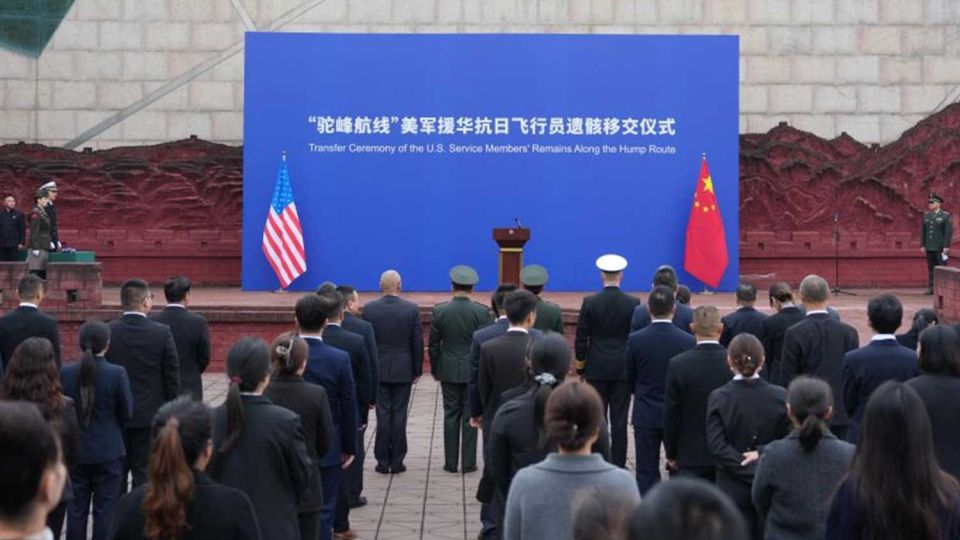
China has handed over the remains of American pilots who helped it resist Japanese aggression during World War II. The transfer took place in Chengdu, the capital of Sichuan province, on Tuesday. The remains had recently been recovered from sites along the Hump Route, the vital wartime air supply line that crossed the Himalayas.
The handover ceremony took place at the Jianchuan Museum Cluster in Chengdu. Representatives of the Chinese and US militaries and local officials attended.
A senior official from the Archives Bureau of the General Office of the Central Military Commission said the event reflects the history of Chinese and American forces fighting side by side against Japan. He said the ceremony would help bring these fallen airmen home and honor the long-standing friendship between the two nations, a bond built through shared hardship.
A representative of the US Defense POW/MIA Accounting Agency described the handover as the result of years of steady joint work and a deeply meaningful moment. He said the remains stand for a defining chapter in which Americans, moved by a sense of duty to oppose aggression, stood with the Chinese people against a common enemy.
A Route Built on Sacrifice
The Hump Route was an air corridor over the Himalayas into Sichuan. From 1942 to 1945, it kept China supplied and sustained its resistance to Japan. The American Volunteer Group of the Chinese Air Force, widely known as the Flying Tigers, played a key role in opening and defending the route. Historical records show that more than 1,700 Chinese and American aircrew lost their lives along it, making the route a lasting symbol of the two countries' cooperation during the war.
Ongoing Cooperation
Since the defense ministries of the two countries signed a memorandum of understanding on military archive cooperation in 2008, work in this area has continued without interruption. Chinese authorities say both sides have collaborated in a friendly and practical way, guided by equality, consultation, mutual benefit and reciprocity.
Over the past 18 years, search and excavation teams have carried out field investigations at more than 100 locations across China. A growing number of volunteers have also joined the search.
Fan Jianchuan, director of the Jianchuan Museum Cluster, said the museum raised funds and assembled a specialist team for several expeditions into uninhabited, glacier-covered terrain in search of wreckage from American aircraft that had aided China. The team recovered eight bone fragments on its most recent trip. Fan said Chinese culture places great value on gratitude and reciprocity, and he hoped the friendship forged during the World Anti-Fascist War would endure.
In April of last year, China returned the remains of American pilots found in Hengdong county, Hunan province. An earlier handover had taken place at the Jianchuan Museum Cluster in October 2015.
The Ministry of National Defense said China is willing to keep working with the United States in this field and to help build a constructive relationship of strategic stability between the two countries.