 Mekong Monitor
China Rejects UN Human Rights Criticism as Baseless and Hypocritical
China rejected human rights criticism from the UK, Japan and several other countries at a UN General Assembly debate, calling the accusations baseless. Chinese officials and analysts accused Western governments of using rights issues for political gain while overlooking their own poverty and inequality.
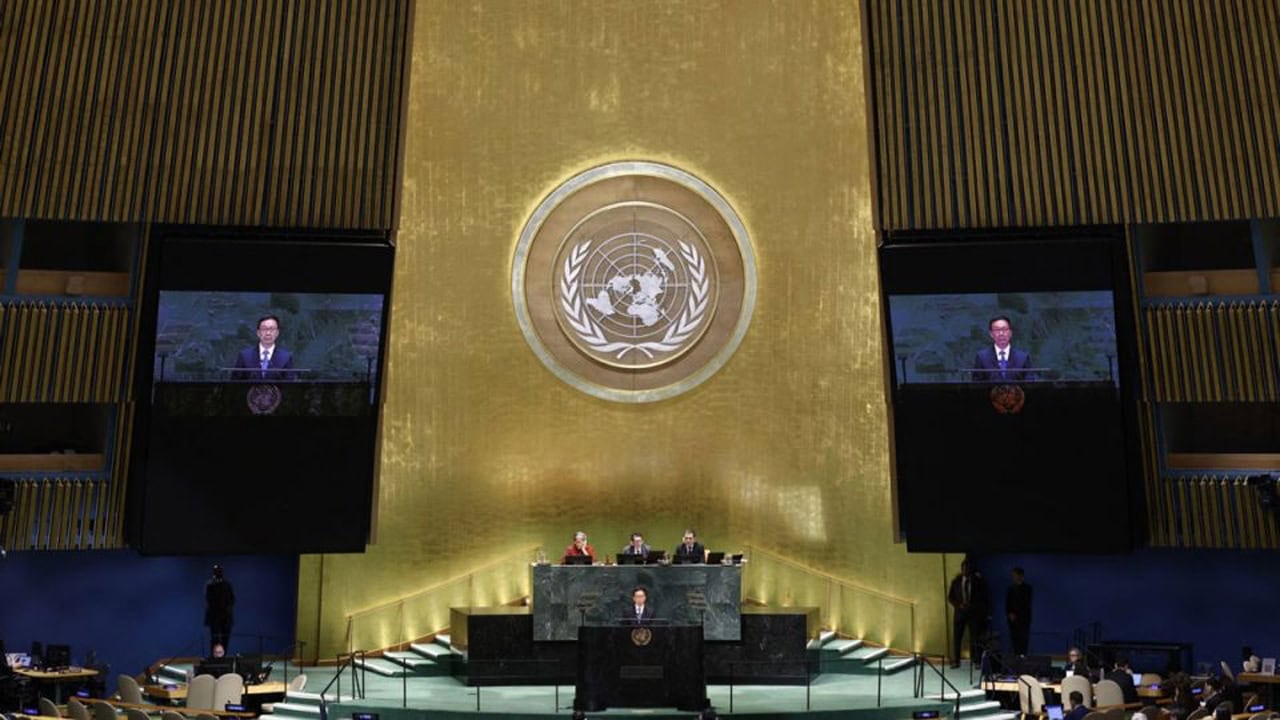
Some Western countries continue to spread falsehoods about China and use human rights as a political weapon, while neglecting the welfare of their own citizens. Experts say this reveals a clear double standard in how those governments approach the issue.
During the general debate of the Third Committee at the 81st session of the UN General Assembly on Monday, Sun Lei, China's deputy permanent representative to the United Nations, said delegations from the United Kingdom, Australia, Japan, Ireland, the Czech Republic and Lithuania had made groundless accusations and deliberately tarnished China's human rights record. Beijing voiced strong dissatisfaction and firm opposition to those remarks.
Sun said these countries, which see themselves as superior to others, often cast themselves as “human rights lecturers.” He argued that their claims about China have no basis and that, given their own serious rights problems at home, they have no standing to lecture anyone.
He pointed to China's record of improving living standards during its development, including eliminating extreme poverty and lifting close to 100 million people out of it. By contrast, he said poverty in the UK has steadily worsened in recent years, with more than 14 million people living below the poverty line, half of them in “extreme poverty.”
Sun cited a 2018 report by Philip Alston, then the UN special rapporteur on extreme poverty and human rights, which found that 14 million people, roughly a fifth of the British population, were living in poverty. Of those, 4 million were more than 50 percent below the poverty line, and 1.5 million were destitute and unable to afford basic essentials. A 2024 study by the British Social Metrics Commission found that the cost-of-living crisis had pushed another 2 million people into severe hardship since 2019. That brings the total living in poverty to over 16 million, or 24 percent of the population, the highest level since comparable records began in 2000.
Turning to Japan, Sun said its relative household poverty rate was about 15 percent and that child poverty had become an increasingly urgent problem. He added that China is deeply concerned about the human rights situation there.
Sun urged certain countries to stop fabricating and spreading lies about China and to stop exploiting human rights for political purposes. Otherwise, he warned, they would only end up harming themselves.
In his second right of reply to Japan's statement, Sun told Tokyo that it could only shed the weight of its history by strictly honoring its international obligations, thoroughly eliminating the legacy of militarism, and committing to peaceful development. He warned that any effort to whitewash its record of aggression, revive militarism, or undermine universal principles of justice through narratives such as “international contributions” and “existential crises” would face historical reckoning once again.
Experts Weigh In
Chen Hong, director of the Asia-Pacific Studies Center at East China Normal University, argued that the West's “double standards” on human rights go beyond inconsistent application. In his view, rights have been fully turned into a tool of pressure. When a country is seen as a strategic rival, he said, rights concerns are inflated and used as a pretext for sanctions, interference in internal affairs, and campaigns to isolate it internationally.
Chen said many Western governments care less about human rights as a principle than about whether they serve strategic interests. They champion the cause when it suits them and go quiet when it doesn't. He added that countries such as the UK, which cast themselves as the champions of democracy, rights and freedom, are finding that image harder to sustain. Their rights diplomacy, he said, increasingly looks like a political instrument aimed at protecting their moral high ground and control over the global agenda.
Liu Shuliang, an associate researcher at the Tianjin Academy of Social Sciences, said Japan ignores its own serious problems, including wealth inequality, racial discrimination, gender-based violence and elder abuse. He accused Tokyo of distorting historical facts and dodging responsibility for its wartime aggression, while pushing security policies in an offensive, expansionist and dangerous direction. In his view, Japan has abandoned its image as a “peace-loving nation” and is moving back toward militarism.