 Mekong Monitor
China Has Stated Its Red Lines — But Where Does America Draw the Line?
As Washington prepares a lavish welcome for Xi Jinping, U.S. analysts note that while China's diplomatic red lines are well rehearsed, America's own non-negotiables remain far less clearly defined under the Trump administration.
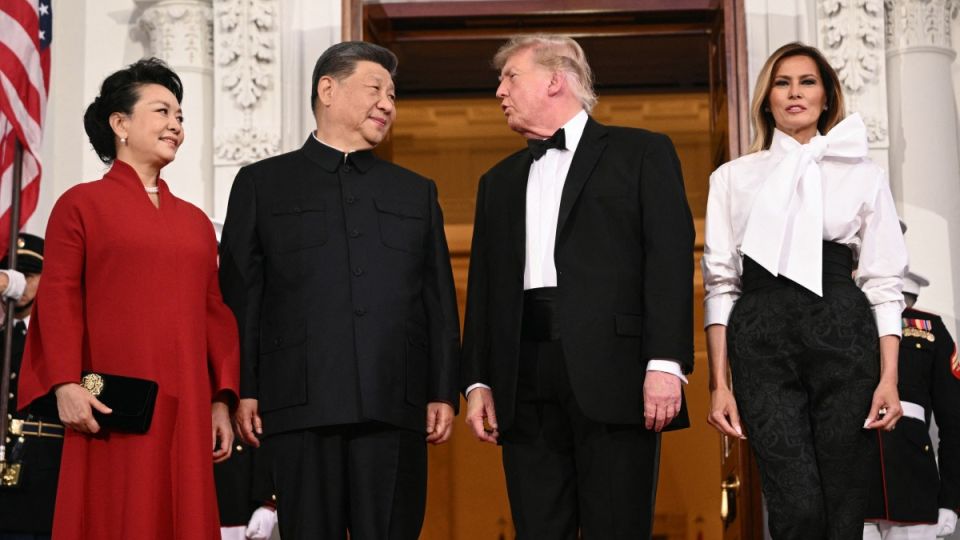
As President Donald Trump rolls out an extravagant welcome for Chinese President Xi Jinping's first visit to the White House in over a decade, foreign policy analysts in Washington are asking a pointed question: what exactly are America's non-negotiables?
The White House has organized a grand arrival ceremony for the morning of September 24, complete with military bands and fighter jet flyovers, followed by bilateral talks between the two leaders. Meanwhile, First Lady Melania Trump is set to host Xi's wife, Peng Liyuan, at the Smithsonian National Museum of Asian Art. A formal state dinner will cap the day.
Beijing's Position Is Well Known
On the eve of Xi's arrival, China's Ambassador to the United States, Xie Feng, used an op-ed in the People's Daily to reiterate Beijing's firm boundaries. He declared that China's sovereignty, security, and development interests are inviolable, and identified four specific red lines: Taiwan, democracy and human rights, China's chosen political system and development path, and its right to economic development.
None of this was new. These are longstanding Chinese positions, regularly invoked before and after high-level diplomatic encounters. Xi himself outlined the same framework during a meeting with then-President Joe Biden in Lima in November 2024.
America's Red Lines Are Harder to Pin Down
The United States, by contrast, has been far less explicit about its own limits. "We could try to infer them," said Kelly Grieco, a foreign policy researcher at the Stimson Center.
Topping the likely list is Iran. China continues to purchase Iranian oil and is believed to support Tehran's war effort. Observers are watching whether Beijing might offer to serve as a mediator — and what concessions it would seek from Washington in exchange.
Another friction point is China's grip on rare earth exports. These elements are critical to manufacturing everything from smartphones to advanced weapons systems. Despite officially easing strict export controls, Beijing has in practice continued to restrict supplies to American companies.
A Shift in Priorities Under Trump
Scott Kennedy, a China specialist at the Center for Strategic and International Studies, noted that traditional U.S. red lines — industrial policy, Taiwan, the South China Sea, and human rights — are difficult to identify in the current administration's approach.
"Instead, they want an avoidance of war. They want to keep markets up, and anything that makes President Trump look good," Kennedy said. "Very different kinds of red lines than the US has had in the past."
Grieco pushed back on the idea that Washington has fundamentally shifted its stance. She pointed out that the Trump administration has continued to oppose Chinese coercion in the South China Sea, reaffirmed defense commitments to the Philippines, and maintained joint maritime patrols and military exercises in the region.
"Some analysts are conflating the administration's effort to avoid needlessly provocative rhetoric with a substantive retreat from US commitments. Those are two very different things," she said.
The Case for Clarity
Grieco argued that both nations would benefit from greater transparency about where their lines are drawn. Making red lines explicit could help stabilize the relationship by reducing the risk of misunderstandings and unintended escalation, she said.