 Mekong Monitor
China-ASEAN Youth Camp Opens with a Push to Turn Friendship into Action
The fourth China-ASEAN Excellent Youth Summer Camp has opened at Henan Normal University with 48 students and young researchers. IRIC director Kin Phea urged participants to turn their new friendships into cooperation that benefits their communities.
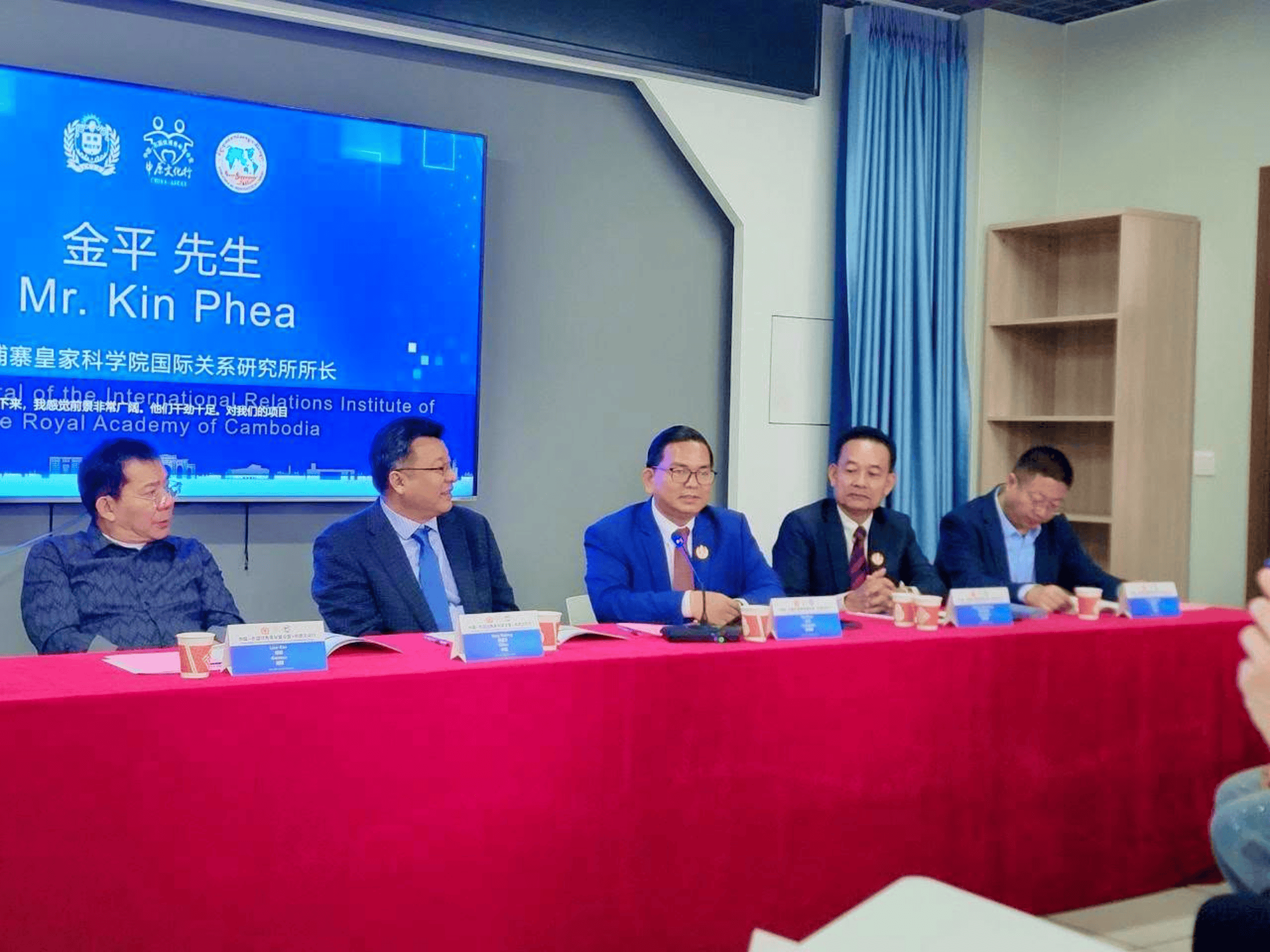
The fourth China-ASEAN Excellent Youth Summer Camp is underway at Henan Normal University in China. Running from October 18 to 24, the programme is co-organised by the International Relations Institute of Cambodia (IRIC) at the Royal Academy of Cambodia and the College of Political Science and Public Administration at Henan Normal University. It brings together students and young researchers from across ASEAN and China, with 48 participants in total: 10 from ASEAN countries and 38 from China.
At the official opening ceremony on October 19, IRIC director Kin Phea urged the participants to take what they learn and the friendships they form and put them to work on cooperation that improves life in their home communities.
The camp's theme, “A New Journey Across Mountains and Seas: Empowering Youth to Build a Community with a Shared Future,” shapes a schedule that mixes academic dialogue, cultural exchange and training in diplomacy and leadership.
Lessons from earlier camps
In his keynote, Phea looked back at the three previous camps and traced how what started as an agreement between institutions has grown into a regular platform for youth exchange. Discussions, diplomatic simulations and cultural events have helped participants sharpen their communication and leadership skills, and many of the friendships formed have continued long after the camp ended.
He said earlier groups had been given room to learn together, practise cooperation and build trust with one another. He presented those gains as the groundwork for this fourth edition.
Three priorities for participants
Phea outlined three priorities for the week: critical inquiry, inclusive cooperation and practical action. He asked students to test evidence, challenge their own assumptions and try to understand the concerns of other countries. He also urged educators to make space for hard questions and respectful disagreement.
Economic interdependence can create shared interests, he warned, but on its own it cannot dissolve mistrust.
He stressed that regional cooperation must deliver tangible benefits to communities and give smaller countries a meaningful voice. Different political systems, cultural traditions and national priorities can all fit within a common future, he said, as long as people feel their dignity and interests are respected. Speaking from a Cambodian perspective, he named sovereign equality, international law and ASEAN centrality as essential foundations.
Meaningful youth participation, Phea added, depends on access to mentorship and real chances to contribute.
Linking the camp's sessions on water resources, climate change and regional security to preventive diplomacy, he advised participants to listen carefully before proposing solutions, and to think through how cooperation could work when interests differ.
Voices from the host university and participants
Welcoming the group, Prof. Yang Yadong, vice-president of Henan Normal University, pointed to the camp's growth across its first three editions and its contribution to international education. He described it as a high-level forum where Chinese and foreign young people can get to know one another and talk about the future together.
Yang said that pairing academic exchange with cultural experiences would broaden students' global outlook and sharpen their ability to communicate across cultures. He also welcomed deeper educational partnerships with ASEAN institutions.
Tian Qirui, party secretary of the university's College of Political Science and Public Administration, placed the event within two milestones: the 35th anniversary of China-ASEAN dialogue relations and the fifth anniversary of their Comprehensive Strategic Partnership. Young people, Tian said, are the future of the country and a vital force behind friendly China-ASEAN cooperation. She encouraged participants to share what they gain with friends and communities back home.
Prof. Xi Laiwang, a distinguished professor at the university and director of its Institute for World Peace and Development, stressed that exchanges should continue beyond the programme. He hoped participants would act as ambassadors of friendship and cooperation between China and ASEAN.
Speaking for the ASEAN delegates, Mak Monyreach, a student at the Royal Academy of Cambodia, said the group was ready to engage with regional challenges. He described them as future partners, not just students. He singled out the security consensus competition as a chance to practise negotiation and develop practical proposals alongside Chinese peers.
Chen Siyuan, a Public Administration student at Henan University, spoke for the Chinese attendees. Chen emphasised the value of learning across academic disciplines and national backgrounds, noting that understanding builds trust and trust makes cooperation possible. Chen also welcomed the mix of academic discussion and cultural immersion.
What the week includes
Sessions will cover China-ASEAN cooperation, Lancang-Mekong cooperation and China's development. The programme also includes a youth dialogue on water resources and climate change, an International Symposium on building a closer China-ASEAN community with a shared future, and the China-ASEAN New Era Security Consensus Framework competition.
Cultural activities feature visits to the Yinxu Museum and the Chinese Character Museum in Anyang, along with campus tours and hands-on sessions in Chinese tea culture and calligraphy. The aim is to deepen understanding of China's history and traditions while giving participants a chance to share their own cultures.
Keeping the connections alive
Closing his keynote, Phea offered a practical way to sustain the relationships built during the week. Before leaving Henan, he suggested, each mixed national team should pick one small joint project and set a date to meet again. Examples included a short comparative study or a water conservation activity.
Their shared future, he told the young participants, will be shaped by the choices they make and the respect they show one another.