 Mekong Monitor
Charting the Next Phase of Cambodia-Japan Relations
Seven decades after diplomatic ties began, Cambodia and Japan are moving from donor and recipient toward genuine co-creation. Both sides now need to deliver on economic, human capital and security commitments.
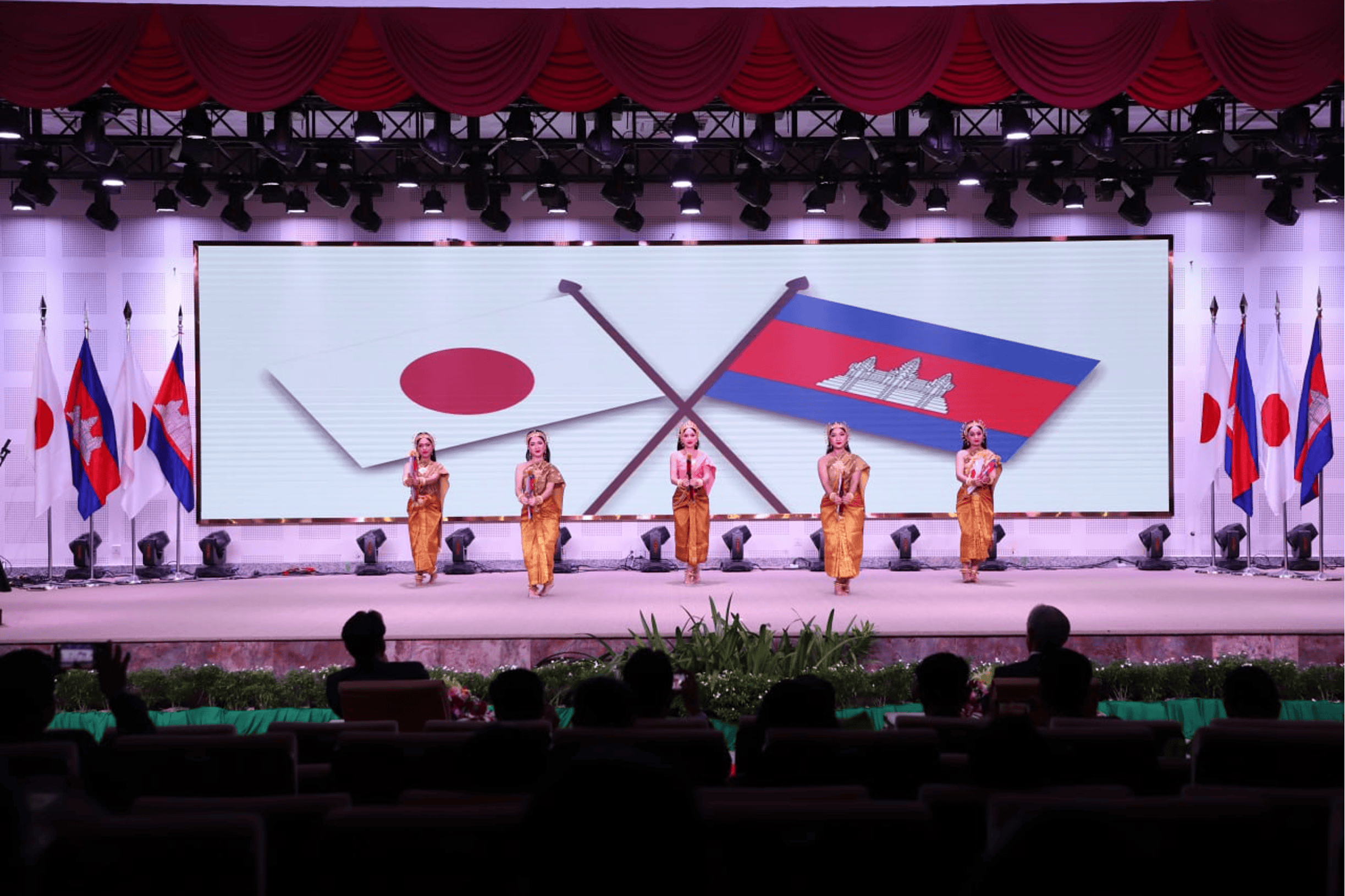
For more than seven decades, since diplomatic ties were established in 1953, Japan has been one of Cambodia's most steady, generous and trusted partners. Its support has run from the peace process and post-conflict reconstruction to decades of high-quality official development assistance and, today, a strategic partnership. That engagement has helped Cambodia rebuild, modernise and look ahead with confidence.
The upgrade of relations to a Comprehensive Strategic Partnership in 2023 was a landmark. The next step should go further, turning the relationship into one of real co-creation. In that model, both countries support each other as equals, and Cambodia grows strong enough to give back meaningfully to Japan and to its other development partners.
The groundwork for this shift is already in place. Japan's help has never been limited to money. It has covered critical infrastructure, human resource development, health, education, mine action and the less visible work of building stronger institutions. Japanese concessional loans worth roughly $3.5 billion, together with grants and the well-regarded KUSANONE grassroots projects, have left visible and lasting results across the country.
The Japan-Cambodia Economic Co-Creation Package, announced during Prime Minister Hun Manet's official working visit to Japan in May 2025, gave the relationship a new direction. It centres on creating economic and social value together, improving the investment climate, supporting Japanese companies, expanding public-private partnerships, and deepening cooperation on digital and green initiatives.
The early results are encouraging. Bilateral trade reached nearly $2 billion in the first eight months of 2026, up almost 19 per cent on the same period a year earlier. Cambodian exports to Japan rose by more than 22 per cent, reflecting better competitiveness and the advantages of trade frameworks such as the Regional Comprehensive Economic Partnership.
Japanese companies continue to invest in manufacturing, logistics and newer industries. Large projects, especially the ongoing expansion of Sihanoukville Autonomous Port into a regional logistics hub, are set to link Cambodia more closely to regional and global supply chains. Cooperation has also grown into clean energy under the Asia Zero Emission Community, climate action through the Joint Crediting Mechanism, the use of Japanese satellite data for environmental monitoring and farming, and practical security capacity-building.
On defence and security, Japan's Official Security Assistance in 2026, which includes communications equipment for the Royal Cambodian Army and patrol boats for the Navy, is part of a wider picture. Goodwill visits by Japanese vessels to Ream Naval Base and ongoing professional exchanges point to growing mutual trust. These steps are modest in scale, but they carry real symbolic weight. They reflect a shared commitment to regional peace and stability, and a relationship built on trust rather than dependence.
Still, true co-creation requires more than Japan continuing to provide support, however valuable that support remains. Cambodia must also speed up its own capacity-building so the partnership becomes genuinely two-way.
A stronger, more competitive, more innovative and more resilient Cambodia could offer Japan dependable partners for resilient supply chains, a growing market for advanced Japanese technology and investment, and a constructive voice in regional and international forums. Cambodia can champion the rule of law, free trade and a Free and Open Indo-Pacific, principles it was the first ASEAN member to publicly endorse.
Cambodia can also share the lessons of its own post-conflict recovery, particularly in peace education, humanitarian mine clearance and inclusive development. Those lessons can contribute to international efforts that Japan itself considers important.
The practical next steps are clear.
Four priorities for the next phase
- Deliver on the Economic Co-Creation Package. Full and energetic implementation should remain a top priority. That means further improving the business environment, expanding Business Co-Creation Teams, organising more two-way investment missions, and developing joint projects in key sectors such as green agriculture, digital transformation, logistics and renewable energy.
- Intensify investment in people. More scholarships, technical training, university partnerships, professional exchanges and youth programmes will help Cambodian professionals become active collaborators and innovators, rather than only recipients of knowledge.
- Deepen cooperation in emerging fields. Work on cybersecurity, space technology applications, climate-smart agriculture and carbon-market mechanisms should expand, so both countries gain economic and environmental benefits.
- Continue measured, transparent security cooperation. Maritime security and defence capacity-building should go on in a careful and open way. This will strengthen Cambodia's ability to contribute to regional stability while reinforcing the long-standing trust between the two countries.
Cambodia's goal of reaching upper-middle-income status by 2030 fits naturally with Japan's long-term vision of a peaceful, open and prosperous Indo-Pacific. A Cambodia that is stronger economically and institutionally is better placed to support Japan's priorities, whether in supply-chain resilience, decarbonisation or an international order based on the rule of law. In return, Japan's continued engagement, delivered with the care, technical excellence and long-term outlook that have defined its approach for decades, will help Cambodia reach that strength faster and more sustainably.
This evolution does not mean moving away from other partners. It is the natural progression of a mature friendship. Co-creation means both sides contribute ideas, resources and political will, both sides innovate, and both sides benefit. Cambodia does not want to remain a permanent recipient of aid. It wants to be a reliable and capable partner that can give back through opportunity, stability, shared prosperity and constructive engagement in the region.
The relationship between Cambodia and Japan has already weathered decades of challenges and change, marked by remarkable consistency, goodwill and mutual respect. The next chapter should be shaped by mutual empowerment and shared responsibility. By deliberately building a partnership of true co-creation, the two countries can show how development cooperation can mature into a genuine strategic friendship. That friendship can benefit both peoples and strengthen the wider region for generations to come.
Japan's steadfast support has helped Cambodia rise from the ruins of conflict toward a more hopeful future. A stronger Cambodia, ready and able to contribute in return, would honour that support in the most meaningful way: by becoming a true partner in building a better, more resilient and more prosperous future together.