 Mekong Monitor
Carney Urges Francophone Nations to Build Strategic Autonomy and Defend French
Prime Minister Mark Carney called on Francophone countries to work together on technology, AI and cultural sovereignty to reduce their dependence on major powers. He also pressed for stronger protection and wider digital visibility for the French language.
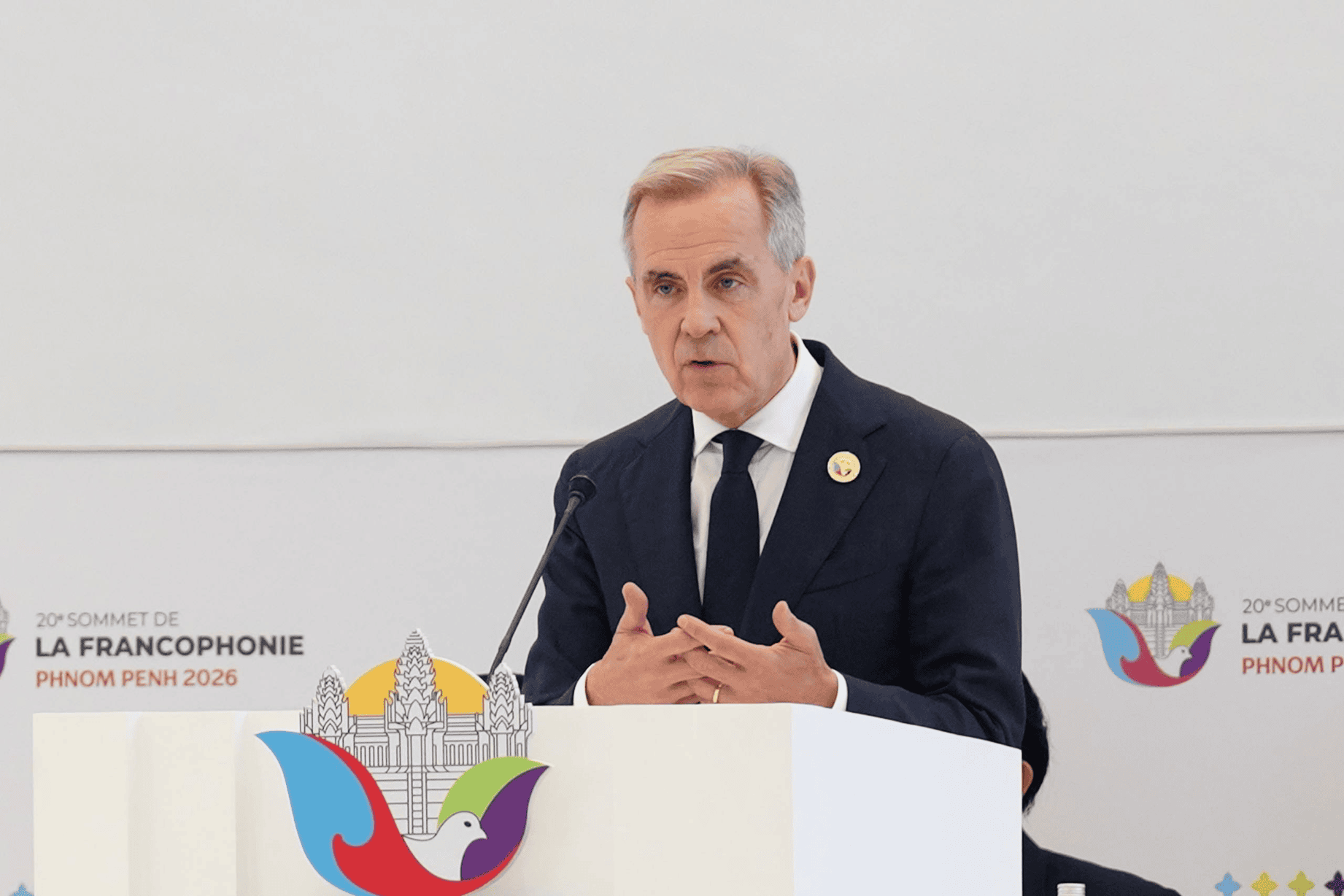
Canadian Prime Minister Mark Carney has urged Francophone countries to deepen their cooperation in technology, artificial intelligence and cultural sovereignty in order to become more self-reliant. He warned that larger powers are increasingly using economic ties and supply chains as tools of leverage.
Speaking at the closing ceremony of the 20th Francophonie Summit on November 16, Carney argued that strategic autonomy should reach well beyond the familiar areas of energy, food and physical security. In his view, it also has to cover critical minerals, space, financial systems and cultural sovereignty, where the French language could play a key role.
“Major powers have started using economic integration as a form of pressure,” he said. He pointed to tariffs, control over financial infrastructure and supply chains as points of vulnerability that others could exploit.
Carney said no country can achieve autonomy on its own. Instead, he called for flexible partnerships grounded in shared values and common interests, with different coalitions tackling different problems. “Language is part of this picture too. It is one of the great strengths of the Francophonie,” he said. Protecting and promoting French, he added, calls for joint action on technology, media, social platforms and artificial intelligence.
He cautioned that technology can deepen existing inequalities and push certain languages to the top. AI models trained mostly on dominant languages tend to favour the most common phrasing and overlook the wider range of linguistic diversity. “Systems trained on dominant languages tend to flatten things toward the most common forms, and we lose the richness and variety of how people express themselves,” he said.
Such systems, he argued, are never neutral. The voices and data used to train them can slowly shape the way people speak, write and think about themselves.
Carney stressed that making French-language content easier to find on digital platforms should not be framed as censorship or protectionism. Rather, it is a way of making sure Francophone cultures stay visible in a world increasingly run by technology. Language, he said, is too important to be left entirely to market forces, and countries have every right to ensure their stories and languages can be found on the platforms their citizens use every day.
He reaffirmed Canada's commitment to defending French and Francophone cultures, including against pressure from large tech firms and neighbouring powers.
As Canada prepares to chair the Francophonie in 2028, Carney laid out five priorities. These include strengthening French in public life, improving its presence on digital platforms, developing shared AI resources and ensuring creators are fairly paid. He also projected that the number of French speakers could double within 25 years, with roughly 85 per cent of them living in Africa. For that reason, he said young people and economic cooperation will be central to the next summit, which Canada will host on September 7 and 8, 2028.
Closing his speech, Carney made the point that a language only stays alive when people keep using it, speaking it, singing it, writing it, reading it, imagining with it and arguing over it. He urged Francophone nations to protect French and help it find new voices across the world.