 Mekong Monitor
Cambodia Urges Thailand to Keep Its Word and Restore Diplomatic Ties
Cambodia’s foreign minister is pressing Thailand to restore full diplomatic representation and carry out agreed confidence-building measures. He says dialogue, not military confrontation, is the way to resolve the border and maritime disputes.
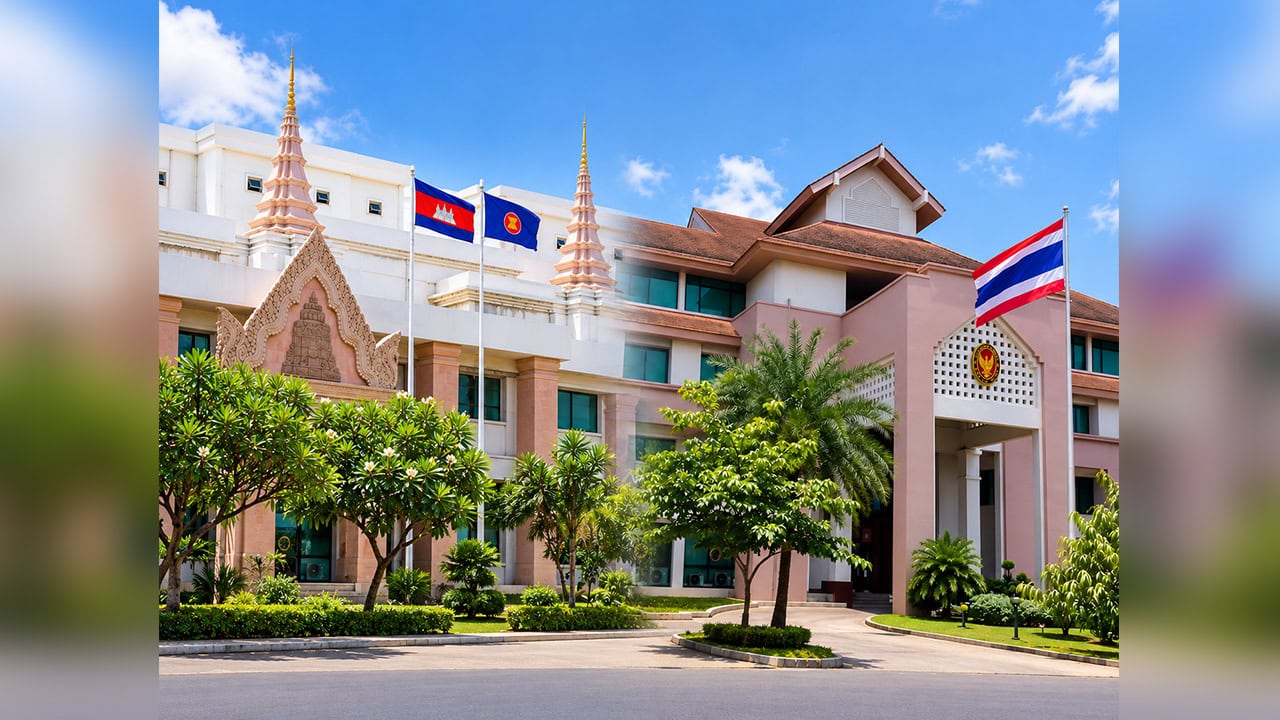
Cambodia’s Foreign Minister, Prak Sokhonn, has called on Thailand to carry out the confidence-building measures recommended by the UNCLOS conciliation commission. He placed particular emphasis on restoring full diplomatic representation between the two countries.
For now, both embassies remain staffed only at the second-secretary level. Sokhonn said diplomacy and dialogue are the best way to settle disputes peacefully, rather than through military confrontation.
Speaking on National Television of Cambodia (TVK) on October 20, he was reflecting on the second meeting of the Cambodia–Thailand Conciliation Commission under the UN Convention on the Law of the Sea. The meeting took place in The Hague, Netherlands, from October 14 to 18.
Sokhonn said the return of diplomatic staff was one of the confidence-building steps discussed during the maritime proceedings. “Diplomatic relations help keep peace between our two countries and can help us resolve disputes peacefully,” he said.
He stressed that this is not a new commitment. The two sides had agreed to send their deputy chiefs of mission back to their embassies, but implementation stalled as tensions flared. The agreement was first reached in Kuala Lumpur, Malaysia, in 2025, and both prime ministers reaffirmed it in May 2026. The two governments later exchanged diplomatic notes on the return of officials, yet the arrangement has still not been put into effect.
Land and maritime issues kept separate
Tensions over shared land and sea boundaries remain high. Sokhonn acknowledged that the two disputes fall under separate legal frameworks and dispute-resolution mechanisms. Even so, he warned that friction along the land border could cloud the atmosphere for maritime talks.
According to Sokhonn, Cambodia told the commission that the land and maritime questions should not be tied to each other. For roughly 25 years, he noted, the two countries have handled them through distinct legal channels.
He also pointed to an agreed plan to set up a hotline linking the naval commanders of both countries, so that any problems at sea can be addressed directly.
Wider confidence-building package
- Refraining from threats or the use of force in maritime areas
- Keeping public communication constructive, with each side free to issue statements defending its legitimate interests and correcting misinformation, as long as the conciliation process is not undermined
- Implementing the ceasefire agreement of December 27, 2025, along with other bilateral commitments
Sokhonn also renewed Cambodia’s call for the safe return of more than 20,000 displaced civilians, who, according to Cambodian authorities, still cannot go back to their homes in border areas.
He described the second conciliation meeting as “constructive,” saying real progress had been made on confidence-building steps and on the presentation of each country’s legal arguments and evidence. However, no final agreement on the delimitation of the maritime boundary has been reached.
The third conciliation meeting is scheduled for Kuala Lumpur from November 23 to 27, 2026, and a fourth is planned for The Hague in late January 2027.
Sokhonn reiterated that Cambodia remains committed to settling the dispute through diplomacy, negotiation and international law. He argued that restoring diplomatic relations and rebuilding mutual trust are essential to easing tensions and reaching a lasting settlement.