 Mekong Monitor
Cambodia Urges Recognition of Women as Drivers of Climate Action at COP31
At COP31 in Antalya, Cambodian official Ngin Lina called on governments to treat women as agents of change in climate action, and outlined the country's progress on gender-responsive policy.
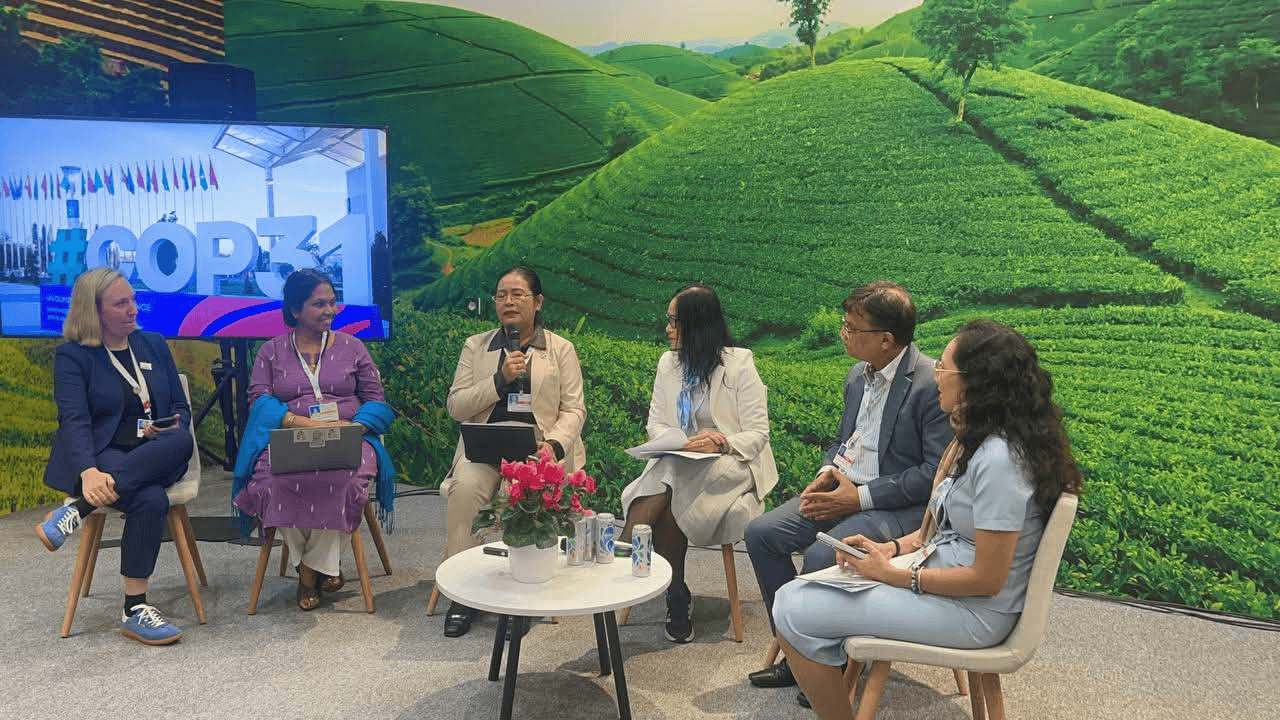
At the COP31 climate conference in Antalya, Türkiye, a senior Cambodian environment official argued that women should be seen as drivers of climate solutions rather than as a group simply at risk.
Ngin Lina, who chairs the Gender Mainstreaming Action Group at the Ministry of Environment, spoke on the panel 'Empower: Women for Climate-Resilient Societies,' held on the conference sidelines. She said gender-responsive climate action depends on evidence-based policy, genuine participation and leadership, measurable indicators, clear accountability and adequate funding. Only when these elements are in place, she added, can pledges turn into tangible results. Lina also serves as a secretary of state at the ministry.
Cambodia's progress
Lina outlined how Cambodia is building gender-responsive climate action, particularly by integrating Gender Equality, Disability and Social Inclusion (GEDSI) considerations into its updated Nationally Determined Contribution (NDC 3.0). This work is aligned with the Belém Gender Action Plan.
Among the key achievements she highlighted:
- Using the findings of Cambodia's first gender and environment survey to inform climate policy.
- Establishing 131 Gender Equality and Social Inclusion Key Performance Indicators (GESI KPIs) spanning 163 measures.
She also credited partnerships, especially the EmPower programme jointly run by UN Women and the UN Environment Programme (UNEP). The initiative is helping women take on leadership roles, gain better access to resources, and build climate-resilient livelihoods and jobs.
Shared challenges across the region
The discussion brought together speakers from Cambodia, Vietnam and Bangladesh to compare women's empowerment programmes and gender-responsive climate efforts. A recurring obstacle was the lack of dedicated budget allocations to put these plans into practice.
Participants recommended inclusive approaches, the collection of sex-disaggregated data, gender-responsive budgeting, stronger coordination, and wider cooperation with development partners, the private sector and civil society organisations. They also stressed the importance of embedding the Belém Gender Action Plan into national action plans, clearly identifying support needs, and strengthening implementation as well as monitoring and evaluation.
Next steps
Lina also held talks with representatives of the NDC Partnership about future cooperation on monitoring the results of the gender KPIs.