 Mekong Monitor
Cambodia to Host Water Governance Dialogue Focused on Local-Level Management
Cambodia’s Ministry of Water Resources and Meteorology and CDRI will host a one-day dialogue on November 12 to explore how water governance can better serve provinces and communities. The event will bring together government officials, local leaders, researchers, and development partners.
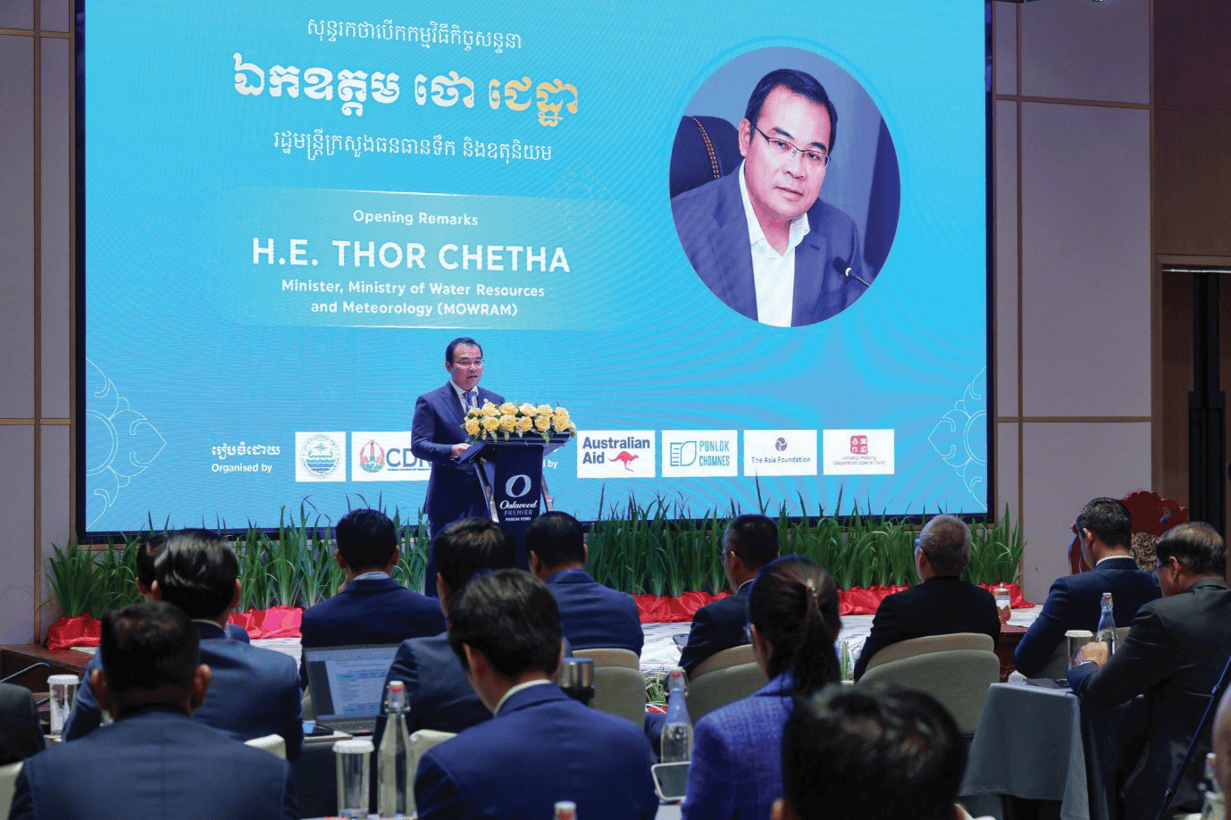
The Ministry of Water Resources and Meteorology and the Cambodia Development Resource Institute (CDRI) are set to co-host the Cambodia Water Governance Dialogue 2026 on November 12. The aim is to strengthen water governance so that policies and investments better reflect the needs and priorities of local communities.
Under the theme “Strengthening Water Governance at the Subnational Level,” the one-day event will examine how national water planning, river basin priorities, sector development, and public and development-partner investment can better respond to conditions on the ground, according to a joint press release.
About 200 participants are expected. They will include officials from national ministries, provincial and district administrations, technical departments, commune councils, River Basin Committees, Farmer Water User Communities, and other community institutions. Development partners, researchers, civil society organisations, and private-sector representatives will also attend.
Cambodia’s water resources support agriculture, fisheries, energy, domestic water supply, ecosystems, and rural livelihoods. However, floods and droughts, shifting river flows, ecosystem decline, competing demands, and rising consumption are putting growing strain on these resources. Many of these problems cut across administrative and sectoral lines, so institutions need to work together to address them.
An Pich Hatda, Secretary of State at the ministry, said effective water governance depends on national policies, plans, and investments that reflect the realities facing provinces and communities, backed by stronger institutional coordination.
“What Cambodia needs is clearer lines of responsibility, sounder use of evidence, and tighter coordination across ministries and levels of government,” he said. “This dialogue will help identify practical steps that institutions can take together to manage water more sustainably and to protect the people, livelihoods, and ecosystems that rely on it.”
The morning sessions will focus on subnational water governance, social inclusion, national water planning, river basin priorities, and how government policies and development-partner funding can better meet local needs.
The afternoon discussions will look at coordination between national and subnational institutions. Participants will draw lessons from district-level water management, irrigation, private-sector involvement, and community experience to pinpoint practical priorities for improvement.
The dialogue will also gather early feedback on a proposed Cambodia Water Week, which is envisioned as a national platform for policy discussion, public engagement, knowledge sharing, and partnership building.
CDRI Executive Director Eng Netra said the event will link research and policy with the hands-on experience of national and subnational institutions, communities, and other water-sector actors.
“Good policy has to be grounded in evidence and in a clear understanding of how it works in practice,” she said. “This dialogue gives authorities, communities, researchers, development partners, and the private sector a chance to share experiences, agree on priorities, and build partnerships for putting policy into action.”
The 2026 event builds on the first High-Level Policy Dialogue on Water Governance, held last year. That meeting highlighted the need for clearer institutional responsibilities, stronger coordination, better access to data, greater technical capacity, and more meaningful participation in water-related decision-making.
The dialogue is one of the joint activities agreed under a July memorandum of understanding between the ministry and CDRI. The MoU covers research, knowledge exchange, capacity development, and policy dialogue.
The event is supported by the Australian government through the Ponlok Chomnes Programme (PCII) of The Asia Foundation, the Australia Cambodia Partnership for Climate Resilience, and Oxfam.