 Mekong Monitor
Cambodia's Civil Society Groups Present Climate Priorities Ahead of COP31
Cambodian civil society and development organizations have outlined a set of climate priorities — including protecting concessional finance access and boosting adaptation funding — as the country prepares for COP31 in Türkiye this November.
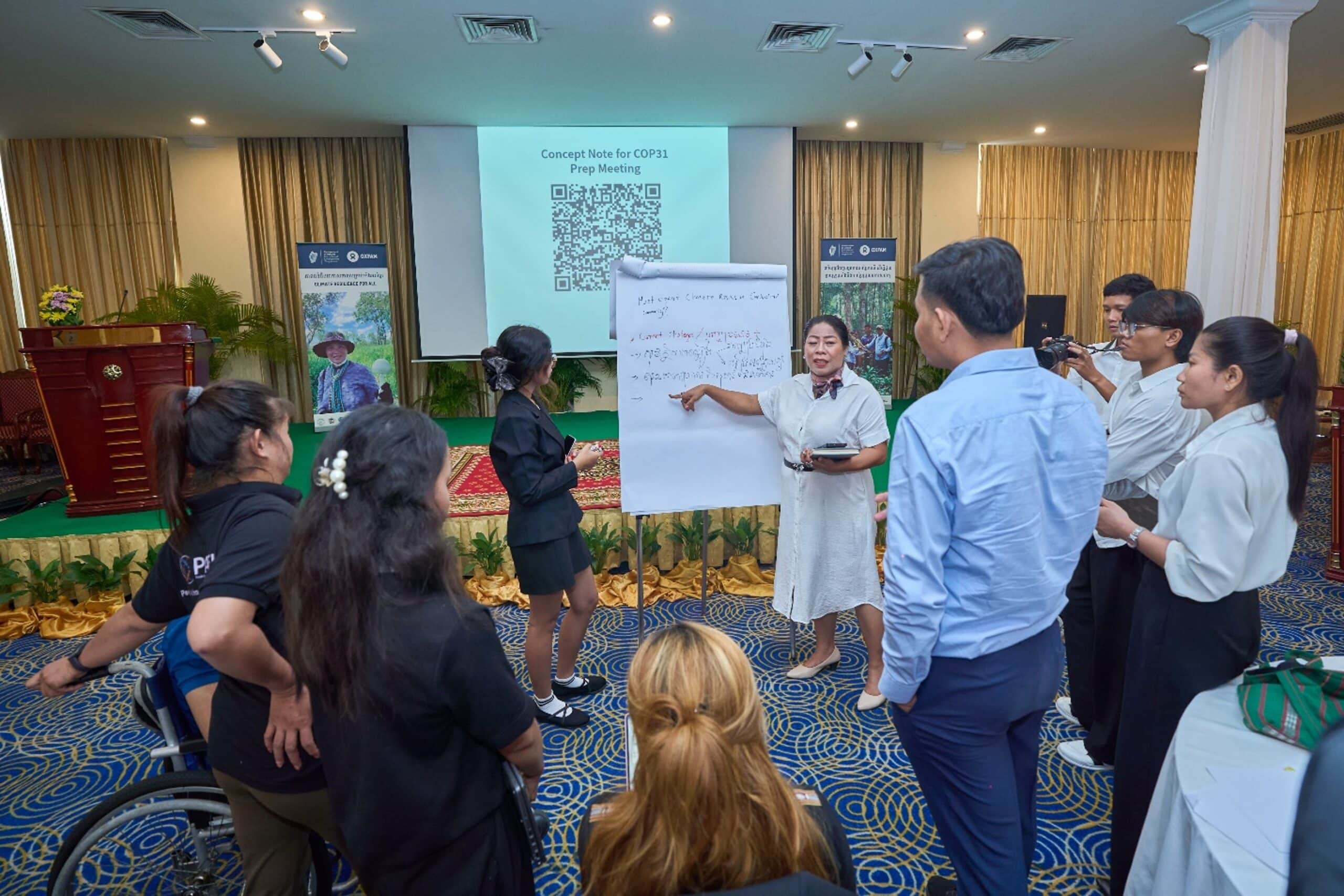
Cambodia is pushing for greater access to climate finance, enhanced adaptation support, and an equitable transition as it gears up for the 31st Conference of the Parties (COP31) in November.
On September 23, the NGO Forum on Cambodia (NGOF) and Oxfam co-hosted a national consultation in Phnom Penh to shape the country's negotiating stance ahead of the summit. Around 80 participants attended, drawn from government agencies, civil society, indigenous communities, disability organizations, youth groups, academia, the private sector, UN bodies, and international development partners.
The goal was to craft a unified, evidence-driven position for Cambodia before COP31, scheduled for November 9–20 in Antalya, Türkiye, organizers said in a joint statement.
LDC Graduation and Finance Concerns
Delegates stressed the urgency of delivering tangible support to developing nations grappling with worsening climate impacts that threaten livelihoods, food supplies, and economic growth. Special focus fell on Cambodia's impending graduation from Least Developed Country (LDC) status, the rollout of its Third Nationally Determined Contribution (NDC 3.0), and the importance of preserving access to concessional finance and technical assistance during the transition period.
NGOF Executive Director Soeung Saroeun emphasized that locally led, multi-stakeholder climate initiatives are essential for long-term resilience, and that funding should flow to communities without bureaucratic barriers or preconditions. "I hope our voices are heard and taken into account by global leaders, especially emitter countries," he said.
Ambitious Targets Need Matching Finance
Oxfam Cambodia's National Director Phean Sophoan argued that the country's climate commitments — a 55 percent emissions cut by 2035 and carbon neutrality by 2050 — must be backed by adequate international funding. She warned that a fair global climate framework cannot demand higher ambition from vulnerable nations like Cambodia while pulling concessional support once they leave LDC status. COP31, she said, must produce grant-based, predictable, and debt-resilient financing so that graduation becomes a development milestone rather than a step toward greater climate vulnerability.
Frontline Communities Speak Out
Rural representatives described the toll of erratic weather on farming and food security. Yem Channy, a participant from Stung Treng province, said families that depend on rainfall, crops, and river fish are watching harvests fail and debt mount as weather becomes more unpredictable. She called for stronger local adaptation programs, better protection of natural resources, and climate finance that actually reaches affected communities.
Key Recommendations
The consultation addressed a broad agenda spanning climate finance, adaptation and mitigation strategies, loss and damage, NDC 3.0 implementation, just energy transition pathways, nature-based solutions, carbon markets, climate-resilient agriculture, green investment, and gender-responsive climate action.
- Safeguard climate-finance access for nations transitioning out of LDC status.
- Scale up grant-based funding for adaptation projects.
- Improve direct access to the Loss and Damage Fund.
- Ensure global adaptation frameworks acknowledge the critical role of freshwater ecosystems, particularly the Mekong River and the Tonle Sap Basin.