 Mekong Monitor
Cambodia Rejects Thai Claim That Preah Vihear Was a Military Target
Cambodia's culture ministry has rejected Thai army claims that Cambodian forces used ancient temples, including Preah Vihear, for military purposes. It says the accusations distract from the damage Thai forces have done to Cambodian heritage sites.
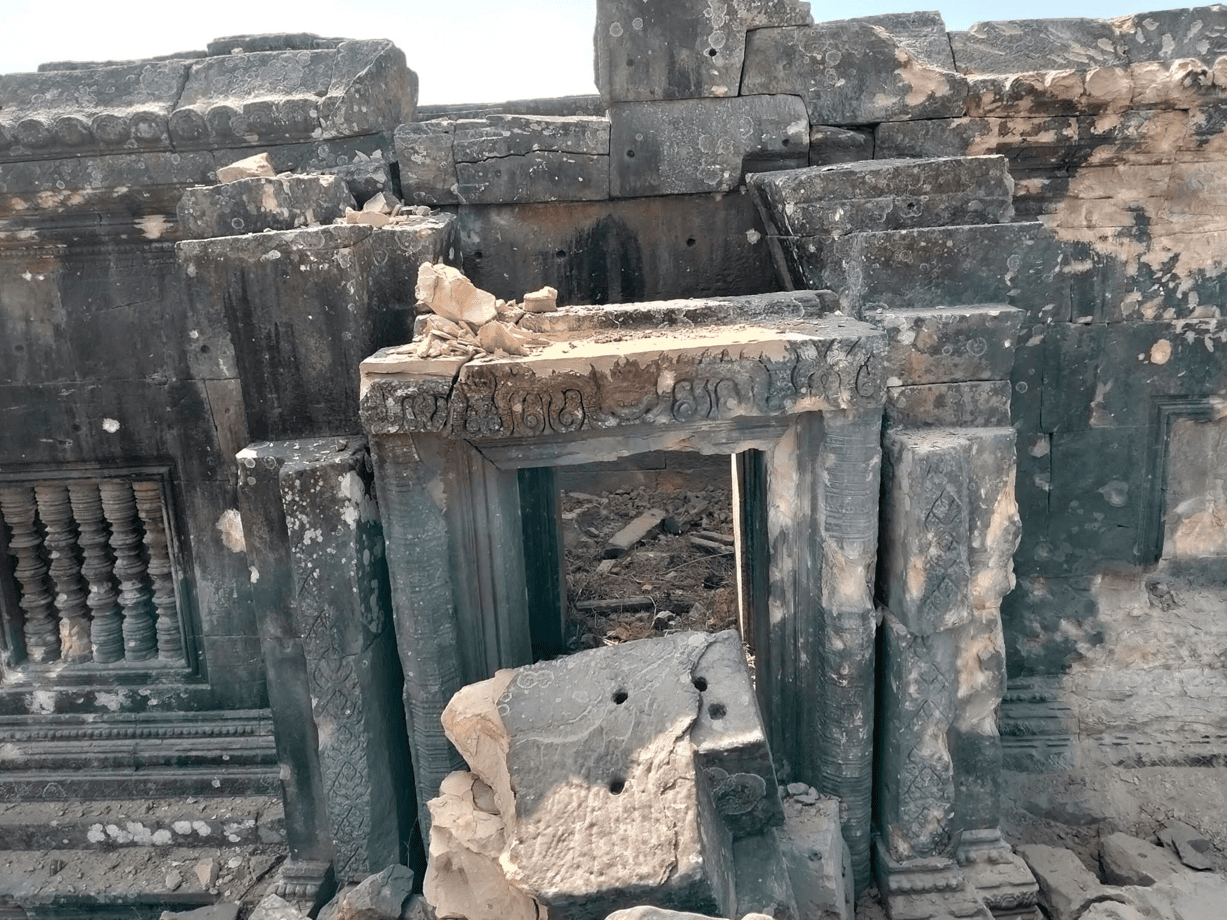
Cambodia's Ministry of Culture and Fine Arts has pushed back against fresh accusations from the Thai military that Cambodian forces used ancient temples, including the UNESCO-listed Preah Vihear, for military purposes during last year's fighting.
In a statement issued on October 22, the ministry said these claims distort the facts, mislead the public, and shift attention away from the damage Thai armed forces have inflicted on Cambodia's cultural heritage.
The ministry stressed that Cambodia's ancient temples and archaeological sites are places of cultural and historical importance, worship, conservation, research, education, and tourism, not military bases. It noted that Cambodia is a party to the 1954 Hague Convention on the Protection of Cultural Property in the Event of Armed Conflict and the 1972 World Heritage Convention, and said it remains committed to protecting its heritage under international law.
The statement was a response to remarks by Thai army spokesperson Winthai Suvaree, who said Thai forces had fired on Preah Vihear because Cambodian troops had installed weapons there to use against Thailand. He argued that this meant the temple had temporarily lost its legal protection under the Hague Convention, which allows for such an exception when a monument is used for military purposes.
Suvaree also accused Cambodia of using the temple as a shield and of failing to prioritise its conservation.
The culture ministry flatly rejected these accusations. It formally protested the continued presence of Thai forces and their unilateral activities at Tamone Thom, Ta Krabei, and Khnar temples, as well as at other archaeological sites along the Cambodia-Thailand border.
According to the ministry, Thai forces have carried out demining, infrastructure and electricity-network development, restoration and construction, and other work at these sites without the consent of Cambodian authorities. It warned that such actions threaten Cambodia's sovereignty and territorial integrity and could undermine efforts to peacefully resolve outstanding border issues.
The ministry also pointed to the extensive damage done to Preah Vihear and other Cambodian heritage sites during the clashes in July and December 2025. It argued that the destruction of irreplaceable cultural property makes restraint, accountability, and full respect for heritage conventions more urgent than ever.
A call for peaceful resolution
Cambodia urged Thailand to resolve outstanding issues through peaceful means and established bilateral mechanisms, including the Joint Boundary Commission (JBC). It also renewed its call for the return of archaeological objects removed from Khnar Temple and taken to Thailand.
The ministry concluded that Cambodia's temples are central to the nation's identity and to the shared heritage of humanity. They must be protected rather than politicised, preserved rather than exploited, and kept free from unilateral actions and military confrontation.