 Mekong Monitor
Cambodia Calls on Thailand to Return K’nar Temple Artefacts and Rejects Bangkok’s Sovereignty Claims
Cambodia has demanded that Thailand return artefacts taken from K’nar Temple and stop unauthorised work at its heritage sites. Phnom Penh says Bangkok is using heritage registration to back territorial claims over disputed Khmer temples.
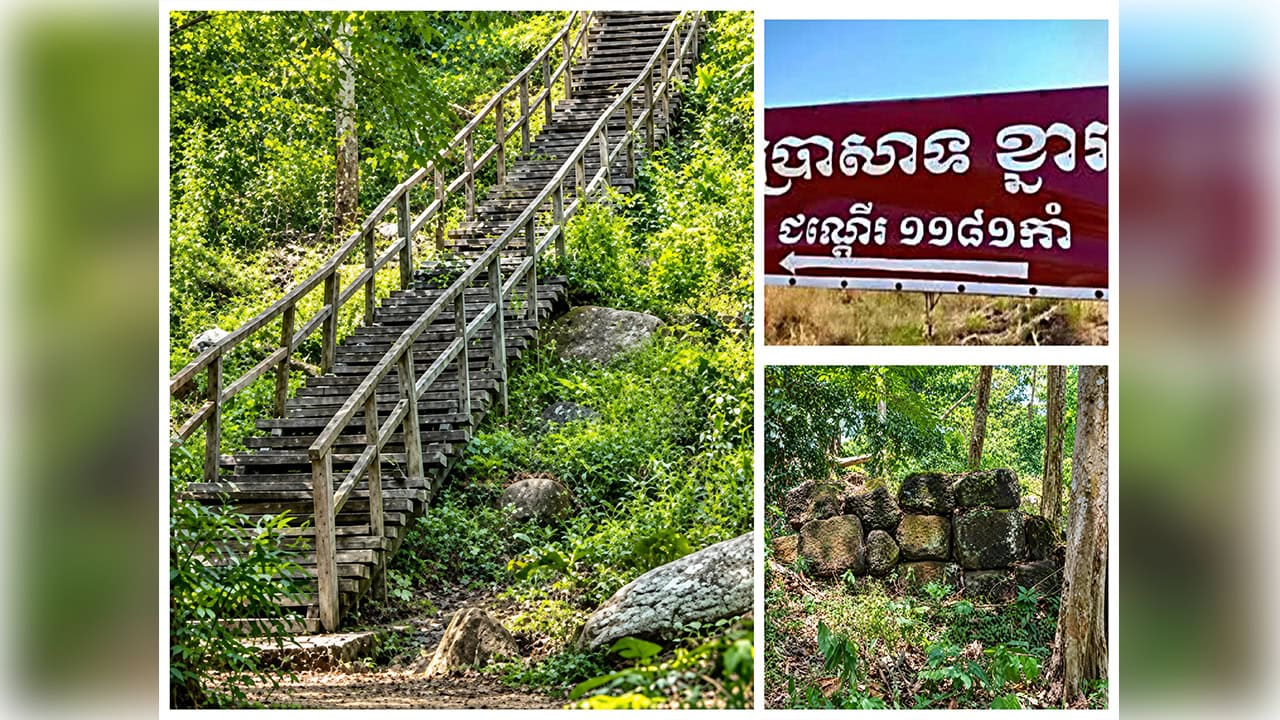
Cambodia has urged Thailand to hand back the archaeological objects taken from K’nar Temple and to stop carrying out unauthorised work at Cambodian heritage sites. Phnom Penh says Bangkok is using heritage listings and conservation measures to strengthen its territorial claims over several Khmer temples along the shared border.
In an October 27 statement, the Ministry of Culture and Fine Arts responded to remarks made on October 25 by Thai Culture Minister Sabeeda Thaised. She had said that K’nar and Ta Krabey temples lie within Thai territory and have been registered as part of Thailand’s national cultural heritage. The ministry also criticised Thailand’s refusal to return the removed objects, dismissing the justification that they were being kept for research, maintenance and conservation.
Cambodia said the Thai position has no basis in international law. It warned that Thailand’s unilateral moves at the temples, which it says are under the unlawful occupation of the Thai military, could erode efforts to rebuild trust after the border clashes of 2025.
“Thailand’s administrative steps, including adding these temples to its national heritage list and asserting management and conservation rights without Cambodia’s consent, amount to deliberate efforts to create a fait accompli on the ground,” the ministry said.
Historical maps and legal arguments
The ministry pointed to two maps that, in its view, place the temples inside Cambodia. The first is the 1:200,000-scale map produced during boundary work between French Indochina and Siam under the 1907 Franco-Siamese Convention. Cambodia says Thailand recognised that map through the 2003 Terms of Reference and other agreed technical records. The second is Thailand’s own unilateral Series L7017 map, drawn at 1:50,000 by its military, which also shows the temples on the Cambodian side.
Cambodia added that Thailand changed its position on the 1907 map after the 2025 border conflict broke out. The ministry also cited the International Court of Justice rulings of 1962 and 2013 on Preah Vihear temple, arguing that they support the validity of the historical boundary mapping. Although it described the L7017 map as a unilateral document with no standing in international law, the ministry said the map’s depiction of the temples still strengthens Cambodia’s case. An illustration released with the statement compares the two maps and shows where K’nar Temple sits relative to the boundary lines.
Heritage protection and boundary commitments
The ministry said removing cultural property from territory under occupation breaches international obligations to protect heritage. It referred specifically to the 1954 Hague Convention for the Protection of Cultural Property in the Event of Armed Conflict, the 1972 World Heritage Convention, and other UNESCO instruments on conserving cultural property and monuments.
It also warned that removing artefacts and altering the areas around the temples could shift the border landscape, destroy evidence and change the original terrain of disputed land. In Cambodia’s view, these actions go against Article 5 of the 2000 Memorandum of Understanding between the two countries, which requires boundary surveys and demarcation to be carried out through the Joint Boundary Commission (JBC). Cambodia insisted that neither side should take unilateral steps that interfere with the agreed demarcation process.
The ministry said the dispute over the temples and their objects risks creating unnecessary tension on the border and undermining commitments both governments made to rebuild confidence. It cited the joint statement of December 27, 2025, and later agreements aimed at repairing relations after the conflict.
“These actions create needless tension along the border and weaken the earlier agreements and commitments both countries made to rebuild mutual trust,” the ministry said.
It called on Thailand to immediately halt all unauthorised activity at Cambodian heritage sites, return the objects removed from K’nar Temple, and respect Cambodia’s sovereignty, territorial integrity and cultural heritage. The ministry also urged the JBC to resume its work on outstanding boundary issues through peaceful dialogue, international law and existing bilateral agreements. It reaffirmed Cambodia’s commitment to settling disputes peacefully while protecting its cultural heritage for future generations.