 Mekong Monitor
Cambodia Calls for Border Agreement Implementation, Defends UN Maritime Conciliation Amid Thai Criticism
Cambodia urges Thailand to implement border agreements and allow displaced civilians to return, while defending its use of UN arbitration for a maritime dispute after criticism from the Thai Prime Minister.
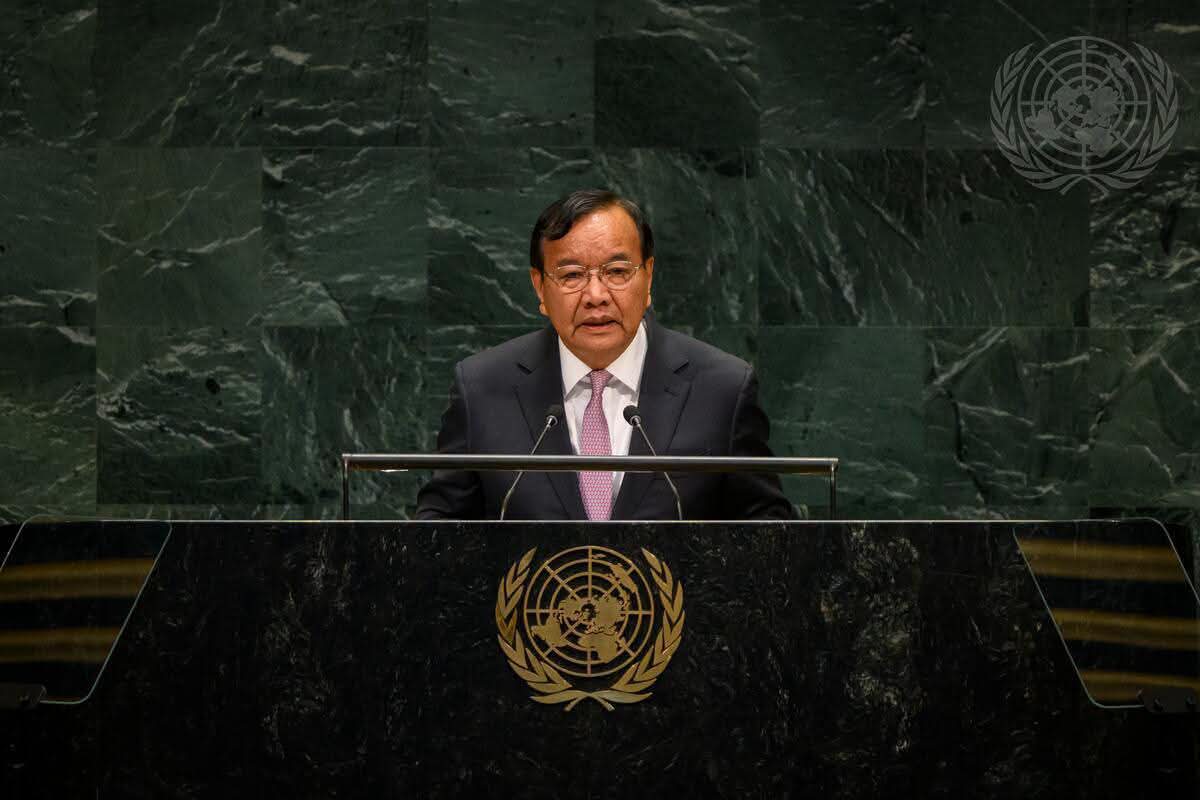
Cambodia has urged Thailand to uphold existing border agreements and resume the demarcation process, while also allowing over 20,000 displaced Cambodian civilians to return to their homes. In a statement at the United Nations, Cambodia defended its decision to pursue international conciliation over a separate maritime dispute.
Speaking to the UN General Assembly, Cambodian Foreign Minister Prak Sokhonn stated that recent hostilities have severely damaged mutual trust and left lasting harm, including damage to cultural heritage sites and a persistent danger from unexploded ordnance. He emphasized that rebuilding this trust is essential for future peace and stable neighborly relations.
The address followed comments from Thai Prime Minister Anutin Charnvirakul, who told the assembly that Cambodia had not genuinely pursued bilateral dialogue. Instead, Cambodia initiated compulsory conciliation proceedings under the United Nations Convention on the Law of the Sea (UNCLOS).
Minister Sokhonn did not directly reference the Thai PM's remarks. He outlined Cambodia's position, which remains focused on peaceful settlement. He called for the full implementation of past agreements, particularly a joint statement from December 27, 2025, in which both nations committed to renounce force and respect international boundaries.
Sokhonn further advocated for the prompt restart of the Joint Boundary Commission's survey and demarcation work to resolve outstanding claims. He also demanded an end to military activities in areas Cambodia considers occupied, which he said prevent more than 20,000 of its citizens from returning home.
Regarding the maritime dispute, Sokhonn explained that Thailand's termination of the 2001 bilateral memorandum of understanding in May removed the sole legal framework for resolving it. This, he said, prompted Cambodia to seek compulsory UNCLOS conciliation. He described a recent commission meeting in Singapore as a constructive opportunity to bridge differences.
Prime Minister Anutin had previously stated that Thailand was participating in the UNCLOS process in good faith. He also called for concrete bilateral cooperation on border security, online scams, and demining.
Minister Sokhonn also identified transnational online scams as a top national priority, noting they require stronger international cooperation. The core disagreement between the two nations centers on how trust was broken and the appropriate path to restoring it: Cambodia emphasizes renewed land demarcation and ceasefire adherence, while also pursuing the UNCLOS maritime process; Thailand questions the choice of that process and prioritizes direct bilateral security cooperation.