 Mekong Monitor
Buddhist Head Urges Cambodians to Keep the Rice-Offering Ritual Alive and Respect Differing Views
The head of the Buddhist Association of Cambodia has urged people to keep the traditional sticky-rice offering alive for future generations, while asking both participants and non-participants to respect one another's beliefs.
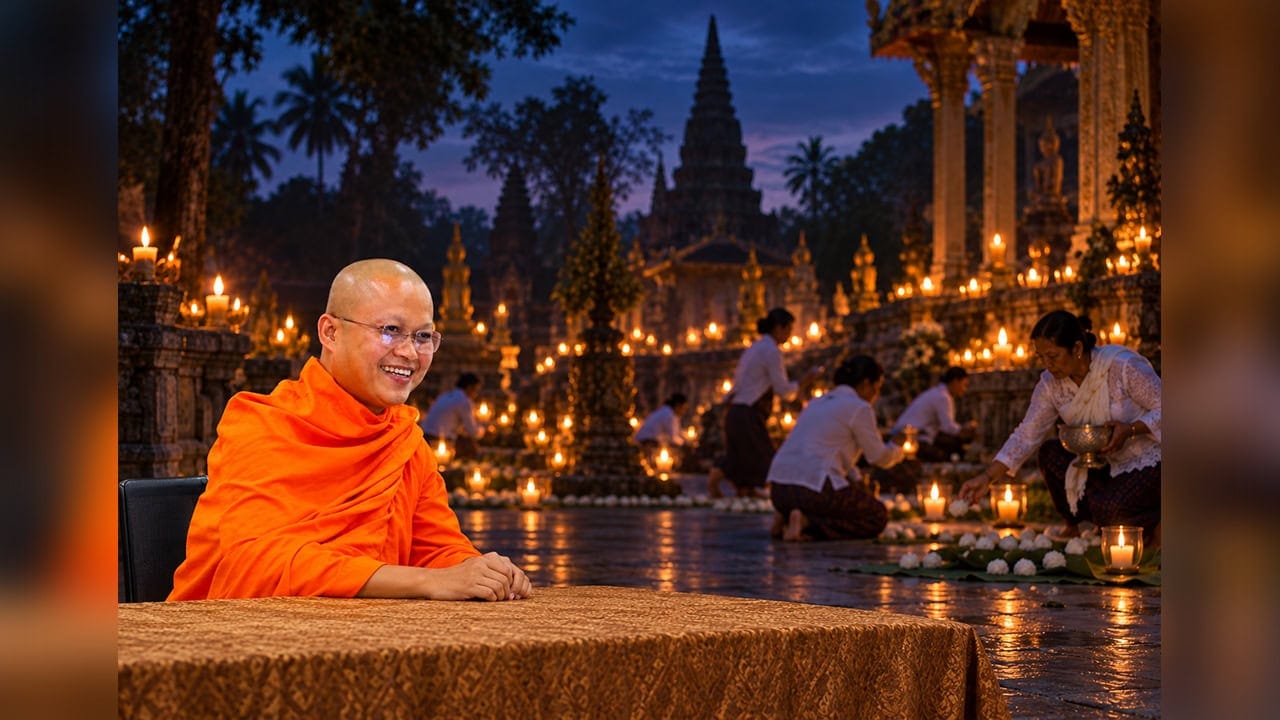
The head of the Buddhist Association of Cambodia has called on Buddhists and other Cambodians to keep up the traditional rice-offering ceremony as a way of safeguarding the nation's cultural heritage for coming generations. He also asked people who take part in the ritual and those who do not to respect each other's views and steer clear of arguments.
Venerable Sam Sokha, the association's president, said the Kingdom's culture, traditions and customs can only endure if the public takes part, especially young people and those yet to come.
In a social media post, he encouraged Buddhists to join the ceremony in large numbers. He described taking part as a way of showing love for the nation's identity and for the heritage handed down by their ancestors.
Origins of the ritual
An accompanying background account traces the tradition back to ancient rites for the dead. It connects the practice to shraddha, a Brahmanical ancestral ceremony, and cites the Thnal Baray inscription, catalogued as K279, from the reign of King Yasovarman I.
According to the account, the sticky-rice balls mean more than food for hungry spirits. They stand in for a physical body through which the dead, believed to have been reborn as preta, or hungry ghosts, could return to human life.
The account also links the custom to the reign of King Jayavarman VII, in the late 12th and early 13th centuries. At that time, rites drawing on Mahayana Buddhist beliefs were held for those who had died in war. These rites were associated with Avalokiteshvara, the bodhisattva of compassion, and with the belief that suffering spirits could be freed from their torment.
Concerns about dissent within the community
The appeal came as he voiced concern about a small number of monks, nuns and lay people who, in his view, seemed uneasy with their own national traditions and customs.
“Why do a small number of monastics and laypeople express rationalist views that seem to take issue with their own culture, traditions and customs, while other peoples continue to preserve theirs?” he asked.
To show that modern progress and traditional practice can coexist, he pointed to Halloween celebrations in Western countries and to Chinese customs that involve burning joss paper. He noted that many countries keep their customs alive even as science and technology advance rapidly.
He told those who do not share the faith to respect others' beliefs and avoid quarrels over religion. Such disputes, he said, do nothing to preserve or promote national culture.
For those who hold to the ceremony, he encouraged them to keep observing it, arguing that each person's participation helps pass cultural heritage from one generation to the next.
In the same message, he raised a hypothetical scenario: foreigners claiming the rice-offering ceremony as their own ancestral tradition and seeking UNESCO recognition for it as cultural heritage. He used this to urge Cambodians to think seriously about why protecting their traditions matters. Keeping the tradition alive, he maintained, depends on participation across generations, so that Khmer cultural identity can be handed down to future descendants.