 Mekong Monitor
Beneath the Border Fighting: Why Cambodia and Thailand's Tensions Keep Returning
This opinion piece examines how unresolved territorial claims, the politicisation of temple heritage and the limits of regional institutions helped pave the way for renewed fighting between Cambodia and Thailand.
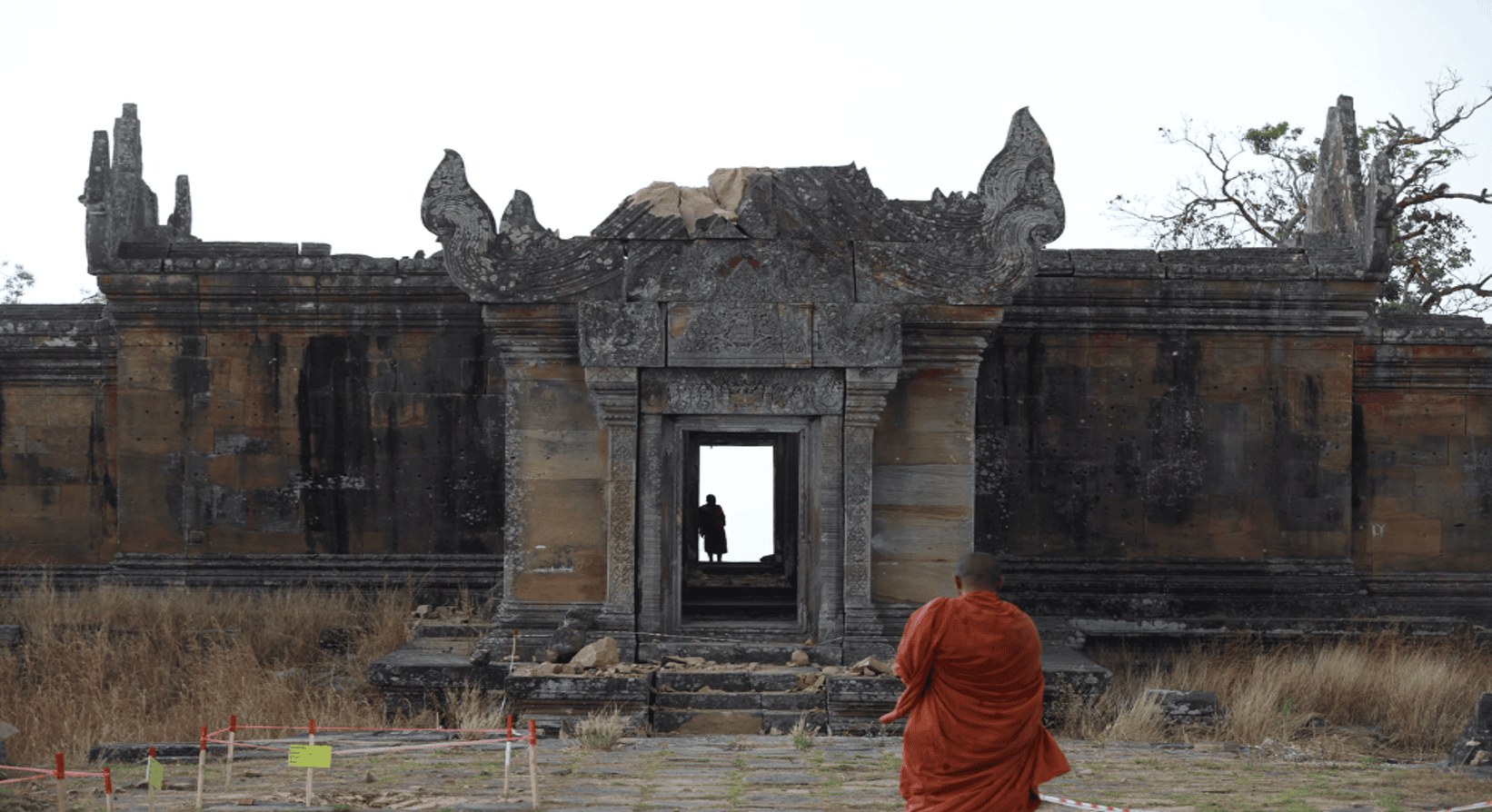
When peace agreements are signed and the guns fall silent, a frontier may appear to have settled. But if the issues that fuelled a conflict remain unresolved, that calm can prove fragile.
The 2008–2011 confrontation between Cambodia and Thailand offers a useful lens for understanding the fighting of 2025. To what extent did the questions left open after the earlier conflict shape the renewed violence?
This piece argues that the 2008–2011 conflict helped create the conditions in which fighting could flare again. It examines three factors: wider territorial disagreements that were never settled, the politicisation of cultural heritage, and the shortcomings of international institutions. None of these fully explains the 2025 clashes, but together they help explain why relations between the two countries remain so difficult to repair.
Historical Background
The roots of both the 2008–2011 fighting and the 2025 renewal reach back to the colonial era. Maps drawn during that period placed Preah Vihear within Cambodia. The International Court of Justice (ICJ) affirmed this in 1962 and clarified its ruling in 2013, yet the broader border dispute remained open. After UNESCO inscribed the Preah Vihear Temple on its World Heritage List in 2008, nationalist feeling fed a series of armed clashes between the two countries that lasted until 2011.
The Association of Southeast Asian Nations (ASEAN) tried to intervene, but its reach was limited. Its long-standing principle of non-interference and its difficulty in reaching consensus among members constrained what it could do. Still, it did help facilitate negotiations between the two sides.
Around the same time, Cambodia asked the ICJ for a clarifying interpretation of its 1962 judgment. The court's findings affirmed Cambodia's sole sovereignty over the entire promontory on which the temple stands. However, this did not resolve all the territorial disagreements between the two countries.
Relations were relatively cooperative for a period after the 2008–2011 conflict, although disputes over the contested land persisted. The death of a Cambodian soldier in 2025 reignited tensions, and both sides responded by mobilising their militaries.
What followed was a series of intermittent clashes along the frontier. They caused military and civilian deaths, displaced local residents and destroyed property. The international community, led by ASEAN, the United States and China, brokered a temporary ceasefire in October, but it did not produce a conclusive resolution. After fighting broke out again in December, Cambodia and Thailand agreed to a new ceasefire on 27 December 2025. The deal allowed international mediators and bilateral cooperation envoys to monitor the disputed territories, and that monitoring is still under way.
So what does the 2025 conflict reveal about the hostilities of 2008–2011?
Unresolved Territorial Disputes
Settling the sovereignty of the temple, first through the 1962 ICJ case and later through its 2013 clarification, did not resolve the wider territorial tensions between Cambodia and Thailand.
The 1962 case concerned only the temple's sovereignty and the withdrawal of Thai forces from the temple and its vicinity on Cambodian territory. The 2013 clarification extended the ruling to the whole Preah Vihear promontory, but it did not determine the demarcation of the full Cambodia–Thailand border. Applying the principle of non ultra petita, the court based its decision solely on the specific request Cambodia had made.
Disputes persisted in other areas as well. Fighting in May 2025 near the Emerald Triangle, where Cambodia, Laos and Thailand meet, along with clashes in July and December around the Tamone and Ta Krabei temples, showed that contested territory extends well beyond Preah Vihear.
Until both countries establish a clear and precise border, unsettled territorial questions are likely to keep complicating their bilateral relations for decades.
Taking the matter to the international court seems unlikely, however, because neither government is willing to cede territory. Each side fears that giving ground would stir nationalist sentiment at home and could trigger domestic unrest.
The Thai government's support for the Preah Vihear inscription illustrates the problem. It faced major backlash from Thai nationalists, who viewed the move as a concession of the temple and the surrounding land to Cambodia.
The political cost of accepting an unfavourable outcome may therefore discourage leaders from pursuing or implementing a final settlement.
Cultural Heritage and Historical Memory as Tools of Nationalism
The contest over Preah Vihear and other temples also shows how cultural heritage can be used to justify nationalism and reinforce territorial claims.
When UNESCO listed Preah Vihear in 2008, Cambodia's name was included alongside the temple, effectively declaring the site to belong to Cambodia alone. This made the temple a focal point in an already disputed territory.
In 2025, temples such as Ta Krabei, Tamone and, once again, Preah Vihear became the focus of nationalist sentiment. In February, groups of tourists reportedly visited these sites singing nationalist songs to assert Cambodian ownership, which angered many Thai nationals.
These temples are part of the shared history of the Khmer Empire, and their significance goes well beyond the lines on a map. When a monument becomes tied to national identity, however, giving it up can be portrayed as surrendering a country's cultural heritage.
Political actors can exploit these feelings by presenting the defence of a temple as a patriotic duty and any compromise as a betrayal of heritage. Because the territorial tensions from 2008 were never resolved, similar narratives were mobilised again in 2025.
In this way, the earlier conflict reinforced the politicisation of heritage in later disputes, tying the dispute more closely to national identity and making it harder to resolve.
Limits of ASEAN in Resolving Regional Disputes
ASEAN, the region's primary international body, plays an important role in helping member states resolve disputes peacefully. However, because its charter gives it only an advisory role, it can engage only in indirect diplomacy, offering suggestions to the parties involved.
As a result, its efforts have not always been enough to address a multifaceted conflict such as the one between Cambodia and Thailand.
During the 2008–2011 conflict, ASEAN sought to de-escalate matters by urging both countries to agree to an immediate ceasefire.
Nevertheless, Thailand's preference for resolving the dispute through bilateral negotiations limited ASEAN's effectiveness, and the bloc's non-interference principle, which sits at the core of its charter, restricted its room to act.