 Mekong Monitor
Beijing's Riverfront Light Festival Shows Cambodia How to Light Up Night Tourism
Beijing's Liangma River light festival combines public art, riverfront installations and cultural performances into a night-tourism model that Cambodia could adapt for its own cities and heritage sites.
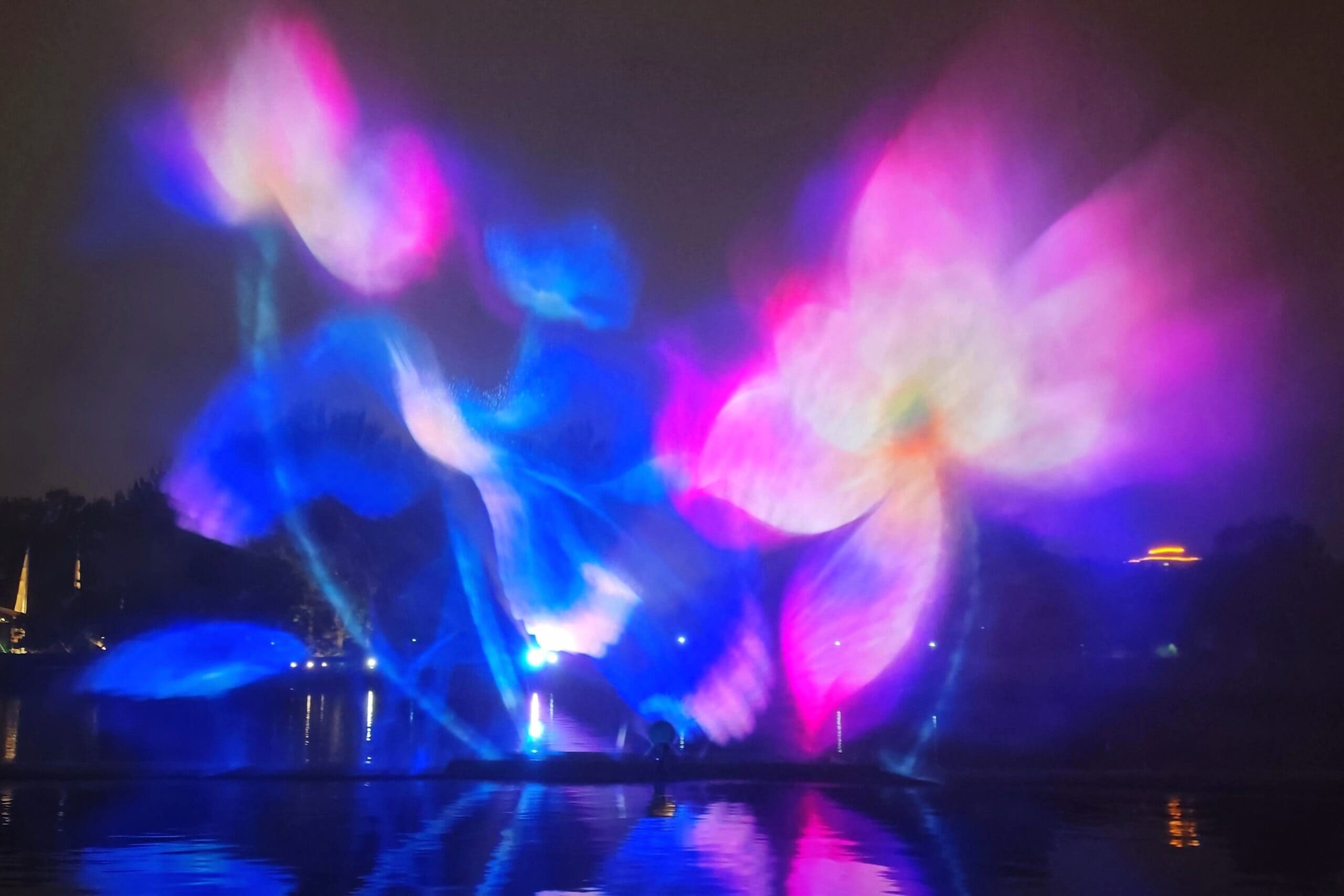
A new approach to lighting up rivers after dark is catching the attention of Southeast Asian tourism planners. Beijing's Liangma River International Arts Festival has transformed a stretch of urban waterway into an open-air venue for light installations, live music and international performances — and it's offering a blueprint Cambodia could adapt for its own riverfronts and heritage sites.
ASEAN journalists visiting Beijing on September 24 attended the opening of the 2026 Chaoyang International Light Consumption Season at the Shell Theatre, followed by a nighttime boat ride along the Liangma River. Along the way, they passed a water-piano installation at White Sail Pier, a traditional Chinese instrumental set near Lotus Lake, a floating "Rubik's Cube" stage on North Lake, and interactive water performances at Shuidui Bridge.
The festival runs from September 11 to October 11, timed to coincide with China's Mid-Autumn Festival and National Day holiday. A total of 46 light-and-shadow installations were created in collaboration with international art teams and eight major Chinese art academies. Four themed routes weave together displays with food, music, sport, creative industries and intangible cultural heritage, while more than 20 cultural events are scheduled across Chaoyang's commercial districts.
A Model for Cambodia
The concept — using public art, illuminated landmarks and organised routes to draw visitors after dark — maps well onto Cambodia's own strengths. Phnom Penh's riverside and Siem Reap's cultural corridor are natural candidates for similar night-tourism programming that connects traditional music, dance, local food and heritage sites into a cohesive evening experience.
Cambodia has already tested the waters. The annual Thanks Angkor Festival and its "Memory Night" programme have brought Khmer performing arts into the Angkor Archaeological Park after sunset. In 2022, Lakhon Khol, Kun Lbokator and other traditional forms were staged behind Angkor Wat to mark 30 years since the site's UNESCO World Heritage inscription. By 2023, nearly 80,000 visitors attended exhibitions and performances across the park, with Lakhon Yike, Lkhon Sbek Thom and martial arts demonstrations at the Terrace of the Elephants among the highlights.
More recently, weekly pop-up performances launched in Siem Reap on September 18 have brought Kun Lbokator to the Terrace of the Elephants on Fridays and Lkhon Sbek Thom along the Siem Reap River on Saturdays.
Art Without Walls
Richard Lewis, chairman of the Asian Arts Fund Scotland and former general coordinator of the Edinburgh Festivals Committee, called the Liangma River setting ideal for taking art out of traditional venues. "The riverbank serves as our stage and the city forms our backdrop," he said. "Free from barriers, art is no longer confined to theatres and galleries. Instead, it merges with the evening breeze along the river, the city streets and lanes, and the everyday lives of local residents."
Lewis noted that the Edinburgh Festival and the Liangma River International Arts Festival have launched a joint cultural exchange called "Dialogue Between Two Cities," with hopes for regular cooperation between Chaoyang and Edinburgh, including artist residencies and the sharing of original works. The Edinburgh festivals draw more than 4.5 million attendees each year, turning Scotland's capital into a global stage through performances in streets, historic buildings and temporary venues.
For Cambodia, the takeaway is that night tourism need not rely solely on bars and commercial entertainment. Traditional music, dance, handicrafts, local cuisine, illuminated heritage sites and river-based performances can be woven into a richer cultural offering — one that serves both visitors and local communities long after the sun goes down.