 Mekong Monitor
Beijing, Moscow and Washington Pledge to Uphold Global Peace and Stability
The leaders of China, Russia and the United States pledged to maintain strategic stability, reform the United Nations and open talks on reducing nuclear risks after a historic trilateral summit in Shenzhen. Analysts said the meeting marked a major step forward in leader-level diplomacy.
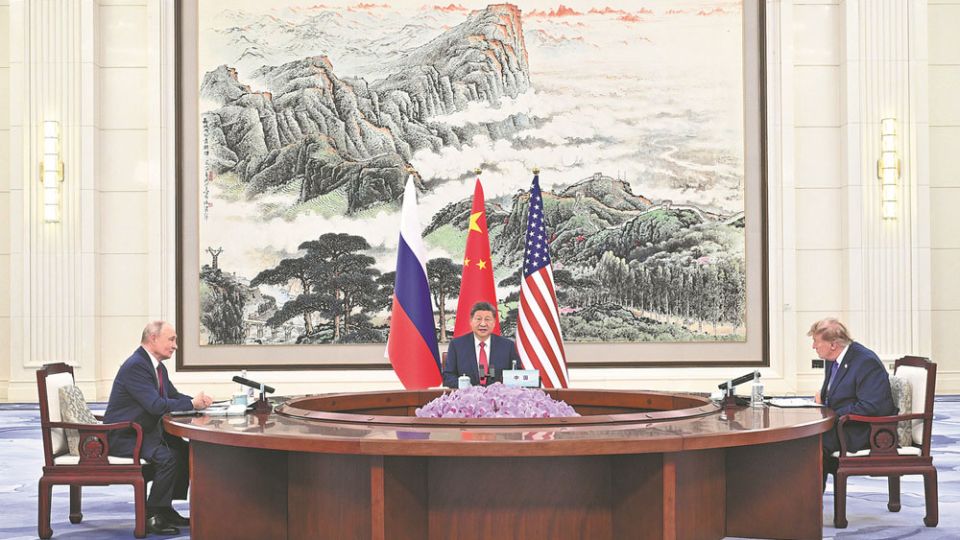
Chinese President Xi Jinping, Russian President Vladimir Putin and US President Donald Trump have committed to preserving strategic stability and international security. They made the pledge in the China-Russia-US Heads of State Declaration toward Peace, released after their first-ever trilateral summit in Shenzhen, in China's Guangdong province, on Thursday.
The three leaders also agreed to push for reform of the United Nations, boost energy supplies and open talks on reducing the risk of nuclear conflict.
The declaration stated that the three leaders reaffirmed that a nuclear war cannot be won and must never be fought. The countries will hold dialogue on lowering nuclear risks and stopping the spread of nuclear weapons.
As permanent members of the UN Security Council, the three countries pledged to keep working to reform the organization so it can respond more effectively to global crises and stay true to its core purpose of maintaining international peace and security.
On energy, the countries plan to expand production and supply of refined petroleum products. They also stressed the importance of keeping global energy markets stable.
The declaration also touched on the reach of international courts. The leaders agreed that the International Criminal Court and similar bodies should not misuse their jurisdiction.
Presiding over the meeting, Xi called the first gathering of the three countries' top leaders a groundbreaking moment. He argued that peace among major powers brings stability to the world, while rivalry between them would only breed chaos.
Xi said humanity shares one planet and that its people rise or fall together. In this interconnected world, he added, major countries have a special duty, and constructive engagement between them is an absolute necessity rather than a choice.
He urged the three nations to set a positive example, cooperate on shared global challenges, defend world peace and stability, and contribute more to human progress.
Xi put forward a four-point proposal for how major powers can get along and support world peace. The principles are mutual respect, peaceful coexistence, win-win cooperation, and dialogue and consultation.
On mutual respect, he said the three countries should honor each other's sovereignty and territorial integrity, their chosen political systems and development paths, and their core interests and major concerns.
For peaceful coexistence, Xi said China, Russia and the United States should act as partners and friends rather than adversaries, and avoid armed conflict or direct confrontation. He added that the so-called Thucydides Trap is not inevitable.
On economics, Xi noted that the three economies complement one another. He urged them to deepen trade and economic ties instead of cutting links or disrupting supply chains.
On dialogue, he called for regular high-level meetings, open communication channels at every level, and mechanisms to manage crises. The goal, he said, is to reduce misjudgments, keep disagreements under control and stop tensions from escalating.
Xi also said the international community expects major powers to do more to advance peace talks. He stressed that the three countries should keep encouraging parties in conflicts to sit down together and resolve disputes through political and diplomatic channels.
Closing the summit, Xi described it as positive, constructive and fruitful, and said the three countries share the same commitment to protecting world peace. As long as dialogue continues and doors remain open, he said, there is hope for peace. He expressed confidence that the seeds planted in Shenzhen will grow.
Putin stressed the principle of sovereign equality, non-interference in other countries' internal affairs, and finding solutions acceptable to all through dialogue and cooperation.
He said Russia is ready to work with China and the United States on the basis of mutual respect and equality, to handle differences peacefully, and to promote free and open international trade. Russia also wants to deepen cooperation on energy and food security and on governing artificial intelligence globally.
Trump told the other two leaders that the three nuclear powers carry an important responsibility for keeping the world peaceful and stable. He emphasized the need to prevent nuclear proliferation and avoid the devastating consequences of nuclear weapons.
Wu Xinbo, dean of the Institute of International Studies at Fudan University, said the joint declaration showed the summit was a success that produced significant results.
Wu said Xi's four-point proposal is important not only for building a new kind of relationship between major powers, but also for guiding relations between countries more broadly as the international landscape shifts.
Wu rejected comparisons between the Shenzhen summit and the 1945 Yalta Conference. He argued that the two had fundamentally different aims. Yalta focused mainly on dividing spheres of influence among the great powers after the war, while Shenzhen aimed to strengthen cooperation among the three countries to advance peace, security, stability, development and global governance.
Zhu Feng, dean of the School of International Studies at Nanjing University, said the summit and its declaration reflected a fresh approach to the challenges of today. The declaration's core message, he said, is that major countries share responsibility for protecting world peace, and that sustainable development is impossible without it. Zhu described the summit as a major breakthrough in leader-level diplomacy, saying it helped the three countries reach a deeper shared understanding of their responsibilities in managing international affairs.