 Mekong Monitor
Beijing Has Defined Its Limits — What Are Washington's?
As Donald Trump prepares a lavish White House welcome for Xi Jinping, Beijing has restated its four red lines, prompting analysts to ask what limits Washington will set in return, from Iran and rare earths to the South China Sea.
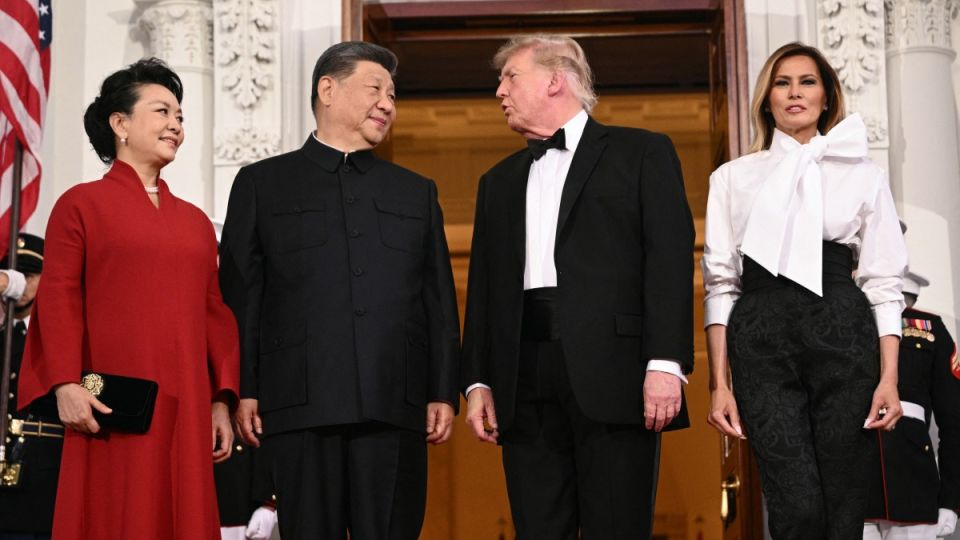
As President Donald Trump prepares an elaborate welcome for Chinese leader Xi Jinping, analysts in Washington are asking where the United States itself intends to draw the line.
Xi's visit, his first to the White House in over a decade, is set for September 24 and is expected to be highly ceremonial. Plans include a formal arrival ceremony with a military band and a flyover by fighter jets, followed by bilateral talks between the two leaders. While they meet, First Lady Melania Trump is scheduled to host Xi's wife, Peng Liyuan, at the Smithsonian National Museum of Asian Art. The day is due to end with a state dinner.
Beijing's four red lines
A day before Xi's arrival, China's ambassador to the US, Xie Feng, reiterated Beijing's positions in an opinion piece published on September 23 in the People's Daily. He wrote that China's sovereignty, security and development interests must not be infringed upon and pointed to four issues that should not be questioned.
Those four areas, he said, are:
- the question of Taiwan
- democracy and human rights
- the country's political path and system
- its right to develop
The message was not new. Xi himself had set out the same four points when he met then-President Joe Biden in Lima in November 2024, and Chinese officials regularly repeat them around high-level contacts with Washington.
Where Washington draws the line
If Beijing's boundaries are clear, what does Washington want Beijing to stop doing? According to Kelly Grieco, a scholar of US foreign policy at the Stimson Center, the American side has been far less explicit, leaving observers to draw their own conclusions.
One likely priority is Iran. China remains a major buyer of Iranian oil and is reported to have provided support for Tehran's war-related activities. Analysts are now watching whether Beijing will propose to act as a mediator and what it might ask for in exchange.
Another key concern is rare earths. Although Beijing has said it eased its tightest export restrictions on these critical minerals — vital for products ranging from smartphones to weapons systems — supplies to American firms remain constrained.
Scott Kennedy, a China specialist at the Center for Strategic and International Studies in Washington, said traditional American concerns have centered on China's industrial policies, its ambitions toward Taiwan, disputes in the South China Sea, and human rights. Those themes, he noted, are less prominent in the current administration's public approach.
"Instead, they want to avoid a conflict, keep markets stable, and secure outcomes that reflect well on President Trump. The nature of the red lines the US is emphasizing now is quite different from before," he said.
Grieco offered a more tempered assessment, arguing she does not see a fundamental break. She pointed out that the Trump administration has continued to push back against Chinese pressure in the South China Sea, reaffirming security commitments to the Philippines, maintaining joint naval patrols and carrying out military exercises.
On issues such as maritime disputes and China's ties to Iran, she said, policy actions matter more than tone. "Some observers are mistaking a deliberate effort to avoid unnecessarily provocative language for a real pullback in commitments. Those are not the same thing," she said.
She added that greater openness from both sides could help. A clearer statement of each country's limits, she argued, would make the relationship more stable and reduce the risk of misunderstanding or unintended escalation.