 Mekong Monitor
Behind the Border Clashes: Why Tensions Between Cambodia and Thailand Keep Returning
Signed treaties and quiet frontiers do not always mean a border dispute is settled. This analysis traces how unresolved territory, politicised heritage and the limits of ASEAN helped set the stage for the 2025 clashes between Cambodia and Thailand.
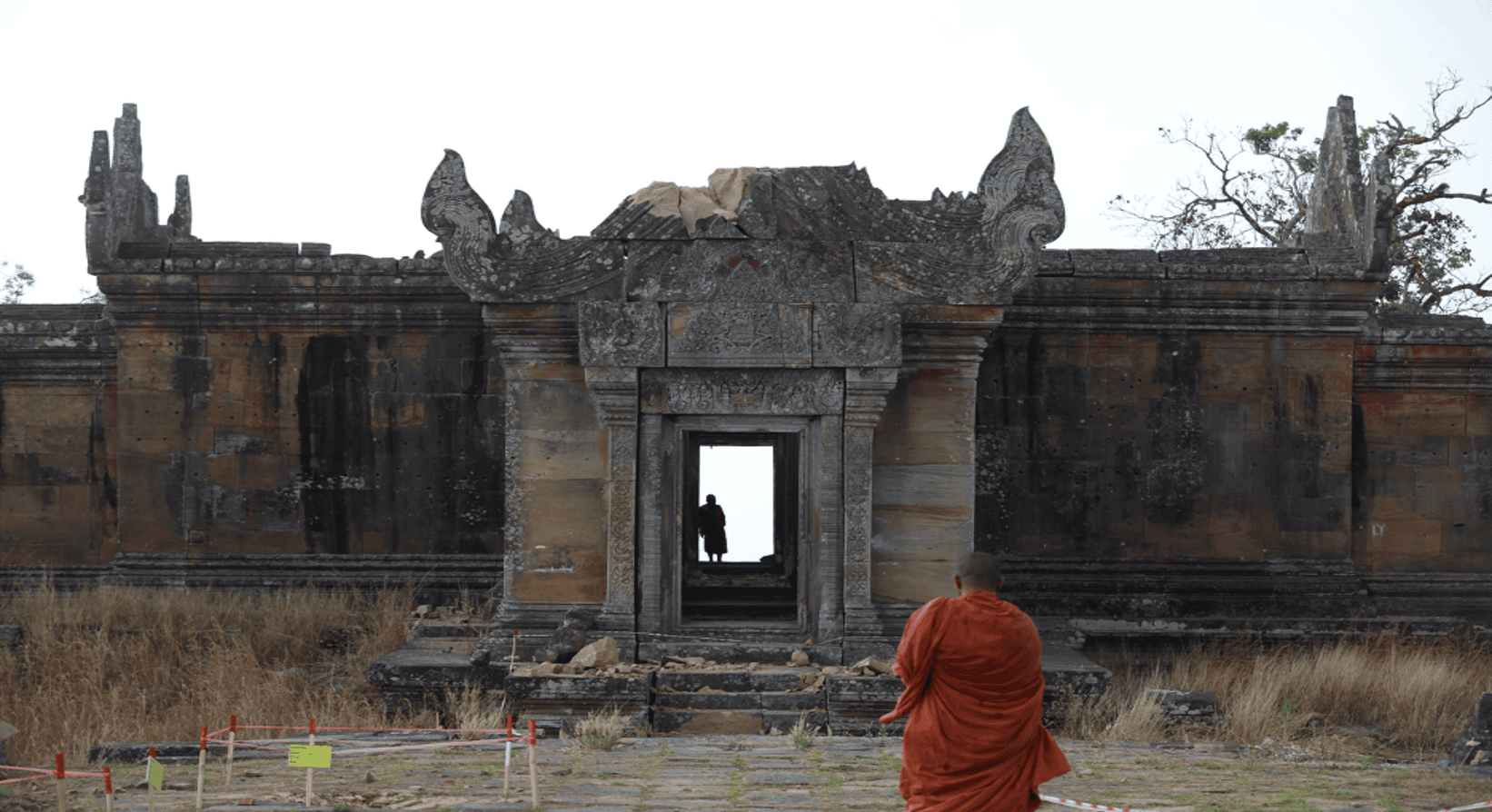
A signed agreement and silent guns do not necessarily mean a border dispute is over. When the grievances behind a conflict go unaddressed, a ceasefire can prove to be only a pause. This raises a pressing question: how much did the unfinished business of the 2008-2011 conflict between Cambodia and Thailand shape the fighting of 2025?
This article argues that the 2008-2011 conflict helped create the conditions that made renewed confrontation possible. It examines three areas: territorial disagreements that were never fully settled, the way cultural heritage became a political tool, and the shortcomings of international institutions in managing the dispute. None of these factors fully explains the renewed fighting on its own. Taken together, however, they help explain why relations between the two countries remain so difficult to repair.
Historical Background
The roots of both the 2008-2011 conflict and the renewed fighting in 2025 can be traced back to the colonial era. Maps drawn during that period placed Preah Vihear within Cambodian territory. The International Court of Justice (ICJ) upheld this claim in 1962 and clarified its ruling in 2013, yet the wider border between the two countries remained disputed.
After UNESCO inscribed Preah Vihear Temple as a World Heritage Site in 2008, nationalist feeling on both sides fueled repeated armed clashes between Cambodia and Thailand, which continued until 2011.
The Association of Southeast Asian Nations (ASEAN) tried to intervene, but its influence was limited. Its long-standing principle of non-interference restricted what it could do, and its members often could not agree on a common position. Still, ASEAN played a useful role in helping bring the two sides to the negotiating table.
At around the same time, Cambodia formally asked the ICJ for a clarifying interpretation of its 1962 judgment. The court had affirmed that Cambodia held sole sovereignty over the whole promontory on which the temple sits. That clarification, however, did not produce a comprehensive settlement of all the territorial disagreements between the two countries.
Relations were comparatively cooperative in the years following the 2008-2011 conflict, although disputes over contested land never fully disappeared. The death of a Cambodian soldier in 2025 reignited tensions, and both sides responded by mobilising their militaries.
What followed was a series of intermittent clashes along the frontier that came to define the conflict. The fighting caused deaths among soldiers and civilians, forced local residents from their homes, and destroyed property.
The international community, led by ASEAN, the United States and China, tried to mediate. In October, these efforts produced a temporary ceasefire, but they did not lead to a lasting resolution. When fighting broke out again in December, Cambodia and Thailand eventually agreed to another ceasefire on December 27, 2025. The agreement allowed international mediators and bilateral cooperation envoys to monitor the situation in the disputed territories, and that monitoring is still ongoing.
So what does the 2025 conflict reveal about the hostilities of 2008-2011?
Unresolved Territorial Disputes
The rulings on sovereignty over the temple, including the 1962 case and its 2013 clarification, did not settle the wider territorial tensions between Cambodia and Thailand.
The 1962 case dealt only with the temple's sovereignty and with the withdrawal of Thai forces from the temple and its vicinity on Cambodian territory. The 2013 clarification extended the ruling to cover the entire Preah Vihear promontory, but the court did not determine where the full Cambodia-Thailand border should run. Applying the principle of 'non ultra petita', the ICJ confined its decision to the specific request Cambodia had made.
The fighting in May 2025 near the disputed Emerald Triangle, a area where Cambodia, Laos and Thailand meet, along with the July and December clashes around the Ta Moan and Ta Krabei temples, showed that territorial disputes continued to affect other parts of the border.
When territorial disagreements remain open, they can keep straining relations between the two countries. Until both sides agree on a clear and precise border, these disputes are likely to shape Cambodian-Thai diplomacy for decades.
A case before the international court seems unlikely, however, because neither government is prepared to give up territory. Each side fears that any concession would stir nationalist anger at home and lead to domestic unrest.
That fear is not unfounded. The Thai government backed the Preah Vihear inscription and then faced heavy criticism from Thai nationalists, who viewed it as handing the temple and the surrounding land to Cambodia.
The political cost of accepting an unfavourable outcome may therefore discourage leaders from pursuing or implementing a final settlement.
Cultural Heritage and Historical Memory as Tools for Nationalism
The disputes over Preah Vihear and other temples also show how cultural heritage can be used to justify nationalism and strengthen territorial claims.
When UNESCO added Preah Vihear to its World Heritage List in 2008, the temple became a focal point of an existing territorial dispute. The listing named Cambodia alongside the temple, which was widely read as declaring that the site belonged to Cambodia alone.
In 2025, temples such as Ta Krabei and Ta Moan, as well as Preah Vihear once again, became symbols that stirred nationalist emotions. In February 2025, groups of tourists reportedly visited these sites singing nationalist songs to assert Cambodian ownership. The move provoked resentment among Thai citizens.
These temples are part of the shared history of the Khmer Empire, and their cultural and historical importance extends well beyond the lines drawn on a map. When people see monuments like Preah Vihear as central to their national identity, however, giving up any claim to them can feel like surrendering their history and culture.
Political figures can exploit these feelings by presenting the defence of a temple as a patriotic duty and any compromise as a betrayal of national heritage. Because the territorial tensions left over from 2008 were never resolved, similar narratives were mobilised again in 2025.
In this way, the earlier conflict reinforced the politicisation of cultural heritage in later disputes. That process tied the dispute more tightly to national identity and made it harder to resolve.
Limitations of ASEAN in Resolving Regional Disputes
ASEAN is the region's main multilateral body and plays an important role in encouraging peaceful, diplomatic solutions between its member states. However, its charter gives it an advisory role. As a result, it can only engage in indirect diplomacy by offering suggestions to the parties involved.
That limitation means ASEAN's efforts have not always been enough to address a multifaceted conflict such as the one between Cambodia and Thailand.
During the 2008-2011 conflict, ASEAN tried to calm the situation by calling on both countries to agree to an immediate ceasefire.
Thailand, however, preferred to resolve the dispute through bilateral negotiations. That preference, combined with ASEAN's commitment to non-interference, which sits at the core of its charter, limited the bloc's effectiveness.