 Mekong Monitor
Asian Women Farmers Draft Regional Plan to Secure Land Rights and Build Climate Resilience
Women farmers and civil society groups from across Asia met in Cambodia to draft regional proposals on land tenure, climate finance and women-led agriculture. The plans aim to close persistent gender gaps in farming and rural development.
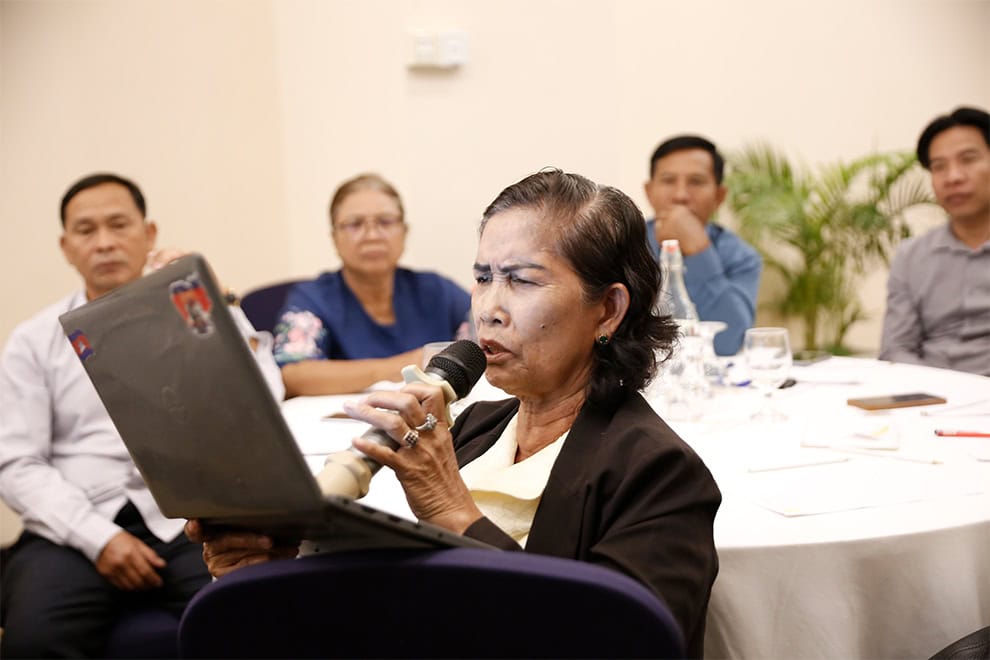
Women farmers’ groups and civil society representatives from across Asia have called for stronger legal protection of land tenure, easier access to climate finance and more investment in farming led by women. The proposals came out of a regional workshop in Cambodia, where participants drafted action plans aimed at closing long-standing gender gaps in agricultural development.
The proposals were finalised over the last two days of the “Women Farmer at the Center: Land Use, Agro-Ecology, and Climate Resilience in Asia” workshop, which ran from October 14 to 17. Government officials, farmer organisations, Indigenous communities, civil society groups and international development partners from 13 countries took part. The countries included Cambodia, Thailand, the Philippines, Indonesia, Malaysia, Vietnam, Laos, Myanmar, Timor-Leste, India, Nepal, Bangladesh and Mongolia.
Participants identified several obstacles keeping women farmers from benefiting fully from agricultural development. These included insecure land tenure, unequal land ownership, limited access to credit and technology, exposure to climate risks and weak involvement in decision-making.
Cambodia proposes a four-year roadmap
The Cambodian delegation presented a draft roadmap covering 2027 to 2030. It was built from more than 20 earlier documents and discussions, and its goal is to strengthen women’s standing as landholders, food producers and leaders in natural resource management.
The roadmap is organised around four strategic areas: legal and policy reform, capacity building, networking and advocacy, and sustainable investment. Planned activities include reviewing land laws and policies, raising women’s awareness of their legal rights, expanding agroecological training, supporting knowledge exchange between farmers, and creating financing options that do not rely heavily on debt.
The delegation stressed that the agriculture, women’s affairs and environment ministries would need to coordinate closely, working alongside civil society groups and development partners. The roadmap is still a draft. It needs further consultation, legal review, cost estimates and formal approval before it can be put into practice.
Soeung Saroeun, executive director of the NGO Forum on Cambodia and chair of the International Land Coalition (ILC) Asia Steering Committee, said the workshop showed why women must be recognised as rights holders and agricultural leaders. Speaking at the closing ceremony on October 17, he said women need real opportunities to use their rights, gain education, access technology and financial resources, and take part in decisions that shape their livelihoods. He described the Cambodian roadmap as a starting point for cooperation at national, regional and global levels rather than the end of the process.
Regional groups call for secure land and stronger leadership
Two regional working groups also presented proposals on challenges shared by women farmers across the region. Wida, speaking for the first group, pointed to safeguards against land grabbing, fair land registration, genuine participation in land decisions and greater government accountability.
The group urged governments to apply free, prior and informed consent wherever development projects affect Indigenous communities or customary land rights. It also recommended regular dialogue between governments, civil society and local communities, and wider recognition of evidence on land ownership and resource use gathered by communities themselves.
Shruti presented the second group’s proposals, which focused on strengthening national land coalitions, building grassroots leadership and linking local campaigns to regional and international land-rights efforts. Its recommendations included training for community land defenders, advocacy based on solid evidence, and tools to track progress on women’s land rights.
Alice Morris, co-chair of the ILC Asia Steering Committee, said the Cambodian presentation offered a detailed implementation framework that could guide regional planning, noting that it covered the full process, including timeframes. She pointed to shared priorities across all presentations: secure land tenure, agricultural technology suited to women, knowledge sharing, market access and collective leadership. She argued that building collective leadership and collective power should be a clear investment priority. She also called for gender-responsive budgeting and social protection, saying agricultural policies must account for women’s unpaid care work and their varied circumstances.
Government calls for gender-responsive climate action
Mom Thany, secretary of state at the Ministry of Environment, formally closed the workshop and set out six strategic directions for boosting women’s role in environmental governance and climate resilience. These included building gender considerations into environmental policies and budgets, strengthening women’s leadership in managing natural resources, and improving access to climate information, early warning systems and disaster preparedness.
Thany also called for more support for women-led agroecology, biodiversity conservation, green technology and climate finance, with safeguards to ensure communities share the benefits fairly. She pointed to field visits during the workshop, which showed mangrove conservation and community fisheries, pepper farming powered by solar technology, and agricultural cooperatives. In her view, protecting the environment and improving livelihoods can support each other when women and communities have a real role in managing resources.
Her recommendations also included collecting gender-disaggregated data, introducing participatory monitoring and strengthening accountability so that policy promises lead to measurable outcomes.
Linking local priorities to global climate goals
Anu Verma, ILC Asia regional coordinator, said the coalition has set three priorities for 2027 and the 2028–2030 planning period. They are strengthening national land coalitions, connecting international environmental agreements with action at the national level, and continuing work on ecosystem restoration and conservation.
ILC plans to consult its member organisations on the support they need to work with governments on national plans tied to the three Rio Conventions, which cover climate change, biodiversity and desertification. Verma also pointed to chances for grassroots representatives to join international climate finance discussions, including talks involving Central Asian pastoralist communities and the Green Climate Fund.
At the closing ceremony, she stressed that greater participation by women means more than attending meetings. She called for deeper changes in who controls land, resources, benefits and decisions, backed by adequate budgets and accountability mechanisms that make existing legal protections work in practice.
Altantuya Tseden-Ish, a member of the ILC Asia Steering Committee and the ILC Global Council, also spoke about the particular difficulties faced by pastoralist women.