 Mekong Monitor
Analysts Say Anutin's UN Speech Was a Calculated Move to Reshape Thailand's Image
Thai PM Anutin used his UN General Assembly speech to frame Cambodia as the obstacle to peace, but analysts say the remarks contradict the facts on the ground and serve mainly as political theater for a domestic audience.
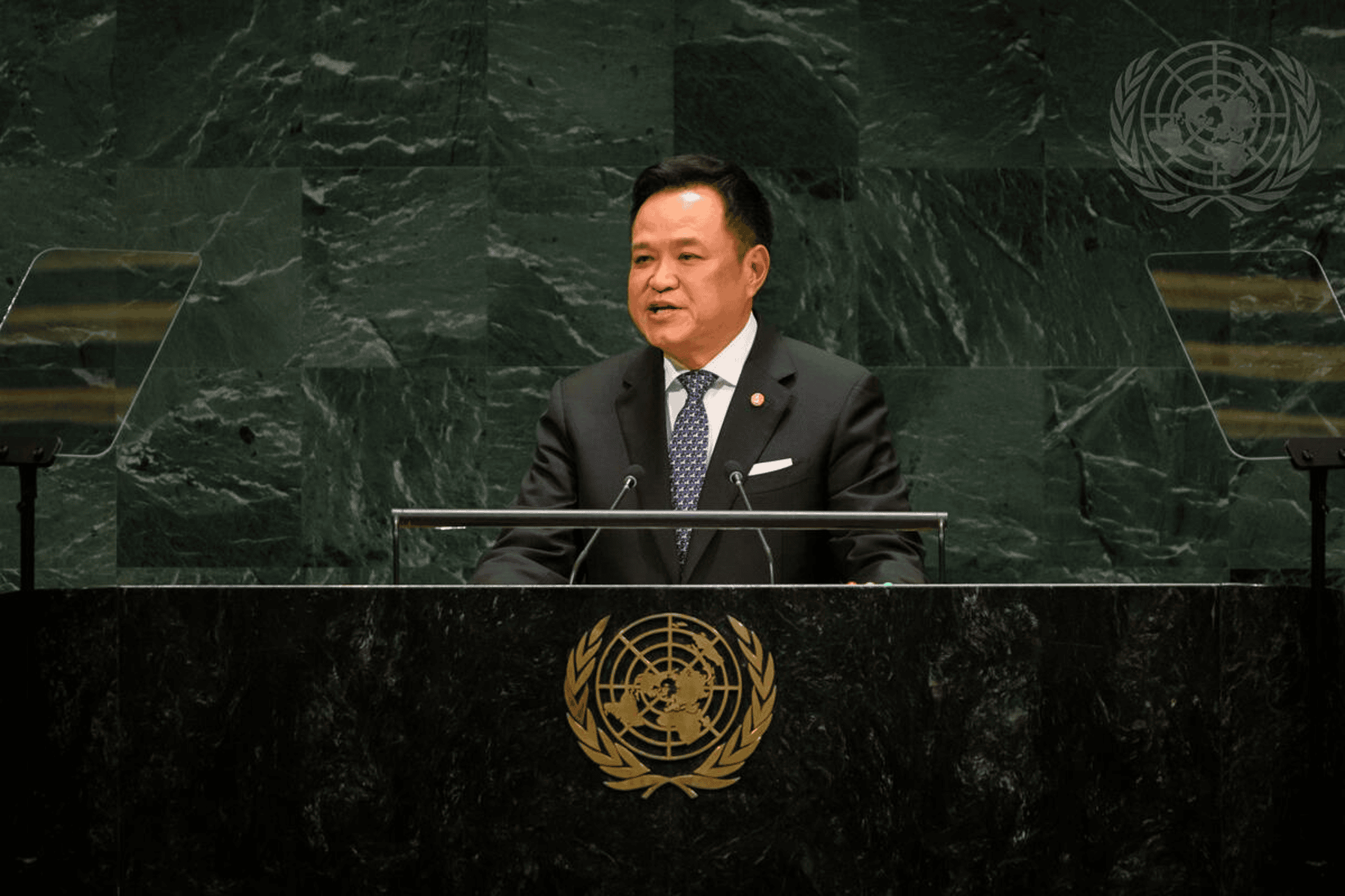
Thai Prime Minister Anutin Charnvirakul had previously cautioned that he would retaliate if Cambodia brought their border dispute before the United Nations General Assembly. Yet in his own address at the UN on September 24, Anutin raised the very issue he had warned against — a move that analysts say distorts the reality of the situation.
In his remarks in New York, Anutin told delegates that he and Cambodian Prime Minister Hun Manet had met in May and mutually agreed that border disputes should be handled through bilateral channels. He then accused Cambodia of going back on that understanding by initiating compulsory conciliation proceedings under the United Nations Convention on the Law of the Sea (UNCLOS).
Anutin insisted that Thailand had engaged in good faith but stressed that the conciliation process covers only the maritime boundary. He called on Cambodia to cooperate on border security, specifically mentioning joint efforts to tackle online scam operations and landmine clearance.
"Our communities will not be safe unless we take decisive action on these issues," Anutin said. "Ultimately, our shared border must be a place of shared prosperity, not a place where the scars of conflict are remembered."
However, Anutin's framing appears at odds with the documented record. Since the two countries signed their second ceasefire agreement in late December 2025, Cambodia has repeatedly sought to open negotiations on land border matters. Prime Minister Manet has publicly stated that he would pursue peace even if the chances of success were minimal. Phnom Penh has repeatedly urged Thailand to deploy its Joint Boundary Commission team, but no meaningful progress has followed.
Analysts: A Political Performance on the World Stage
Geopolitical analyst Nhel Rattha characterized the Thai leader's UN appearance as a carefully crafted diplomatic maneuver designed to shape perceptions both at home and abroad.
Rattha argued that Anutin was projecting an image of strength and control, suggesting that Thailand holds the upper hand and can dictate the terms of any negotiation. He likened the approach to a form of psychological warfare, aimed at convincing domestic audiences that Bangkok holds all the leverage.
By framing the situation this way, Rattha said, Anutin effectively shifted responsibility onto Cambodia — creating the impression that Phnom Penh is the party dragging its feet, while Thailand appears perpetually ready to talk.
Rattha also pointed out that the speech served clear domestic political goals. "Speaking to Thai audiences from a global platform is about boosting popularity at home, rallying nationalists and the military, and signaling that the government will not appear weak on border or maritime resource disputes with Cambodia," he said. "This is diplomatic language meant to satisfy Thai nationalists."
Cambodia Responds: Words vs. Actions
Kin Phea, who directs the Institute of International Relations at the Royal Academy of Cambodia, offered a similar assessment. He said Anutin's remarks were hollow rhetoric designed to convince the international community that Thailand has acted in good faith.
In practice, Phea noted, the Thai military continues to occupy Cambodian territory and has demolished and seized Cambodian homes, farmland, and other property — actions that violate the terms of the ceasefire and breach international law.
"If Thailand genuinely wanted to resolve the border dispute peacefully, it would deploy its Joint Boundary Commission team without further delay so that technical experts could do their work, rather than illegally occupying Cambodian land with military forces," Phea said. "Thailand has no goodwill. What they say is simply to make themselves look good — to project the image of a civilized nation that respects international law. In reality, their actions tell a different story."