 Mekong Monitor
Analysts Say Anutin's UN Speech Was a Bid to Polish Thailand's Image Through Diplomatic Framing
Analysts say Thai PM Anutin Charnvirakul's UN General Assembly comments were a diplomatic manoeuvre to burnish Thailand's image, arguing they clash with continued military occupation of Cambodian land.
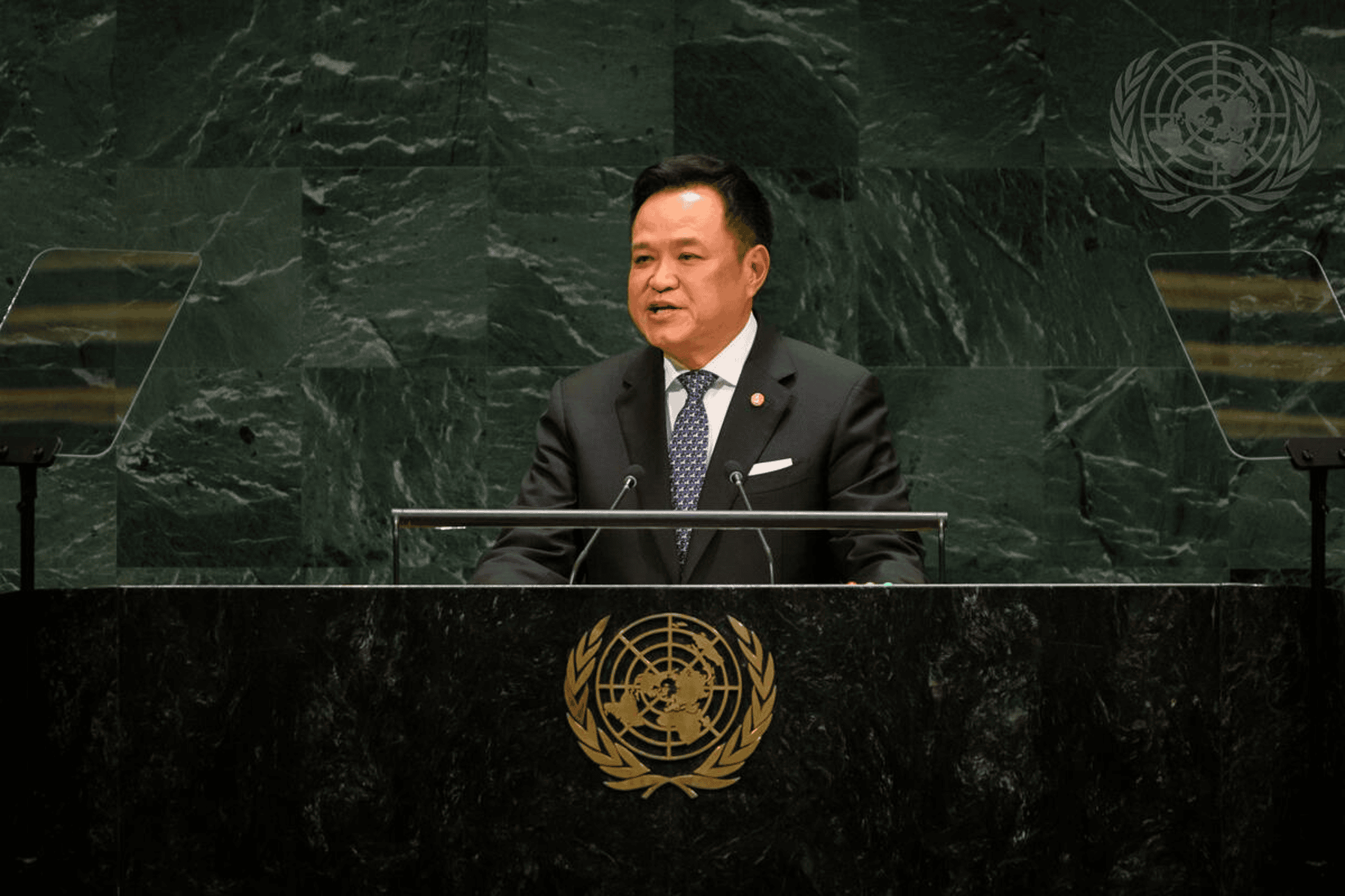
Thai Prime Minister Anutin Charnvirakul had earlier cautioned that he would push back if Cambodia brought the border dispute before the UN General Assembly. Yet he ended up raising the matter himself, in comments that analysts argue misrepresent the situation on the ground.
Addressing the United Nations in New York on 24 September, Anutin recounted a May conversation with Cambodian Prime Minister Hun Manet, during which he said both governments had agreed to settle border matters through bilateral channels. He went on to accuse Cambodia of instead launching compulsory conciliation proceedings under the UNCLOS framework.
"Thailand has nonetheless acted in good faith, but our stance is unambiguous: this procedure relates solely to the maritime boundary. At the same time, Cambodia needs to join us in bolstering security along our shared border, including practical cooperation against online scams and on demining," he stated.
"Our communities cannot be secure unless we act decisively on these matters. In the end, our common border should be a place of shared prosperity, not one marked by the scars of conflict. I want to make clear that Thailand has never pursued conflict, but peace is only possible if we work together in good faith, and that demands genuine effort from our neighbour, Cambodia," he added.
Observers noted that these statements sit at odds with events on the ground, given that Cambodia has repeatedly pressed for talks to settle land border disputes ever since the two nations signed a second ceasefire on 27 December 2025.
Manet has placed negotiations at the top of his agenda, declaring that he would keep seeking peace even if the odds of success were only one per cent. Cambodia has repeatedly urged Thailand to commit its Joint Boundary Commission (JBC) team to joint work, but so far there has been no movement.
A calculated political narrative
Geopolitical analyst Nhel Rattha characterised Anutin's UN address as "a diplomatic tactic and the construction of a political narrative designed to manage the situation and secure political gains at home and abroad."
According to Rattha, the speech was meant to cast Anutin as "strong and holding the upper hand," implying that Bangkok could dictate the terms. He likened this to psychological warfare intended to convince the public that Thailand controlled the negotiating table.
He added that the remarks effectively placed the "ball in Cambodia's court," a manoeuvre to shift attention and paint Cambodia as unprepared or responsible for the delays, while portraying Thailand as perpetually willing to talk.
Rattha also argued that the comments were crafted to serve domestic political ends.
"Speaking to Thais abroad is a message meant to lift the government's popularity at home, to appeal to nationalists and the military, and to signal that the Thai government is taking a firm line and will not appear weak on border or maritime resource questions with Cambodia," he said.
"This is diplomatic rhetoric aimed simply at satisfying Thai nationalists," he added.
Questions over Thailand's sincerity
Kin Phea, who heads the Institute of International Relations at the Royal Academy of Cambodia, offered a similar view, describing Anutin's words as mere rhetoric intended to persuade the international community that Thailand was acting in good faith to resolve the border dispute.
In practice, Phea said, Thai forces continue to occupy Cambodian land and are breaching international law by destroying and seizing the homes, farmland and other property of Cambodians, in violation of the ceasefire terms.
"If Thailand genuinely wanted a peaceful resolution, it would deploy its JBC team without delay so that the technical teams could get to work, rather than illegally occupying Cambodian territory with its military," Phea said.
"Thailand has no goodwill. What they say is only meant to make themselves look good so the international community sees Thailand as a civilised state that respects international law. But in reality, Thailand is a barbaric, predatory state," he added.