 Mekong Monitor
An Open Letter to Thailand’s Prime Minister
An open letter urging Thailand’s Prime Minister to acknowledge accountability for cross-border military actions and take concrete steps toward peace, verification, and heritage protection.
Your Excellency,
I listened closely to your recent address at the United Nations General Assembly. Your emphasis on peace and cooperation was well stated, and I share the hope that Cambodia and Thailand can coexist peacefully along our shared border. Yet I found it deeply unsettling how the diplomatic tone of your speech contrasted with the lived reality of families across the border.
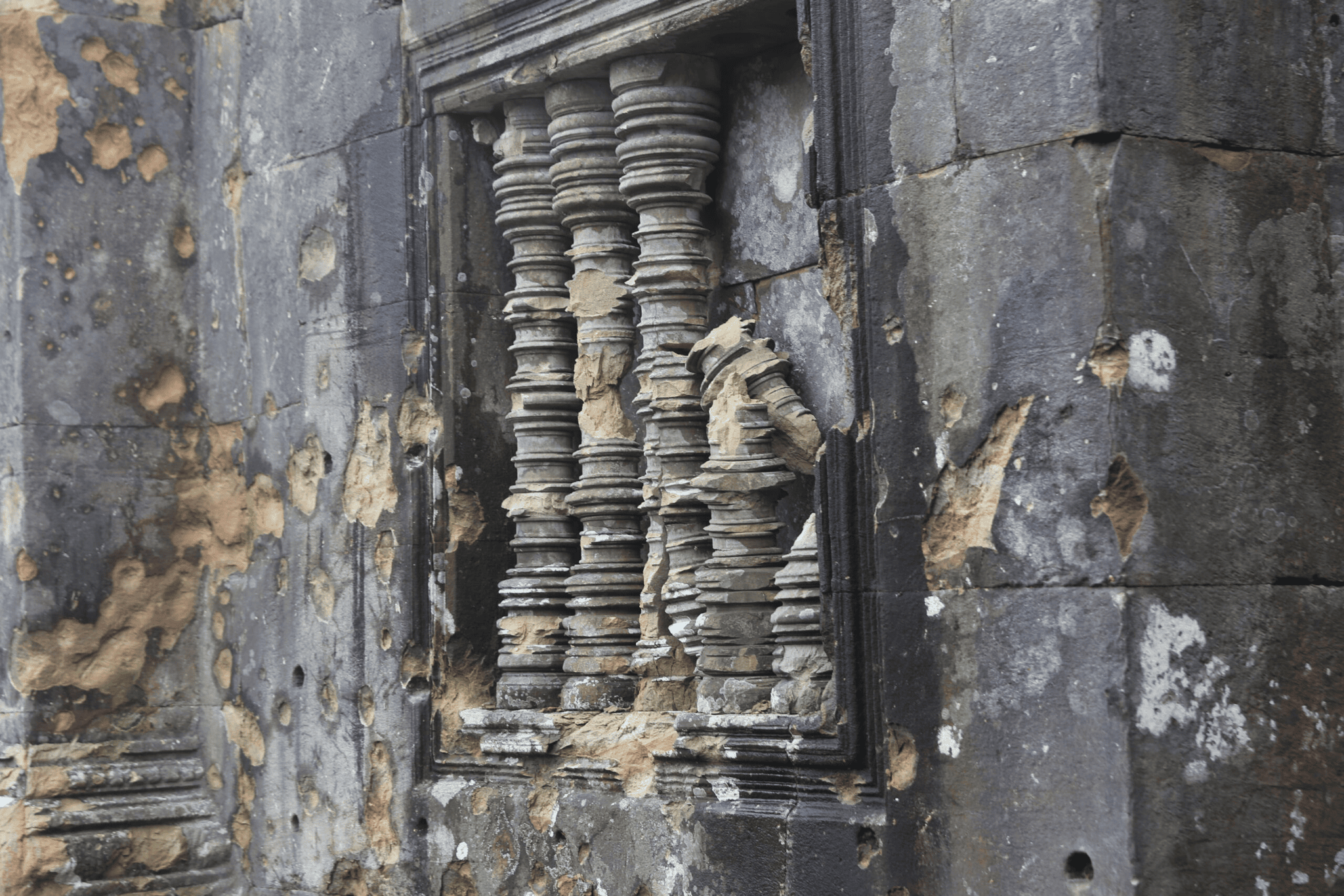
Thailand has openly admitted to launching airstrikes inside Cambodian territory. These strikes killed and wounded civilians, forced entire communities to flee, and damaged homes, schools, and public buildings. The historic Temple of Preah Vihear still shows the scars—artillery craters, shattered stonework, and structural harm. These are not minor incidents. They are documented consequences of military action that crossed an international frontier.
Cambodia must answer for the actions of its own forces, and Thailand must do the same. Peace cannot be built on one-sided narratives. It begins when each side acknowledges its own responsibility, especially when that responsibility involves harm beyond national borders.
The documented record
On December 8, 2025, Reuters reported Thai fighter jets striking inside Cambodia. While Bangkok claimed the targets were military, Phnom Penh called the action unprovoked aggression. Four civilians were killed that day. Thailand’s army chief of staff later said the goal was to degrade Cambodia’s military capacity over time—a statement that underscores the scale of the operation.
The Associated Press later confirmed additional strikes, including one near Poipet. Thailand described the target as a rocket storage facility on the edge of town, insisting safeguards were in place. Cambodia disputed this, saying bombs landed in a residential zone and injured civilians. This discrepancy matters. It demands an independent investigation, though even without a definitive conclusion, it remains clear that Thai aircraft delivered ordnance on Cambodian soil.
The human cost escalated rapidly. By January 2026, reports indicated more than 100 deaths and over 500,000 displaced. By May, the total approached 150 lives lost. This was a serious armed conflict—not a minor misunderstanding between patrols.
Who initiated the fighting?
Cambodia refers to the incursions—air, artillery, and ground—as invasion. Thailand insists its actions were defensive. Some border areas remain undemarcated, and isolated clashes may be contested. These issues require careful evaluation based on evidence and international law, not power asymmetries.
The difficulty many Cambodians have with your UN address is not disagreement over legal semantics. It is the moral weight of placing responsibility solely on the weaker side while the more powerful actor deploys fighter jets across the border and then frames itself as the injured party.
This is a fair question—not a hostile one—and it deserves a straightforward response grounded in transparency, access, and accountability.
Preah Vihear as witness
The Temple of Preah Vihear is more than a military objective. It is aUNESCO World Heritage Site, an 11th-century monument recognized by the International Court of Justice as falling under Cambodian sovereignty. When journalists visited in March 2026, they found widespread damage: collapsed masonry, shell craters, and burned vegetation. Cambodia’s Ministry of Culture and Fine Arts later documented 142 damaged locations from fighting in July and an additional 420 from December. All five main gateway pavilions were hit; three were badly damaged.
Thailand asserts Cambodian forces used the site for military purposes. Cambodia contends the temple was deliberately targeted. Rather than debate those claims, I call for an impartial, expert assessment—by UNESCO and ICOMOS—conducted without restriction. No responsible government should accept destruction of a site of such global significance.
Cambodia’s diplomatic path
Cambodia accepted ceasefire agreements in both July and December 2025, worked through ASEAN, and remained open to dialogue. It supported the UN Secretary-General’s calls for civilian protection and peaceful resolution. In September 2026, both governments entered a UN-facilitated conciliation process on their maritime boundary—a process Phnom Penh is actively pursuing.
Thailand has every right to present its case and defend its population. So does Cambodia. Fairness should not mean treating unequal power and different tools of war as morally equivalent. Accountability must account for who used air power, where munitions landed, and how civilians were affected.
What Thailand must do now
If the pledge you made at the UN is sincere, your government should take verifiable steps that both sides and the international community can observe:
- Independent investigation: Invite a neutral international fact-finding mission to examine the start and conduct of hostilities—including airstrikes, artillery use, civilian casualties, and damage to homes and heritage.
- Full ASEAN access: Permit independent observers to visit all locations where ceasefire compliance is in question, including contested troop positions and infrastructure.
- Freeze unilateral actions: Halt new fortifications, barriers, road construction, and troop deployments in disputed or undemarcated zones until verified agreement is reached.
- Civilian return: Ensure displaced Cambodian families can come back voluntarily, safely, and with dignity, regaining access to their homes, farms, schools, pagodas, and communal land.
- Heritage protection: Support a joint UNESCO and ICOMOS evaluation of Preah Vihear and all impacted cultural sites, make the results public, and commit to restoration where responsibility is confirmed.
- Accountability and redress: Establish a credible process for compensation, rebuilding, and individual accountability where independent findings establish unlawful harm or destruction.
- Border settlement: Restart meaningful demarcation efforts and accept third-party adjudication, conciliation, or other peaceful dispute mechanisms where bilateral talks stall.
Your words at the UN expressed a desire for peace. Those aspirations are shared. But peace built on silence about past harm, or avoidance of responsibility, will not hold. It must be built on truth, transparency, and shared commitment—not just diplomacy from afar, but justice on the ground.