 Mekong Monitor
An Open Letter to Thailand's Prime Minister on the Cambodia Border Conflict
In response to Thailand's UN General Assembly address, this open letter calls for an independent investigation into cross-border airstrikes, civilian casualties, and heritage damage, urging both governments to pursue accountability and lasting peace.
"Thailand has never sought conflict. But peace can only be built when we work together in earnest."
Prime Minister Anutin Charnvirakul said those words at the 81st United Nations General Assembly on 24 September 2026. They were well chosen. Cambodia and Thailand do need to find a way to coexist without further bloodshed. But there is a wide gap between what was said in New York and what Cambodian families have experienced along the border.
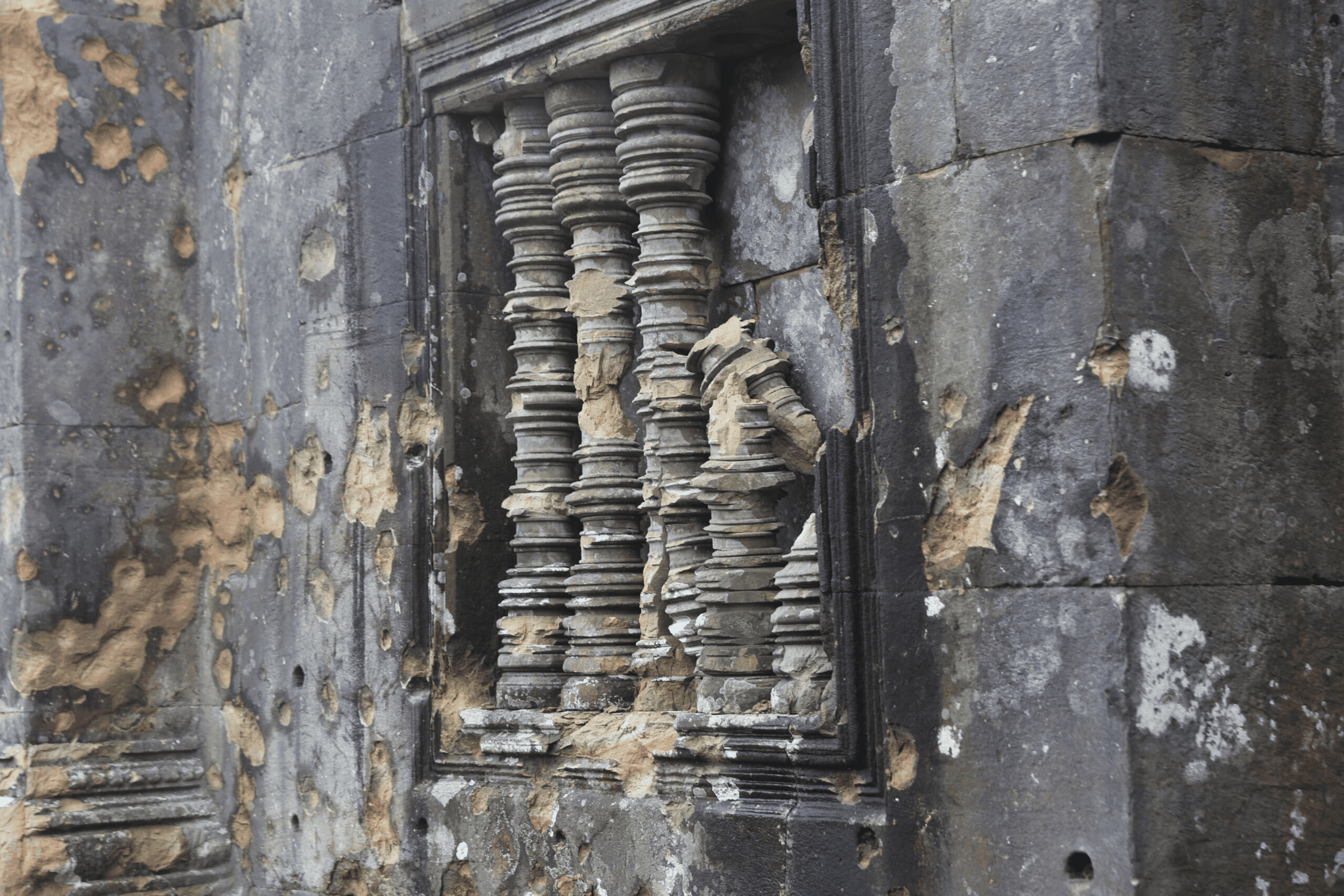
Thailand has acknowledged conducting airstrikes inside Cambodia. Civilians were killed and injured. Large communities were forced from their homes. Houses and public buildings were damaged. The Temple of Preah Vihear still shows artillery craters, shattered stonework, and serious structural damage. These facts cannot be brushed aside while Cambodia is told it must make a more "genuine effort" for peace.
Cambodia should answer honestly for any action taken by its own forces. So must Thailand. Peace begins when each government is willing to confront the consequences of its own conduct, particularly when that conduct crosses an international boundary.
The record cannot be rewritten from a UN podium
The factual record is already substantial. On 8 December 2025, Reuters reported that Thai fighter jets struck targets inside Cambodia. Thailand said the aircraft were attacking military assets; Cambodia called the strikes unprovoked aggression. Four Cambodian civilians were reported killed that day.
Reuters also quoted Thailand's army chief of staff saying the objective was to cripple Cambodia's military capability for the long term. The two governments disagreed over who restarted the fighting, but there is no serious dispute that Thai air power was deployed across the border.
The Associated Press later reported further strikes, including one near Poipet that Thailand acknowledged. Cambodia said bombs struck a residential area and injured civilians. Thailand responded that the intended target was a rocket warehouse on the outskirts and that precautions had been taken. That difference matters and warrants an independent investigation. It does not change the basic fact that Thai aircraft dropped weapons on Cambodian soil.
The human cost escalated rapidly. Reuters reported in January that two rounds of fighting had caused 101 deaths and displaced more than half a million people. By May, the combined death toll was reported at close to 150. The exact figures shifted as official records were updated, but the scale was unmistakable. This was a serious armed conflict, not a minor misunderstanding between border patrols.
The question of invasion and victimhood
Cambodia describes the entry of Thai aircraft, artillery fire, and troops into its territory as an invasion. Thailand rejects that characterization and says it acted in self-defence. Some stretches of the frontier remain undemarcated, and responsibility for individual clashes is disputed. Those questions must be settled by evidence and law. They cannot be settled by allowing the militarily stronger side to define every disputed location and every use of force on its own terms.
This is why the Prime Minister's address at the UN was so difficult for many Cambodians to accept. Thailand acknowledged the airstrikes, yet the speech placed the moral burden on Cambodia. Families who buried relatives, fled their homes, or watched sacred and public places being damaged will naturally ask how the country that sent fighter aircraft across the border can now speak as though it were solely the victim.
That question deserves a clear answer supported by records, access for observers, and an investigation trusted by both sides.
Preah Vihear is evidence carved into stone
The Temple of Preah Vihear is not an ordinary battlefield structure. It is an eleventh-century masterpiece of Khmer architecture, inscribed by UNESCO as a World Heritage Site. The International Court of Justice ruled in 1962 that the Temple sits in territory under Cambodian sovereignty. In 2013, the Court clarified that Cambodia holds sovereignty over the entire promontory of Preah Vihear.
When Associated Press journalists visited in March 2026, they found stone debris, artillery craters, burned vegetation, and extensive damage across the complex. Cambodia's Ministry of Culture and Fine Arts identified 142 damaged locations from the July fighting and another 420 from December. It reported that all five principal gateway pavilions were damaged, three of them severely. The Associated Press also noted that an independent outside assessment had not yet confirmed the full Cambodian inventory. The honest response to that gap is not to dismiss the damage but to invite UNESCO and ICOMOS to examine it without restriction.
Thailand says Cambodian forces used the site for military purposes. Cambodia says Thailand deliberately attacked it. The purpose of an impartial examination is not to decide that dispute from political statements. Whatever the final finding, a monument of exceptional importance to the world was left badly wounded, and no responsible government should be comfortable with that outcome.
Cambodia has repeatedly turned to diplomacy and law
Cambodia joined the ceasefire arrangements reached in July and December 2025, worked through ASEAN, and continued to seek dialogue. The UN Secretary-General called on both governments to protect civilians, return to the ceasefire, and use peaceful mechanisms. In September 2026, the two countries also entered a UN-backed conciliation process over their maritime boundary. Cambodia's willingness to participate is practical evidence that it is prepared to rely on law when bilateral talks reach an impasse.
Thailand has every right to submit its evidence and to protect Thai civilians. Cambodia has the same right. Harm to Thai families is not excused, and nationalism should not be used by either government to hide uncomfortable facts. At the same time, fairness does not require ignoring the difference in military capacity, the use of fighter aircraft, or the locations where bombs landed. Those details are central to accountability.
Steps Thailand must take now
If the commitment expressed at the UN is genuine, Thailand should be willing to pursue practical steps that both countries and the international community can verify:
- Independent investigation. Invite an impartial international fact-finding process to examine the initiation and conduct of hostilities, cross-border airstrikes, artillery use, civilian casualties, and damage to civilian and cultural property.
- Full ASEAN observer access. Permit observers to enter every sensitive location relevant to the ceasefire, including areas where troop positions, barriers, roads, or military works are disputed.
- No unilateral change on the ground. Freeze new fortifications, barriers, excavation, roadbuilding, and troop expansion in disputed or undemarcated areas pending verified agreement.
- Safe civilian return. Guarantee that displaced Cambodian families can return voluntarily, safely, and with dignity, with access to their homes, farms, schools, pagodas, and community property.
- Heritage protection and restoration. Support a joint UNESCO and ICOMOS assessment of Preah Vihear and every affected heritage site, publish the findings, and contribute to restoration wherever responsibility is established.
- Accountability and reparation. Create a credible process for compensation, reconstruction, and individual accountability where independent evidence establishes unlawful civilian harm or destruction.
- Lawful border settlement. Resume effective demarcation work and accept adjudication, conciliation, or other peaceful legal mechanisms to resolve outstanding territorial disputes.
Peace is not built on speeches alone. It is built on verifiable actions, mutual accountability, and the willingness to let facts speak louder than rhetoric. The people of both Cambodia and Thailand deserve nothing less.