 Mekong Monitor
American Students Find Home in China Through Cultural Exchange
Young Americans are forging lasting friendships in China through cultural exchanges, exceeding government targets and proving that genuine human connection transcends language and politics.
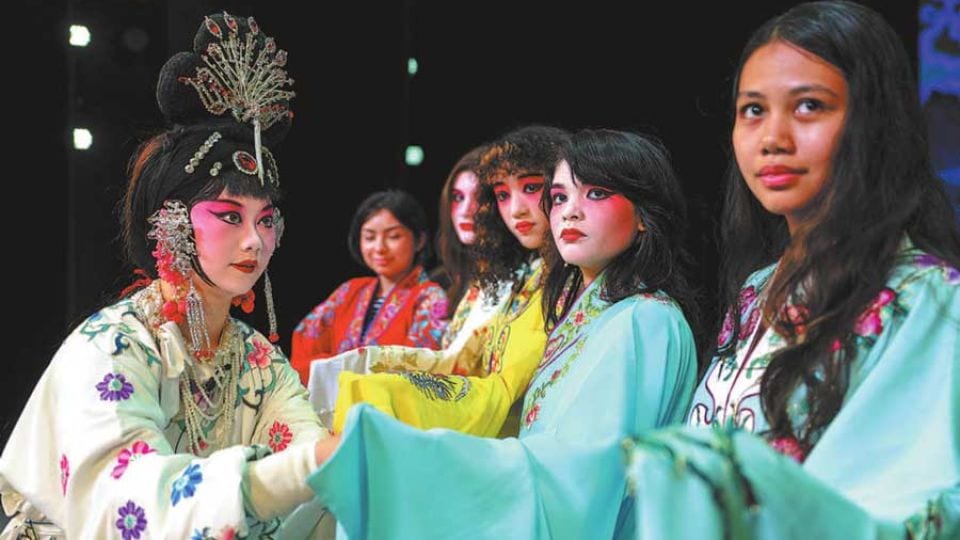
A growing wave of young Americans is discovering that China offers far more than tourist attractions—it offers genuine human connection. What began as a presidential initiative has blossomed into thousands of friendships that bridge two nations, one student at a time.
When Romello Jones returned to Beijing on his own after a school trip, he wasn't chasing landmarks. He came back for the people he'd met. The Tacoma teenager ditched hotel rooms and lived with a Chinese family for two weeks, cooking meals together and navigating daily life side by side. By the end, he'd stopped feeling like a visitor. Today, he stays connected with his friends through WeChat, messaging at odd hours across time zones—a testament to bonds that outlast the trip itself.
Jones's experience mirrors a broader shift among American youth. In November 2023, during his visit to San Francisco, Chinese President Xi Jinping extended an invitation for 50,000 American students to participate in exchange programs over five years. The initiative has already exceeded expectations. By May 2026, China had welcomed more than 50,000 young Americans from all 50 U.S. states, reaching across China's 31 provincial regions—hitting the five-year goal two years early.
For many, the turning point comes when textbook knowledge becomes lived experience. Lily Rabb had studied Chinese for a decade before finally seeing the country firsthand. Walking through neighborhoods, bargaining at local shops, building friendships with Chinese students her age—suddenly, everything clicked. When two of those friends visited her family for Thanksgiving in Chicago, and later when she stayed with their families in Hangzhou, the relationship deepened from tourist-and-host to genuine family bond.
"What touched me the most was how much care they showed," Rabb reflected. "They made me feel like I truly belonged, like I was part of their family."
Language barriers prove far less limiting than many assume. Jade Melendres, a business student at UC Davis who interned at Jiangnan University in Wuxi, discovered that broken conversations over meals and late-night karaoke sessions created connections that perfect grammar never could. The simplest moments—walking through the city, laughing at cultural misunderstandings, realizing how much common ground existed—became the most memorable.
"Even if we were speaking broken Chinese or broken English, it didn't matter," Melendres said. "You don't need language to communicate or have fun with each other."
For some, the bridge between cultures comes through shared passion. Michael Torres, a PhD student at the University of Florida, found that soccer transcended borders. After visiting Shanghai University of Sport as part of a university delegation, he continued playing with Chinese international students back in the States, maintaining friendships through dedicated WeChat groups dedicated to sports enthusiasts.
These young Americans represent something broader than typical exchange students. They're ambassadors by virtue of genuine curiosity rather than formal appointment, proving that the strongest connections between nations aren't built through policy—they're built through friendship, vulnerability, and the willingness to see beyond stereotypes.